
Nightfall
“Nightfall” is a landmark science fiction short story by Isaac Asimov, first published in the September 1941 issue of Astounding Science Fiction under the encouragement of editor John W. Campbell. The story was inspired by a quote from Ralph Waldo Emerson: “If the stars should appear one night in a thousand years, how would men believe and adore, and preserve for many generations the remembrance of the city of God!” Campbell challenged Asimov to explore the psychological impact of such an event, and the result became one of the most celebrated stories in the genre. In 1990, Asimov collaborated with fellow author Robert Silverberg to expand the short story into a full-length novel, preserving the core premise while adding depth to characters and world-building.
The narrative is set on the planet Lagash, which orbits a system of six suns. As a result, the planet is bathed in perpetual daylight; true darkness is unknown to its inhabitants. The story follows the journalist Theremon 762 as he attempts to interview the renowned astronomer Aton 77, who has calculated that a rare eclipse will soon plunge the entire planet into darkness. Aton and his colleagues warn that the first appearance of stars in the sky will drive the populace to madness, causing the collapse of civilization. Theremon is initially skeptical, writing columns that mock the scientists. But as the eclipse approaches, he realizes the terrifying truth. When the eclipse finally occurs, the sky darkens, stars emerge, and mass hysteria ensues—cities are set ablaze and the civilization of Lagash crumbles, just as it has done every two thousand years in a cyclical pattern.
“Nightfall” explores themes of cyclical civilization collapse, the tension between science and religion, the fear of the unknown, and the fragility of collective reason. The story’s central idea—that a society built on absolute certainty can be shattered by a single, unprecedented event—resonates deeply with human history. Asimov’s portrayal of the astronomers’ desperate attempts to prepare for the inevitable reflects both the power and the limits of rational knowledge.
The writing background is rooted in Asimov’s early career. At age 21, he was a rising star in the pulp magazines, and Campbell’s editorial guidance was crucial. The story was an immediate success and became Asimov’s calling card. In 1968, the Science Fiction Writers of America voted it the best science fiction short story ever written before 1965, a distinction that cemented its legendary status. The 1990 novelization, while less taut than the original, provided a richer narrative and was well-received by fans.
“Nightfall” has had a lasting influence on science fiction, demonstrating how a single imaginative concept can generate profound philosophical questions. It has been widely anthologized, adapted into radio dramas, and referenced in countless works. Its depiction of a society that literally cannot see the stars until it is too late continues to captivate readers, serving as a powerful metaphor for human ignorance and the cyclical nature of history. The story remains a must-read for any science fiction enthusiast and a testament to Asimov’s genius.
The story was written between March 17 and April 9, 1941, and sold on April 24 of that year, appearing in the September 1941 issue of Astounding Science Fiction under editor John W. Campbell. It was Asimov's 32nd story, composed while he was a graduate student in chemistry at Columbia University. The inspiration came from a discussion with Campbell about a quotation from Ralph Waldo Emerson, which led to the tale's exploration of a world where darkness is a rare and terrifying phenomenon.
About the Author
Isaac Asimov (c. January 2, 1920 – April 6, 1992) was an American writer and biochemist, widely regarded as one of the most prolific and influential science fiction authors in history. Born in Petrovichi, a small village in Soviet Russia, to a Jewish family, he emigrated to the United States with his parents in 1923, settling in Brooklyn, New York. His father owned a candy store where young Asimov discovered pulp magazines, sparking his lifelong passion for science fiction. He was a brilliant student, graduating from high school at age 15, and went on to earn a Bachelor of Science (1939), a Master of Science (1941), and a Ph.D. in biochemistry (1948) from Columbia University. During World War II, he worked at the Naval Air Experimental Station in Philadelphia. After the war, he joined the faculty of Boston University School of Medicine, where he became a professor of biochemistry, a position he held for most of his career.
Asimov’s writing career began in 1939 with the short story “Marooned off Vesta,” published in Astounding Science Fiction. His breakthrough came in 1941 with “Nightfall,” which was later voted the best science fiction short story of the pre-1965 era by the Science Fiction Writers of America. In the 1940s and 1950s, he created his most famous series: the Foundation series (starting with the short story “Foundation” in 1942, later collected as novels), the Robot series (including I, Robot in 1950), and the Galactic Empire series. These works, often interconnected, form a vast future history of humanity spanning thousands of years. Other major novels include The End of Eternity (1955) and The Gods Themselves (1972), which won both the Hugo and Nebula awards. Asimov also wrote extensively in nonfiction, producing popular science books such as The Intelligent Man’s Guide to Science (1960) and Asimov’s Chronology of Science and Discovery (1989). His total output exceeded 500 books, covering virtually every subject in the Dewey Decimal Classification.
Asimov married Gertrude Blugerman in 1942 (divorced 1973) and later Janet Opal Jeppson in 1973. He had two children. Despite his fame, he was known for his fear of flying and his preference for staying home to write. He died on April 6, 1992, in New York City from complications of AIDS, which he had contracted from a blood transfusion during heart surgery in 1983, a fact he kept private until after his death.
Asimov’s legacy is immense. He is a cornerstone of the Golden Age of Science Fiction, alongside Robert A. Heinlein and Arthur C. Clarke. The “Three Laws of Robotics” he formulated have become a standard reference in robotics and AI ethics. Asteroid 5020 Asimov, the magazine Asimov’s Science Fiction, and two awards (the Asimov Award and the Isaac Asimov Award) bear his name. His works continue to be read and adapted, most notably the Foundation series being adapted into a television series by Apple TV+. His influence on both science and literature is incalculable, and he remains a symbol of the power of imagination grounded in scientific rationalism.
StoryFlow
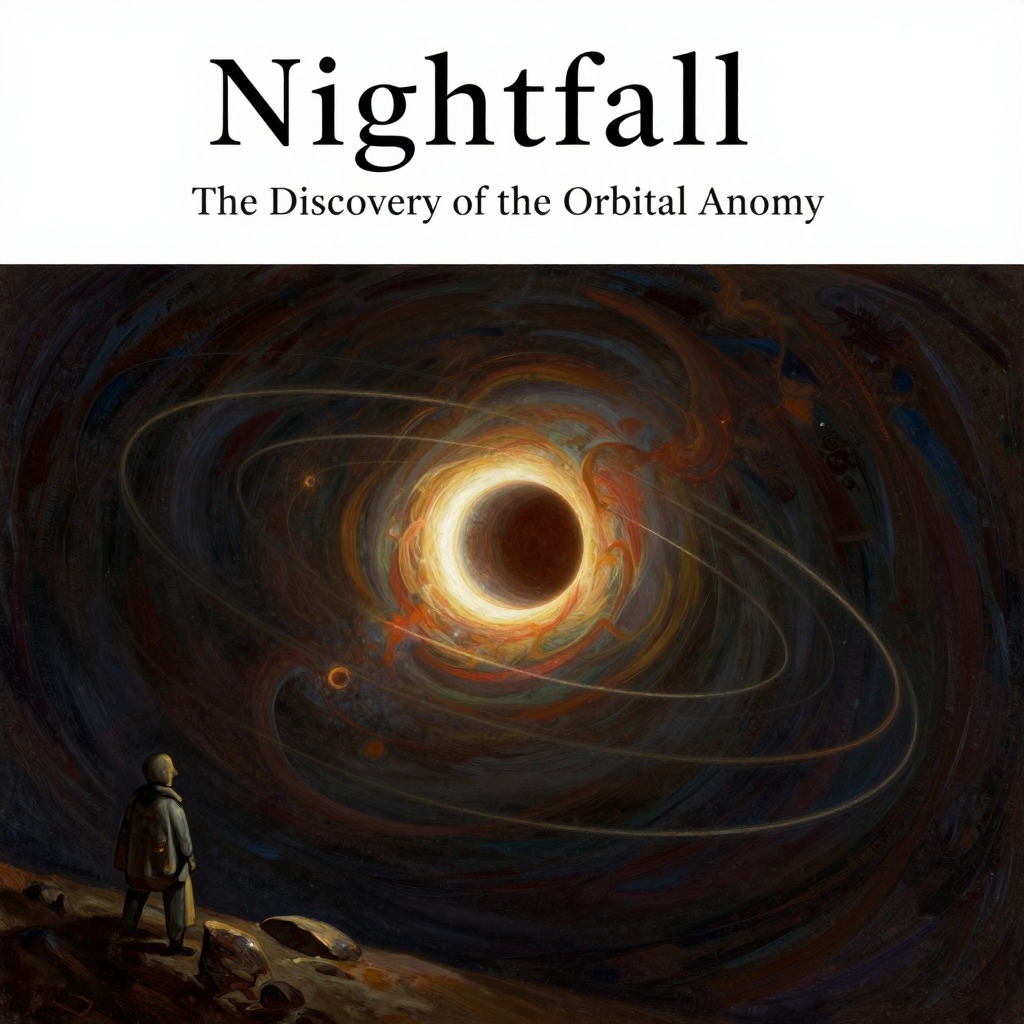
The Discovery of the Orbital Anomaly
Beenay 25 uncovers a discrepancy in Kalgash's orbit that challenges the Theory of Universal Gravitation, leading to the prediction of a catastrophic eclipse.
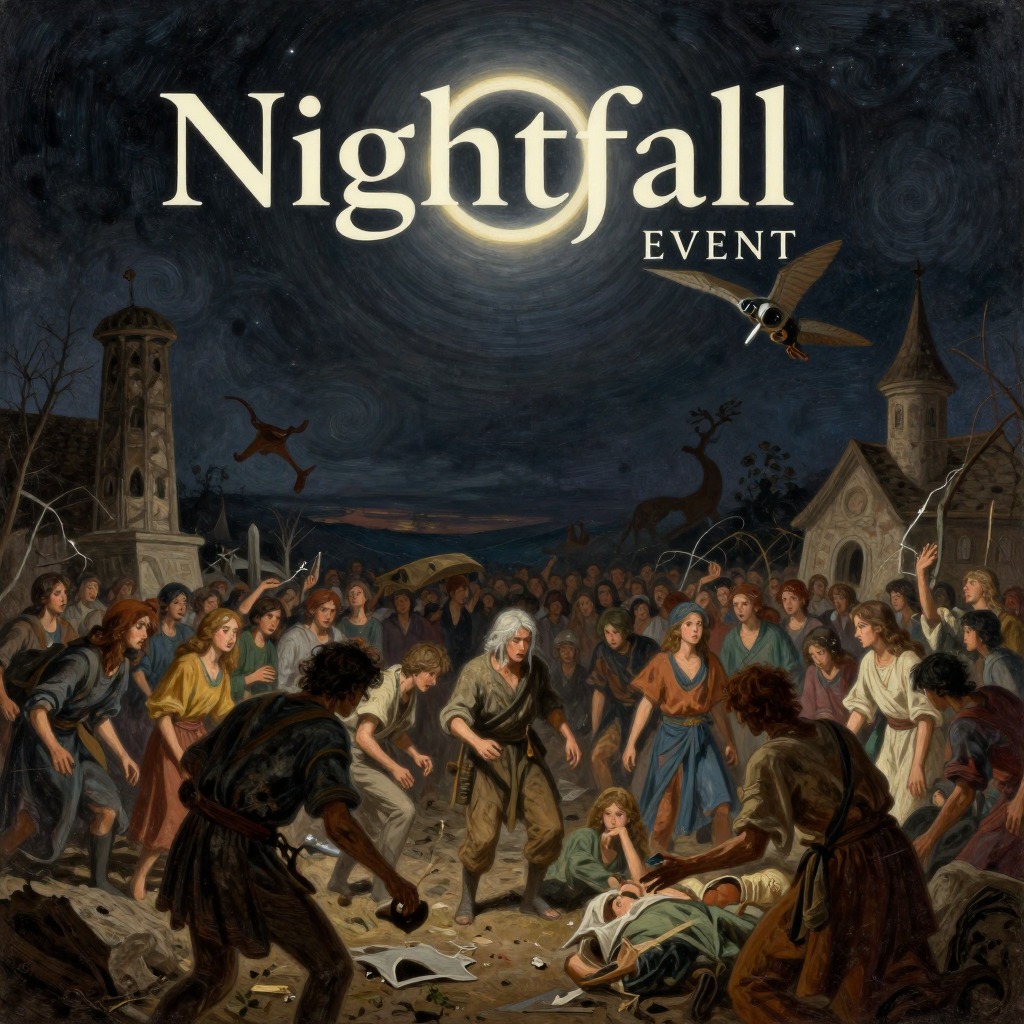
The Nightfall Event
The predicted eclipse occurs, plunging Kalgash into Darkness and revealing the Stars, leading to mass insanity and the destruction of civilization.
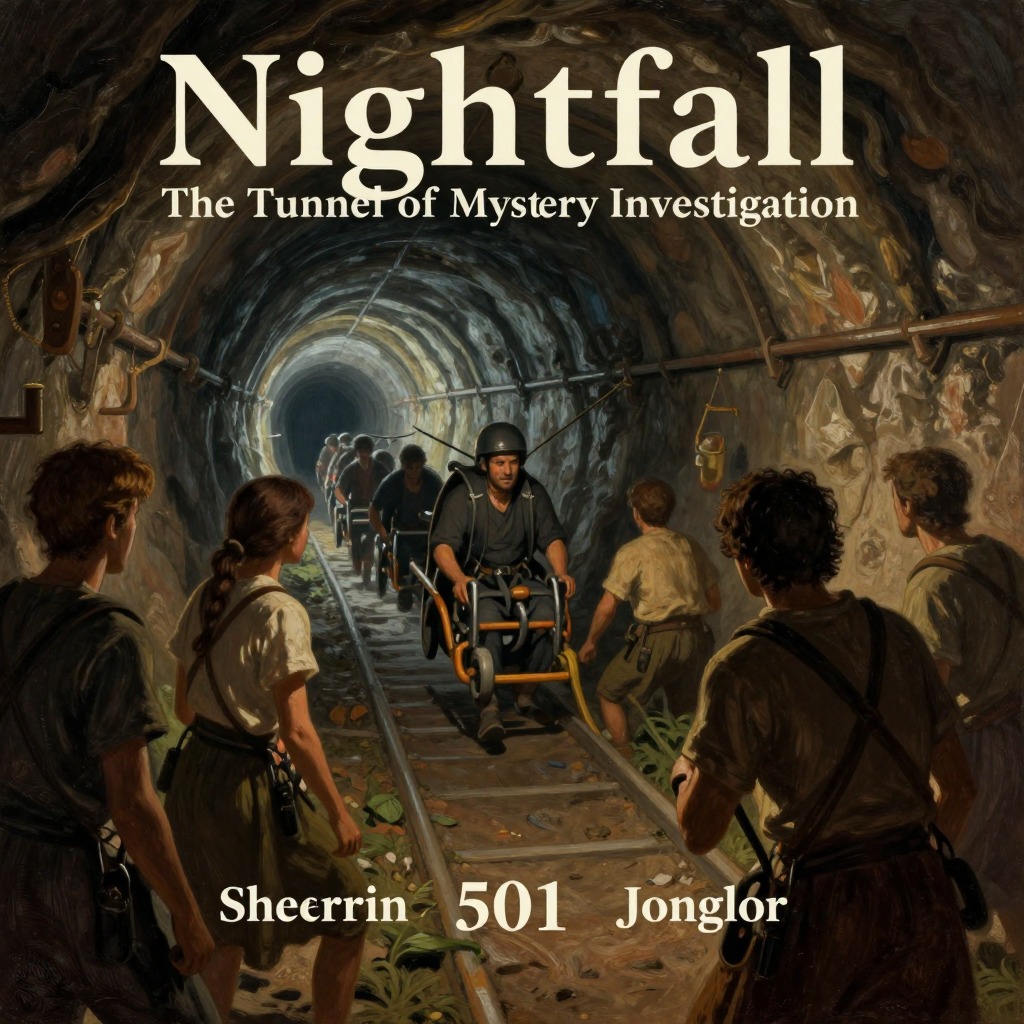
The Tunnel of Mystery Investigation
Sheerin 501 is called to Jonglor to investigate a ride that induces Darkness, revealing the psychological vulnerability of Kalgash's people.
