Palmarian Church
The Palmarian Church, also known as the Iglesia Católica Palmariana, is a schismatic Catholic sect that broke from the Vatican in the 1970s. It is depicted as an ultraconservative, secretive, and militaristic organization that serves as the primary antagonist in the novel, orchestrating the assassination of Edmond Kirsch and representing the violent extreme of religious traditionalism. The church's ideology, structure, and methods are revealed through the backstory of its agent, Admiral Luis Ávila, and through the investigations of Robert Langdon and Ambra Vidal.
Origins and Ideology
The Palmarian Church was founded after local residents near El Palmar de Troya, Spain, claimed to have witnessed mystical visions of the Virgin Mary, who allegedly warned that the Catholic Church was rife with the "heresy of modernism" and that the true faith needed to be protected. The church's founder, Clemente Domínguez y Gómez, took the name Pope Gregory XVII, declaring himself the legitimate pontiff and denouncing the Vatican's pope as a false pope—a belief known as sedevacantism. The Palmarians believe that St. Peter's "seat" is literally "vacant." The church has canonized several ruthless leaders, including Francisco Franco and Adolf Hitler, as saints. Its symbol, the "VICTOR" tattoo, is a Francoist emblem consisting of six letters spelling the Latin word for "victor," which is synonymous with the ultraconservative dictatorship of General Francisco Franco. The church's ideology is a fusion of extreme nationalism, authoritarianism, and a strict, pre-Vatican II interpretation of Catholicism, rejecting all liberal reforms.
Structure and Practices
The Palmarian Church is headquartered in a secure, walled compound called the Mount of Christ the King in El Palmar de Troya, Spain. The compound is described as a fortress-like cathedral with eight towering spires, triple-tiered bell towers, and massive cement walls providing security comparable to Vatican City. The church has amassed vast wealth, enabling it to construct this magnificent cathedral and expand its ministry internationally. It has consecrated hundreds of Palmarian bishops worldwide. The church's practices are highly restrictive: members are forbidden from reading books authored by non-Palmarians, attending family weddings or funerals unless their families are Palmarians, and attending pools, beaches, boxing matches, dance halls, or any location displaying a Christmas tree or image of Santa Claus. Several Palmarian popes were officers of the Spanish military with strong Carlist ideals. The church has been accused of brainwashing, cultlike intimidation, and responsibility for several mysterious deaths, including that of Bridget Crosbie, who, according to her family's attorneys, had been "unable to escape" one of the Palmarian churches in Ireland.
Recruitment and Exploitation of Trauma
The Palmarian Church actively recruits vulnerable individuals, particularly those suffering from trauma. This is exemplified by the story of Admiral Luis Ávila, who lost his wife and son in the Cathedral of Seville bombing. After a descent into alcoholism, PTSD, and a failed suicide attempt, Ávila was approached by his physical therapist, Marco, a Palmarian member who had also lost a leg in the same attack. Marco arranged for Ávila to meet the Palmarian pope, Innocent XIV, who delivered a homily that rejected the traditional Christian teaching of forgiveness and instead endorsed righteous vengeance. The pope told Ávila that his "righteous desire for vengeance cannot be quelled by turning the other cheek" and that his "pain will be the catalyst for your own salvation." This message transformed Ávila, giving him a new purpose as a soldier in a holy war against the enemies of God. The church provided Ávila with a leather-bound Bible flagged with passages about divine vengeance, such as Romans 13:4 ("the avenger who carries out God's wrath on wrongdoers") and Psalm 94:1 ("O Lord, the God of vengeance").
Role in the Assassination of Edmond Kirsch
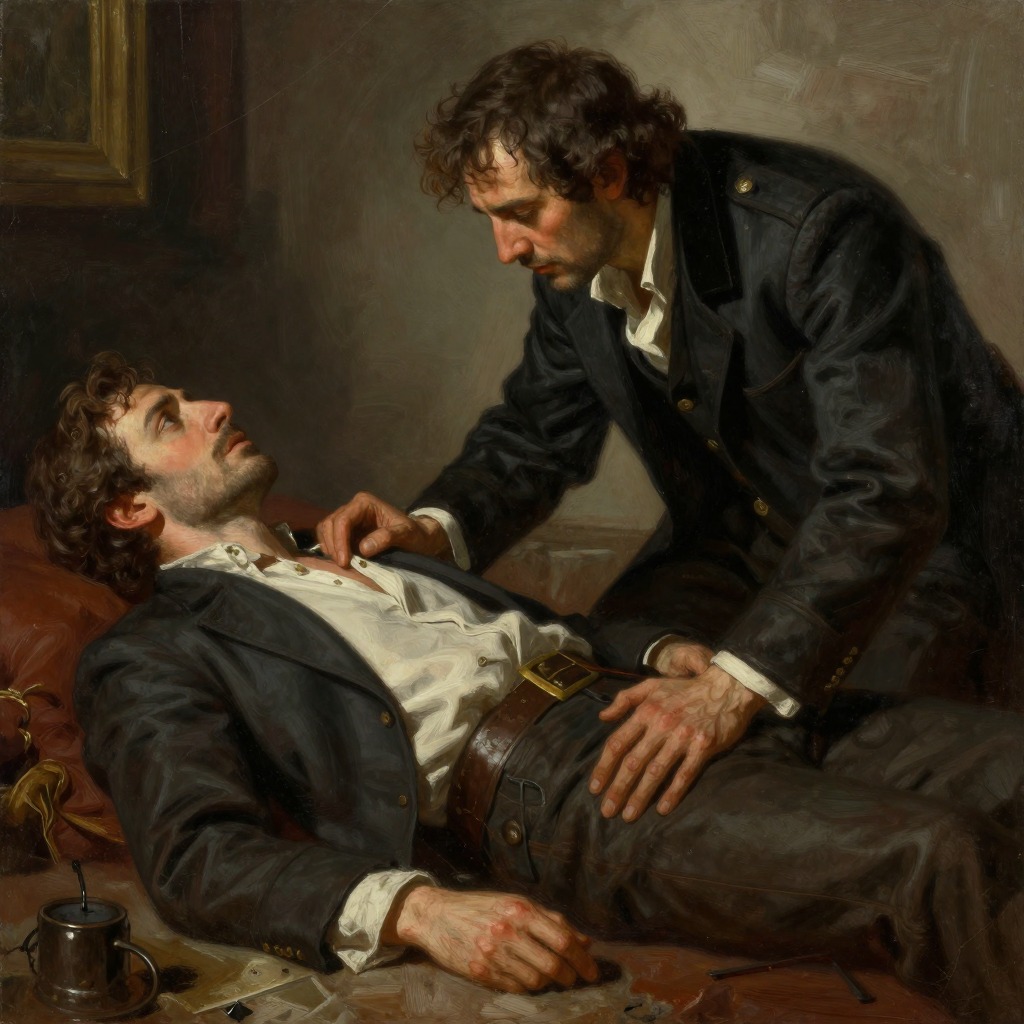
The Palmarian Church, through an individual known as the "Regent," orchestrated the assassination of Edmond Kirsch. The Regent contacted Ávila, offering him a mission and a hundred-thousand-euro advance. The Regent claimed that Kirsch was responsible for the Cathedral of Seville bombing that killed Ávila's family, alleging that Kirsch had waged a secret war against the Palmarian Church for years, funding lawsuits and watchdog groups. The Regent told Ávila that Kirsch's assassination was a "mission" from God, and that Ávila was a "foot soldier" in a noble war. Ávila carried out the assassination at the Guggenheim Museum Bilbao, using a ceramic pistol and a rosary made of Vectran fiber to block the exit. The church's involvement is further suggested by the "VICTOR" tattoo on Ávila's palm, which is a symbol used by the Palmarian Church. The assassination was intended to silence Kirsch's scientific discovery, which the church viewed as a direct threat to its authority and to the foundations of religious faith.
Aftermath and Exposure
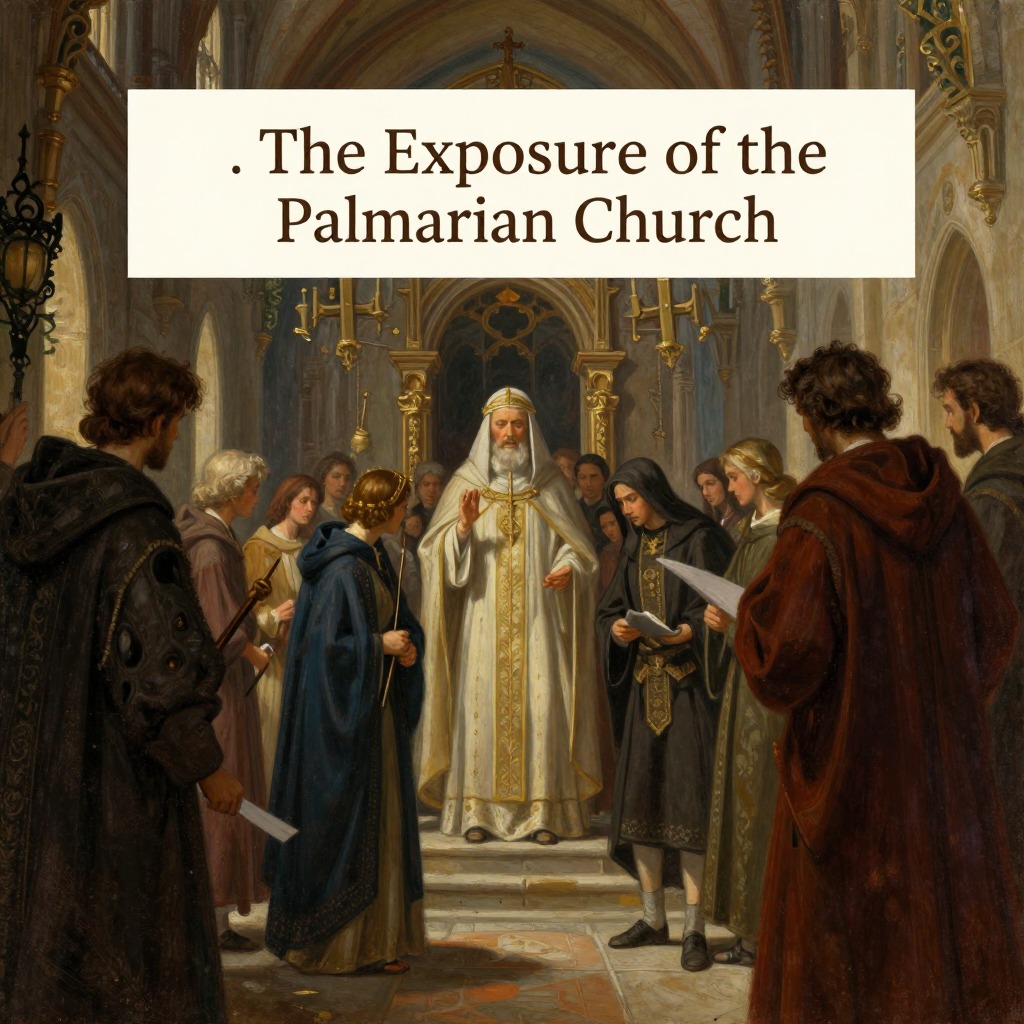
In the wake of the assassination, the Palmarian Church's role is exposed through the investigations of ConspiracyNet and the informant monte@iglesia.org. The website reveals that Ávila had been recruiting online for the Palmarians for more than a year and that his membership in the church explains the "VICTOR" tattoo. The exposure leads to a global scandal, with media sources unearthing a 2016 interview in which former Palmarian pope Gregorio XVIII (aka Ginés Jesús Hernández) confessed that his church was "a sham from the beginning" and was founded "as a tax-evasion scheme." The church's reputation is destroyed, and it faces intense scrutiny. The novel suggests that the Palmarian Church's violent actions, driven by a fanatical ideology, ultimately lead to its own downfall, as the world turns against it. The church's role as the antagonist highlights the dangers of religious extremism and the willingness of some to use violence to suppress scientific progress and maintain traditional power structures.