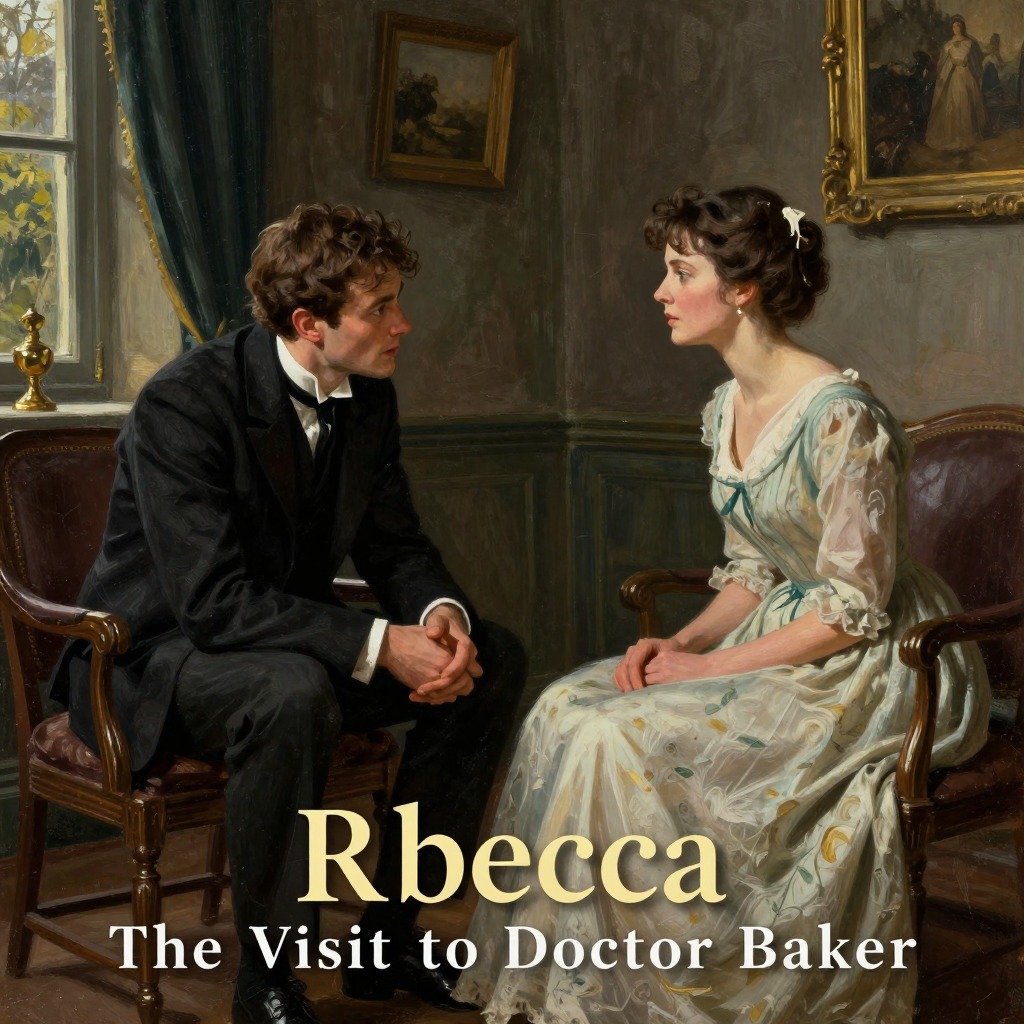
Roselands
Roselands is the suburban Barnet residence of Doctor Baker, the London specialist whom Rebecca de Winter consulted under the false name Mrs Danvers on the day of her death. It is the site where the novel’s central mystery—the motive for Rebecca’s apparent suicide—is definitively resolved, transforming the legal and emotional landscape for Maxim and the second Mrs de Winter.
Location and Setting
Roselands is a square, ivy-covered house with no name on the gate, located on a main road near Barnet, north of London. It is overlooked by other houses and has a tennis court, a deck-chair under a tree, and a very old Scotch terrier that scratches itself in the middle of the path. The interior includes a drawing-room with a portrait of a plain dark woman, new and shiny chintz covers, photographs of two schoolboys, and a large wireless with trailing cords. The house is not on the telephone; the party from Manderley must arrive unannounced. Doctor Baker has retired from practice and lives here with his wife and sons, who are home for the summer holidays. The atmosphere is one of ordinary domesticity: a boy’s voice shouts tennis scores, a woman calls to the dog, and a bath runs upstairs. The house’s unremarkable suburban character contrasts sharply with the Gothic intensity of Manderley, making the revelation that occurs within its walls all the more jarring.
The Visit and Revelation
The party—Maxim de Winter, the second Mrs de Winter, Colonel Julyan, and Jack Favell—arrives after a long drive from Manderley, having followed the address obtained from the night porter at Baker’s former consulting rooms in Bloomsbury. They are shown into the drawing-room and wait for about five minutes. When Doctor Baker enters, he is in flannels and a dark blue blazer, having been playing tennis. He does not initially recall the name de Winter. Colonel Julyan produces the page torn from Rebecca’s engagement diary, which shows the entry “Baker, two o’clock” with a large cross beside it, and the telephone number Museum 0488. Baker confirms the number is correct but says he has never attended a Mrs de Winter. It is suggested that she may have given a false name. Baker leaves to consult his files and returns with a large book and a file-case. He finds the record: a Mrs Danvers had an appointment on the twelfth at two o’clock. He remembers her now: tall, slim, dark, very handsome. The file contains the details of her visit. She had come to him a week earlier complaining of symptoms, and he had taken X-rays. On the second visit, she demanded the truth. Baker told her she had a deep-rooted growth; in three or four months she would have been under morphia, and an operation would be useless. She stood it very well, paid her fee, and left. He adds that the X-rays also showed a malformation of the uterus that meant she could never have had a child, though that was unrelated to the disease. The revelation is immediate and devastating: Rebecca knew she was dying of cancer and had only months to live.
Consequences and Significance
The discovery at Roselands provides the motive that the inquest had lacked, transforming the legal case from one of possible murder to one of suicide. Colonel Julyan immediately recognizes that Baker’s evidence will squash any case Favell might try to bring. Favell, who had been pursuing a blackmail accusation against Maxim, is visibly shaken, his face grey and his hands trembling; he asks whether cancer is contagious. The visit also explains Rebecca’s final note to Favell—“I’ve got something to tell you, and I want to see you as soon as possible”—and her decision to go sailing alone that night. She had chosen to die on her own terms rather than face a slow, painful decline. The truth about her illness also recontextualizes her final confrontation with Maxim in the cottage: her laughter and her taunt about bearing a child were the last supreme bluff, a deliberate provocation meant to force him to kill her. For Maxim and the second Mrs de Winter, the visit to Roselands ends the immediate threat of exposure and prosecution, but it also leaves them with the knowledge that Rebecca’s final act was a calculated victory. The house itself, with its ordinary tennis games and family life, becomes the place where the past is finally laid to rest, even as the future remains uncertain.