the morning-room
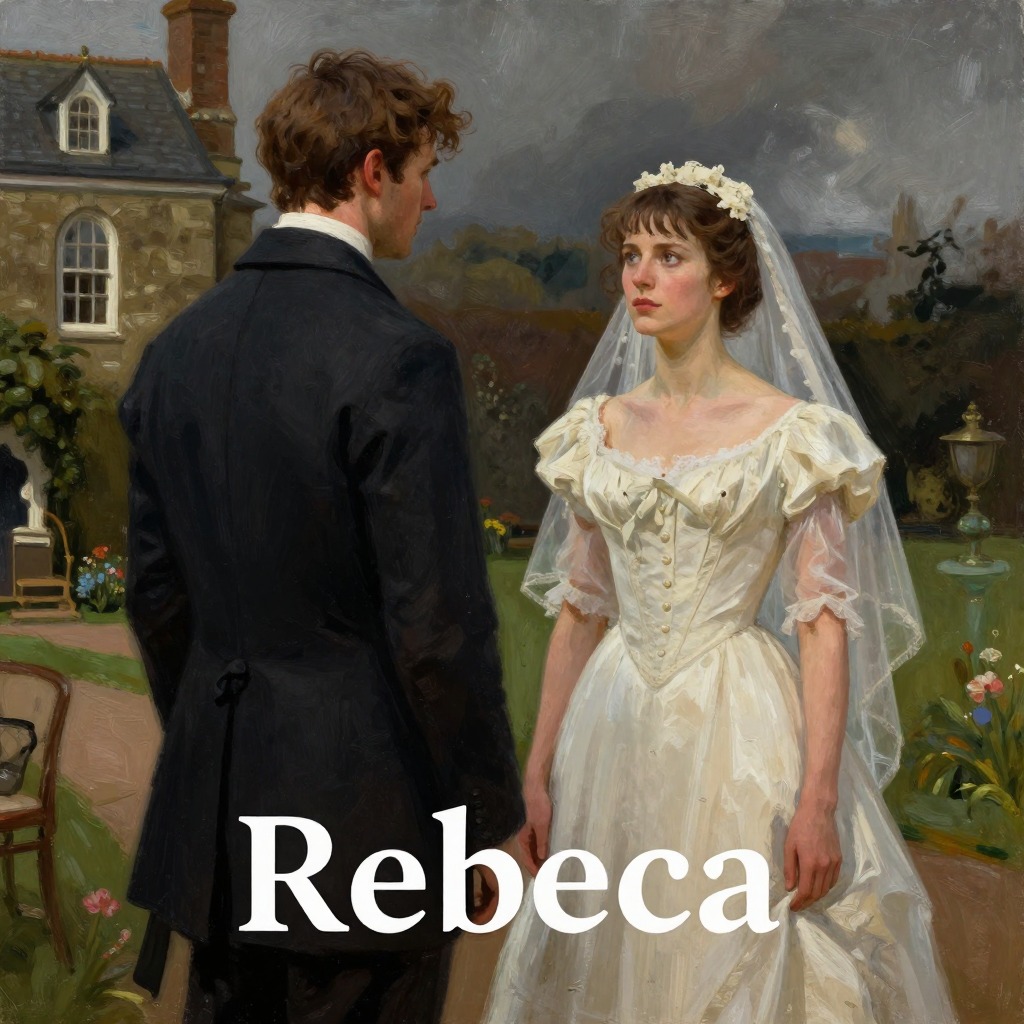
The morning-room at Manderley is a small, graceful room that opens off the long drawing-room, looking out onto a clearing in the rhododendron bushes where a tiny statue of a naked faun stands playing his pipes. It was Rebecca de Winter's private working space, and it remains, after her death, a meticulously preserved monument to her personality and her methods. For the second Mrs de Winter, who arrives at Manderley as Maxim's bride, the morning-room is the site of her most acute daily humiliations, a place where she feels not like the mistress of the house but like an intruder caught trespassing in a dead woman's study.
Rebecca's Domain
The morning-room was furnished and arranged entirely by Rebecca. Every piece of furniture, every vase, every small object was chosen with "sure certain instinct" to create a room that was "vividly alive," possessing "the same glow and brilliance that the rhododendrons had, massed there, beneath the window." Unlike the formal drawing-room shown to the public, this room was intensely personal, a woman's room that was at once beautiful and businesslike. The writing-desk is the room's centerpiece, and it is not a decorative toy. Its pigeon-holes are docketed in Rebecca's own hand—"letters unanswered," "letters-to-keep," "household," "estate," "menus," "miscellaneous," "addresses"—each ticket written in that same scrawling, pointed hand that the narrator first saw on the fly-leaf of a book of poems: "Max from Rebecca." The desk also contains a leather-bound book, "Guests at Manderley," a complete record of a year's visitors, the rooms they used, the food they ate. The room is filled with rhododendrons, their "great warm faces" on the mantelpiece, floating in a bowl on the table by the sofa, standing on the writing-desk beside golden candlesticks. They are the only flowers in the room, and the narrator wonders if there was some purpose in this, whether the room was arranged originally with this one end in view.
The Narrator's Daily Ordeal
From her first morning at Manderley, the narrator is directed to the morning-room by Frith, who informs her that "Mrs de Winter always used the morning-room" and that she will find writing-paper, pens, and ink there, as "Mrs de Winter always did all her correspondence and telephoning in the morning-room, after breakfast." The narrator, who has never seen the room before, must pretend to know her way, and Frith watches her as she blunders into the wrong room before he corrects her. Once installed, she is confronted by the desk's docketed pigeon-holes, which "were like a reproach to me for my idleness." She opens a drawer and finds notepaper with the house crest and visiting cards reading "Mrs M. de Winter" and "Manderley." She puts them back, feeling "guilty suddenly, and deceitful, as though I were staying in somebody else's house and my hostess had said to me, 'Yes, of course, write letters at my desk,' and I had unforgivably, in a stealthy manner, peeped at her correspondence." The house telephone rings, and when she answers, she blunders by saying, "Mrs de Winter has been dead for over a year," not realizing it is Mrs Danvers on the house line. The menu for the day lies on the blotter, and when Mrs Danvers asks if she wishes to change the sauce for the roast veal, the narrator can only say, "I think we had better have what you usually have, whatever you think Mrs de Winter would have ordered." She sits at the desk, drumming her fingers, and realizes she can think of no one to write to except Mrs Van Hopper. When she does write, she notices for the first time how cramped and unformed her own handwriting is, "without individuality, without style, uneducated even, the writing of an indifferent pupil taught in a second-rate school."
The Room as a Site of Conflict
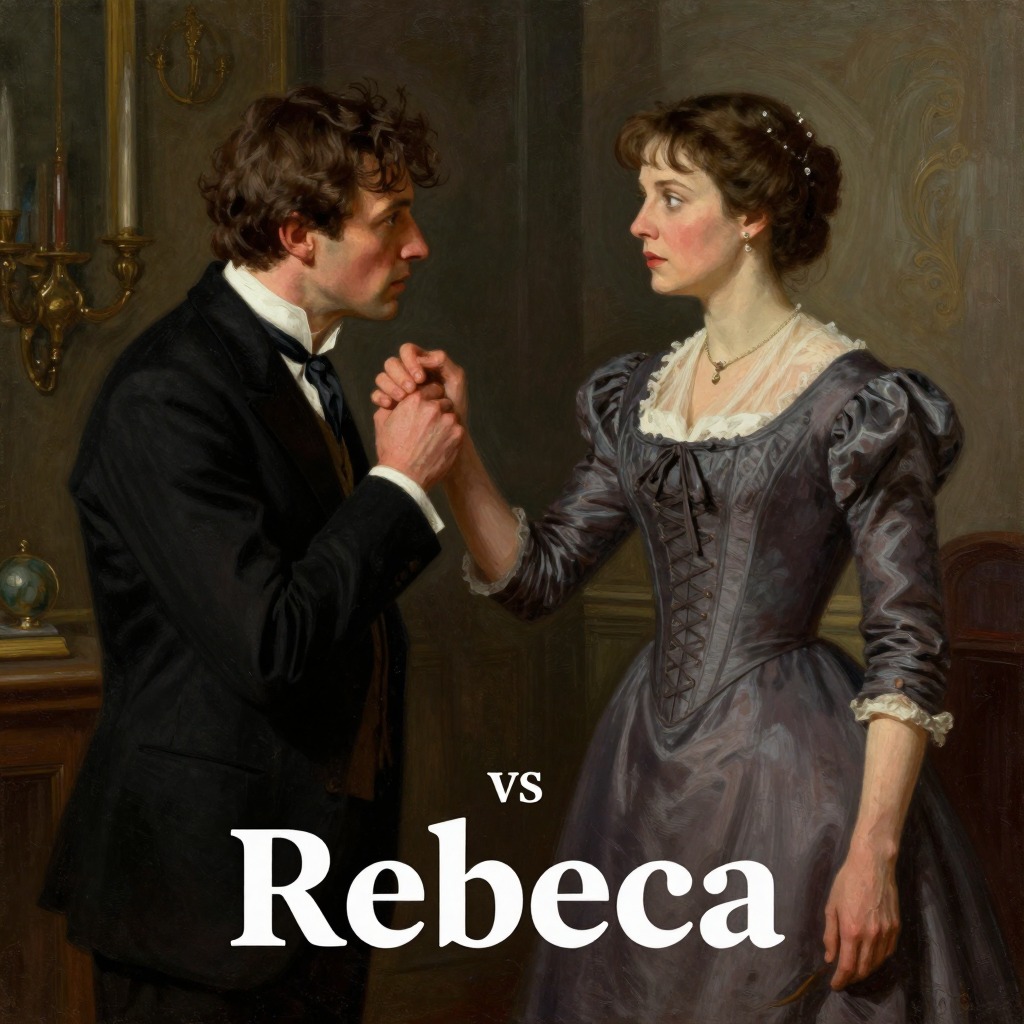
The morning-room is also where the narrator's most painful encounters with Mrs Danvers occur. It is here that Mrs Danvers, having accused Robert of stealing a valuable china cupid, forces the narrator to confess that she herself broke it and hid the pieces in an envelope at the back of a drawer. The scene reduces the narrator to a child, and Mrs Danvers's comment that "when Mrs de Winter was alive we used to do the valuables together" is a deliberate, wounding comparison. Later, the narrator discovers that Mrs Danvers has been using the morning-room to entertain Jack Favell in Maxim's absence; the imprint of a person is on the divan where her knitting had been, and the chair by the desk has been moved. The narrator hides behind the door to avoid being seen, and when Favell discovers her, the encounter is awkward and furtive, a violation of the room's intended order. The morning-room, which should be the mistress's command center, becomes instead a space where the narrator is perpetually outmaneuvered, where her authority is undermined, and where Rebecca's ghostly presence is most keenly felt.