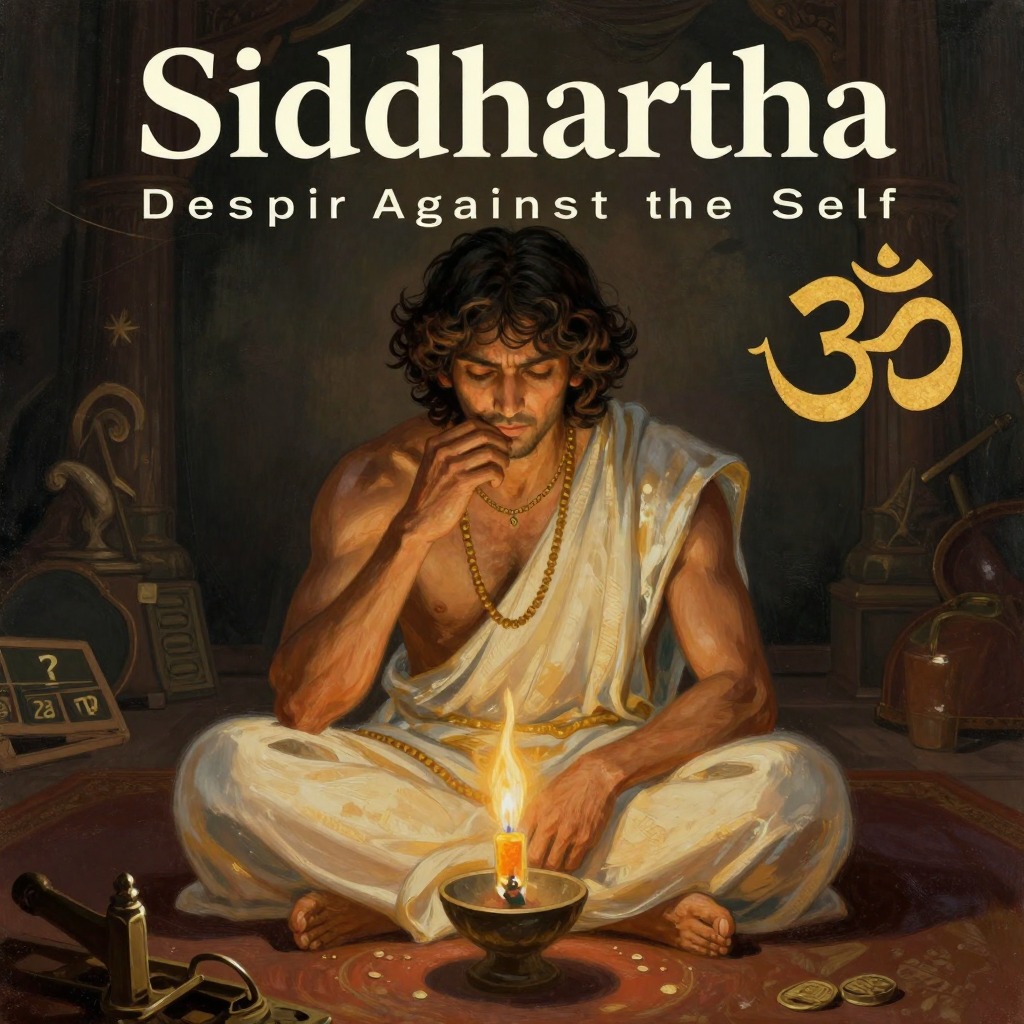
Attempted suicide by the river
Siddhartha's attempted suicide by the river is the darkest hour of his long journey and the turning point that makes his final enlightenment possible. After years of accumulating wealth, indulging in sensual pleasures, and sinking into the despair of a meaningless existence, he reaches the river where he had once been ferried as a young Samana. Standing at its bank, he is consumed by a profound disgust for his life and a yearning for annihilation. Yet, in the very moment he prepares to let himself fall into the water, the sacred syllable Om rises unbidden from the depths of his soul, awakening him to the folly of his despair and setting him on the path toward rebirth and wisdom.
The Descent into Despair
Siddhartha's suicidal state is the culmination of a long spiritual decline. Having left the Samanas and the Buddha's teachings, he entered the worldly life of the city, becoming a merchant under Kamaswami and a lover of the courtesan Kamala. He learned to trade, to wear fine clothes, to gamble, and to drink wine, but these pleasures only masked a growing emptiness. The bright voice within him, which had once guided him, fell silent. He became envious of the childlike people who could love and attach importance to their lives, yet he could not share their passion. Slowly, the disease of the rich—discontent, sickliness, ill-humour, and sloth—gripped him. His life became a pointless cycle of gambling, sex, and the pursuit of wealth, each activity a flight from the disgust that gnawed at his heart.
The Dream of the Dead Bird
The immediate catalyst for his despair is a dream he has after a night of revelry. In the dream, Kamala's rare singing bird, kept in a golden cage, has died. Siddhartha takes the dead bird out, weighs it in his hand, and throws it away into the street. In that instant, he feels a terrible shock, as if he had thrown away all value and goodness from his life. Waking from this dream, he is enveloped by a deep sadness, realizing that his life has been worthless and pointless. He feels alone and empty, like a castaway on the shore. This dream crystallizes his sense of spiritual death and propels him toward the river.
The Encounter with the River
Siddhartha leaves the city and walks through the forest until he reaches the large river—the same river over which a ferryman had once conducted him in his youth. He stops at the bank, weakened by hunger and tiredness, and feels that there are no more goals left for him. He leans against a coconut-tree and looks down into the green water, which reflects back a frightening emptiness that answers the terrible emptiness in his soul. He is filled with the wish to let go and drown, to annihilate himself, to smash the failure of his life. He spits at his own reflection, and in deep tiredness, he turns to let himself fall straight down, closing his eyes as he slips toward death.
The Sound of Om
At the very moment of surrender, a sound stirs from the remote areas of his soul—the sacred syllable Om, the word that is the beginning and end of all Brahman prayers, meaning "that which is perfect" or "the completion." As the sound touches his ear, his dormant spirit suddenly wakes and realizes the foolishness of his actions. He is deeply shocked to see how far he has fallen, that he could seek death and rest by annihilating his body. The Om brings him back to awareness of Brahman and the indestructibility of life. He collapses at the foot of the coconut-tree, mumbling Om, and falls into a deep, dreamless sleep.
The Aftermath: Rebirth and New Purpose
When Siddhartha wakes after many hours, he feels as if ten years have passed. He is refreshed, renewed, and strangely joyful. He realizes that his old self—the tired, desperate Siddhartha—has drowned in the river, and a new Siddhartha has awakened. He feels a deep love for the river and decides to stay near it, to learn from it. He seeks out the ferryman Vasudeva, who recognizes him and welcomes him as his assistant. Siddhartha learns to operate the boat, to work in the rice-field, and to listen to the river. The river teaches him that there is no time, that everything is present, and that all voices of creation are one in the sound of Om. This event marks the beginning of his final transformation, leading to his eventual enlightenment and his reunion with Govinda, where he imparts his wisdom that love is the most important thing of all.