Jetavana
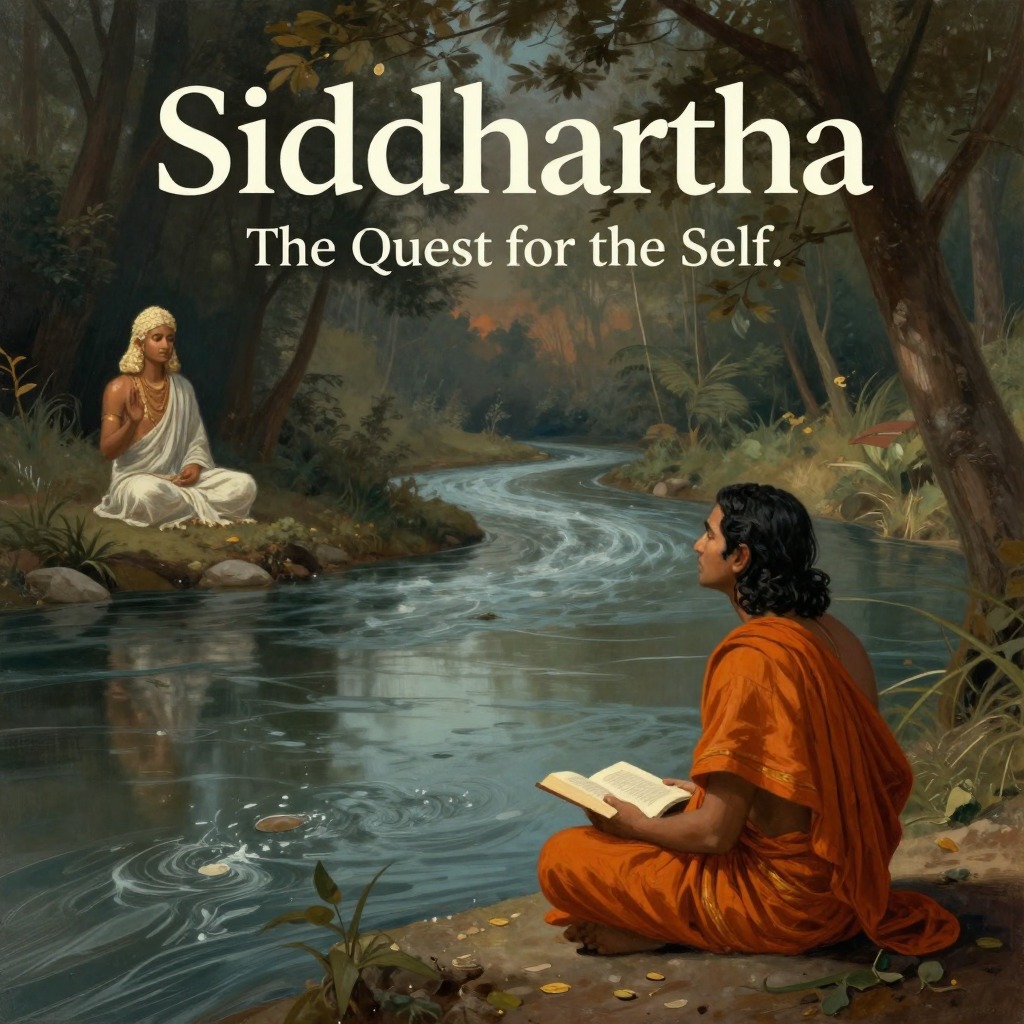
Jetavana, the grove gifted by the rich merchant Anathapindika to the Buddha Gotama and his community, is the location where Siddhartha and Govinda first encounter the exalted one and hear his teachings. It is a place of profound spiritual significance, where the decisive turning point in Siddhartha's journey occurs: his decision to reject the path of discipleship and instead follow his own inner voice. The grove is described as a marvellous, shady garden near the town of Savathi, where monks in yellow robes walk, sit in deep contemplation, and engage in spiritual conversation, bustling like bees. It is here that Siddhartha sees Gotama for the first time and instantly recognizes him by the perfection of his calm, his quietness, and his untouchable peace, a recognition that fills him with a veneration he has never felt for any person before.
The Setting and Its Significance
Jetavana is introduced as Gotama's favourite place to stay, a gift from the rich merchant Anathapindika, an obedient worshipper of the exalted one. The grove is located near the town of Savathi, where every child knows the Buddha's name and every house is prepared to fill the alms-dish of his silently begging disciples. When Siddhartha and Govinda arrive, they find a large crowd of believers and curious people who have spent the night there, and the grove itself looks like a city full of people. The monks, dressed in yellow robes, are seen everywhere—under the trees, in deep contemplation or in conversation about spiritual matters. The Buddha himself, the enlightened one, is in the habit of walking through the grove to beg in the morning, a simple man in a yellow robe, bearing his alms-dish, walking silently. It is in this setting that Siddhartha first sees Gotama and is struck by the perfection of his calm, the quietness of his appearance, which reveals no searching, no desire, no imitation, only light and peace.
The Encounter with Gotama and the Teachings
In the evening, when the heat cools down, everyone in the camp gathers to hear the Buddha teach. Gotama teaches the teachings of suffering, of the origin of suffering, and of the way to relieve suffering, his quiet speech flowing calmly and clearly. He teaches the four main doctrines and the eightfold path, patiently going through the usual path of teachings, examples, and repetitions. After the speech, many pilgrims step forward to ask to be accepted into the community, seeking refuge in the teachings. Govinda, the shy one, also steps forward and takes his refuge, asking to be accepted into the community of disciples. Siddhartha, however, does not join. He feels little curiosity for the teachings, believing they will not teach him anything new, but he is deeply moved by Gotama himself. He observes Gotama's head, shoulders, feet, and quietly dangling hand, and it seems to him that every joint of every finger of this hand speaks of, breathes of, and glistens of truth. He realizes that this man, this Buddha, is truthful down to the gesture of his last finger, and that he is holy.
Siddhartha's Conversation with Gotama
After Govinda leaves with the novices, Siddhartha walks through the grove lost in thought and happens to meet Gotama. He asks for permission to talk to the exalted one, and Gotama silently nods his approval. Siddhartha admires the clarity and irrefutability of Gotama's teachings, which present the world as a perfect, unbroken chain of causes and effects. However, he points out a small gap in this unity: the teachings of overcoming the world and of salvation, which seem to break the eternal and uniform law of the world. Gotama listens quietly and unmoved, then responds that the teachings are not an opinion but have a different goal: salvation from suffering. Siddhartha then confesses that he has not doubted for a single moment that Gotama is the Buddha, that he has reached the highest goal, but that this salvation came through his own search, thoughts, meditation, and enlightenment, not through teachings. He declares that nobody will obtain salvation by means of teachings, and that he must depart from all teachings and teachers to reach his goal by himself or die. Gotama, with a half-smile and unwavering kindness, bids him to leave, and his glance and half-smile remain forever etched in Siddhartha's memory.
Aftermath and Thematic Significance
After leaving the grove, Siddhartha feels that his past life has also stayed behind and parted from him. He realizes that he is no longer a youth but a man, and that the wish to have teachers and to listen to teachings has left him like a snake sheds its old skin. He has left the last teacher, the highest and wisest, the most holy one, Buddha, and was not able to accept his teachings. The grove Jetavana thus becomes the site of a profound awakening: Siddhartha's decision to abandon the search for external teachings and to embark on his own path of self-discovery. Later in the novel, the grove is remembered as the place where he heard the divine Buddha, where he said farewell to Govinda, and where he had the conversation with the exalted one. It is also the place where Kamala, after retiring from her previous life, gives her pleasure-garden to the monks of Gotama as a gift, and where Govinda, in his old age, spends the time of rest between pilgrimages. The grove remains a symbol of the Buddha's teachings and the community of monks, a place that Siddhartha must leave behind in order to find his own truth.