Siddhartha and his son's relationship
The relationship between Siddhartha and his son is a central, painful, and transformative bond in the second half of Hermann Hesse's novel. It represents Siddhartha's final and most profound attachment to the world of human emotion, forcing him to experience the blind, suffering love of a parent, which ultimately becomes the crucible for his final enlightenment and his understanding of the oneness of all life.
The Son's Arrival and Siddhartha's Recognition
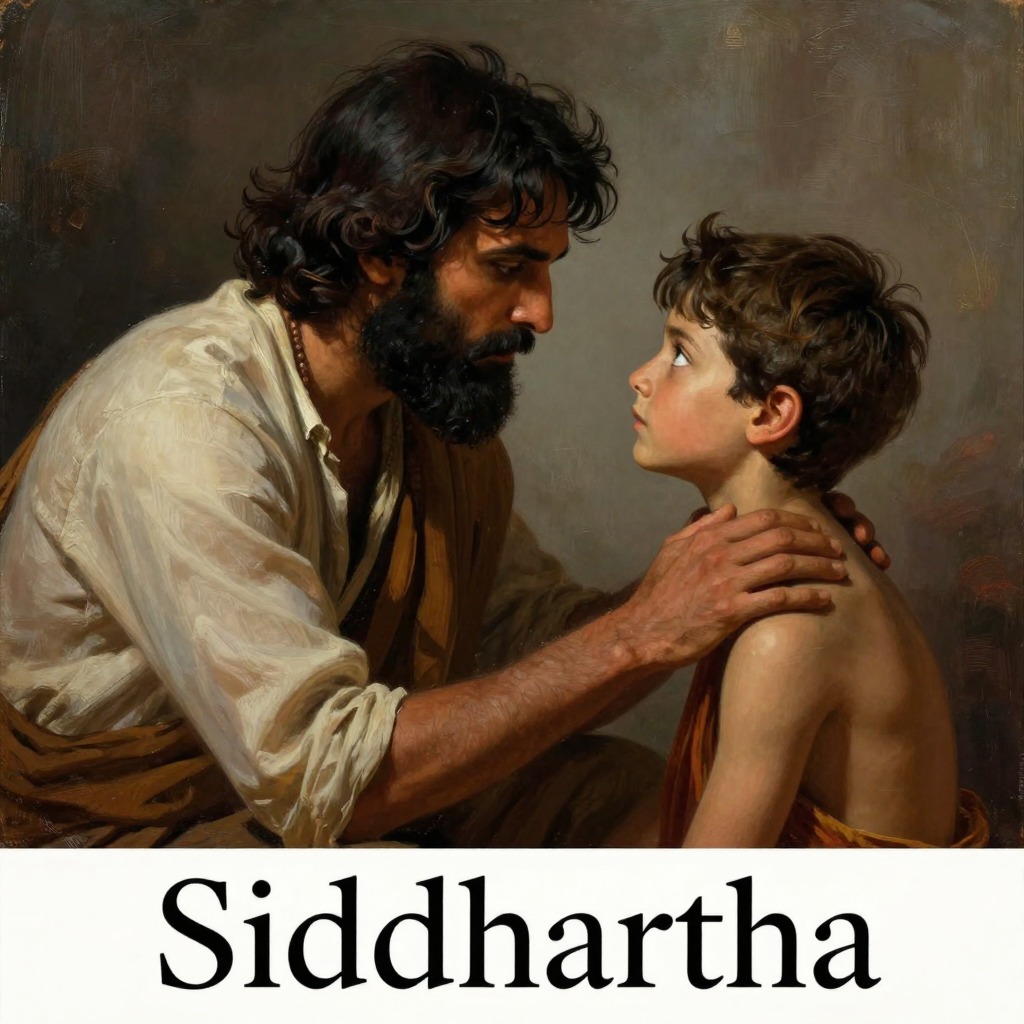
The boy enters Siddhartha's life under tragic circumstances. Kamala, the courtesan who had been Siddhartha's teacher of love, is bitten by a snake while on a pilgrimage to see the dying Buddha Gotama. She collapses near Vasudeva's ferry, and Siddhartha, now a ferryman himself, instantly recognizes her. He also recognizes the boy's face, which strikes him as a "warning reminder" of something forgotten, and Kamala confirms: "He is your son" . The boy, named Siddhartha, is about eleven years old and has been raised in luxury, accustomed to fine food, a soft bed, and servants. Kamala dies from the snakebite, and Siddhartha is left with a son he has never known, a child who is a stranger to the simple life of the ferry hut. Siddhartha's initial reaction is one of profound, almost naive joy, declaring to Vasudeva, "My son has been given to me" . He immediately begins to care for the boy, taking him on his knees, letting him weep, and soothing him with a Brahman prayer from his own childhood .
The Conflict of Worlds: Love, Patience, and Rebellion
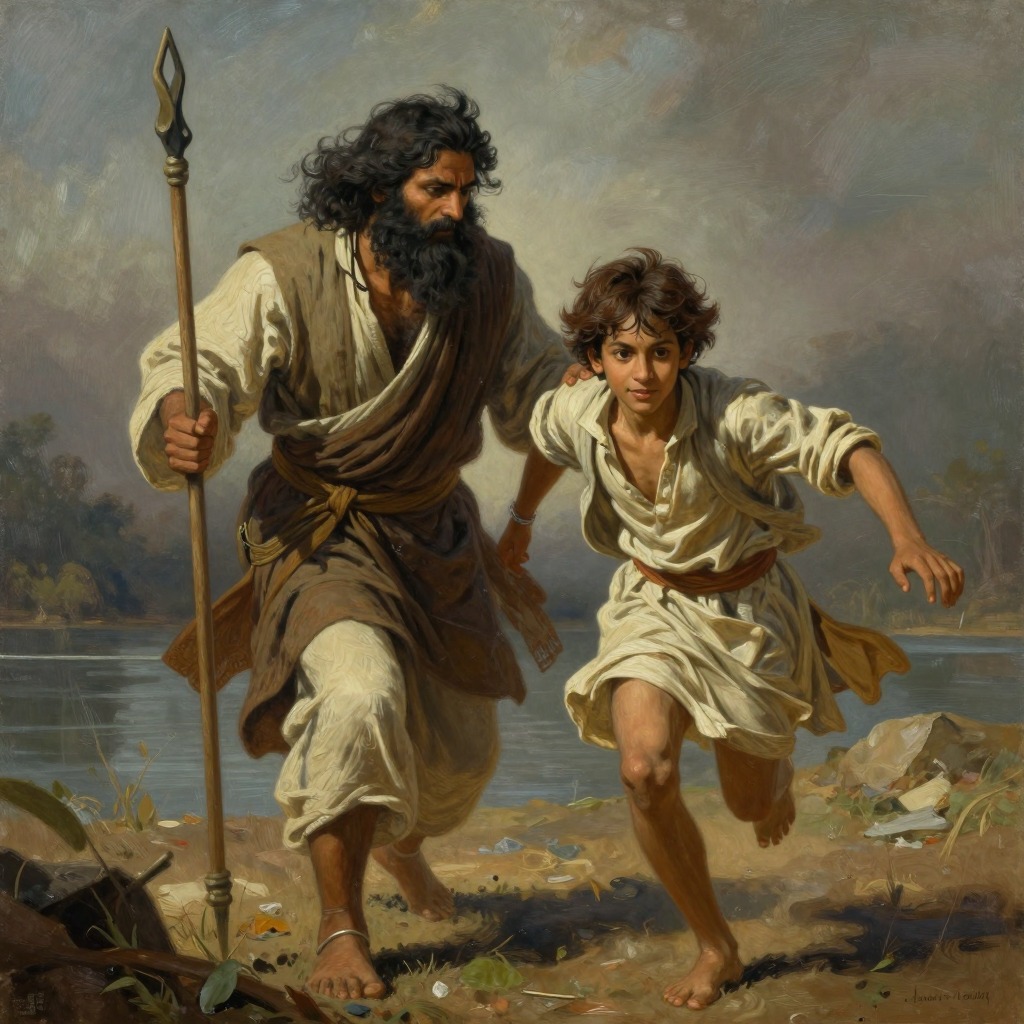
A deep and painful conflict soon arises. The pampered boy, grieving for his mother and resentful of his new life, meets Siddhartha's love with resistance and denial. He sits for days by the hill of the dead, refuses to eat, and gives no open look . Siddhartha, understanding that the boy cannot suddenly be content with poverty, does not force him. He spares him, honors his mourning, and always picks the best piece of the meal for him, hoping to win him over with friendly patience . But the boy remains a stranger, displaying a proud and stubbornly disobedient heart. He steals fruit from Vasudeva's trees and refuses to do any work . Siddhartha, who had once boasted to Kamala of his ability to think, wait, and fast, now finds himself helpless. He realizes that his son has not brought him happiness and peace, but suffering and worry, yet he prefers this suffering to a life without the boy . The conflict escalates when the boy, in a powerful outburst, screams his hatred and contempt, shouting, "I rather want to become a highway-robber and murderer, and go to hell, than to become like you!" . The next morning, the boy has disappeared, taking a small basket of coins and the ferry boat .
The Wound of Love and the Lesson of the River
The son's departure leaves Siddhartha with a deep, burning wound. He chases after the boy, driven by a desire to see him one more time, but stops at the entrance of Kamala's old pleasure-garden, realizing his search is useless and that he cannot help his son . He feels emptiness and a profound sadness, but he also begins to understand a deeper truth. Vasudeva, the wise ferryman, had already warned him: "Water wants to join water, youth wants to join youth, your son is not in the place where he can prosper" . He had also told Siddhartha that he could not protect his son from Sansara, from sin and suffering, any more than his own father had protected him . The wound of love, however, does not heal easily. Siddhartha envies every traveller who has a child, and he nurtures his love and tenderness in his heart, allowing the pain to gnaw at him . One day, driven by yearning, he prepares to go to the city to find his son, but the river laughs at him. Looking into the water, he sees his own face and recognizes in it the face of his own father, the Brahman, who had suffered the same pain of separation when Siddhartha himself had left home to become a Samana . He realizes the cycle of suffering is repeating itself, and the river's laughter teaches him that everything comes back, that the same pain is suffered over and over again until it is fully understood and accepted .
Transformation and the Final Teaching
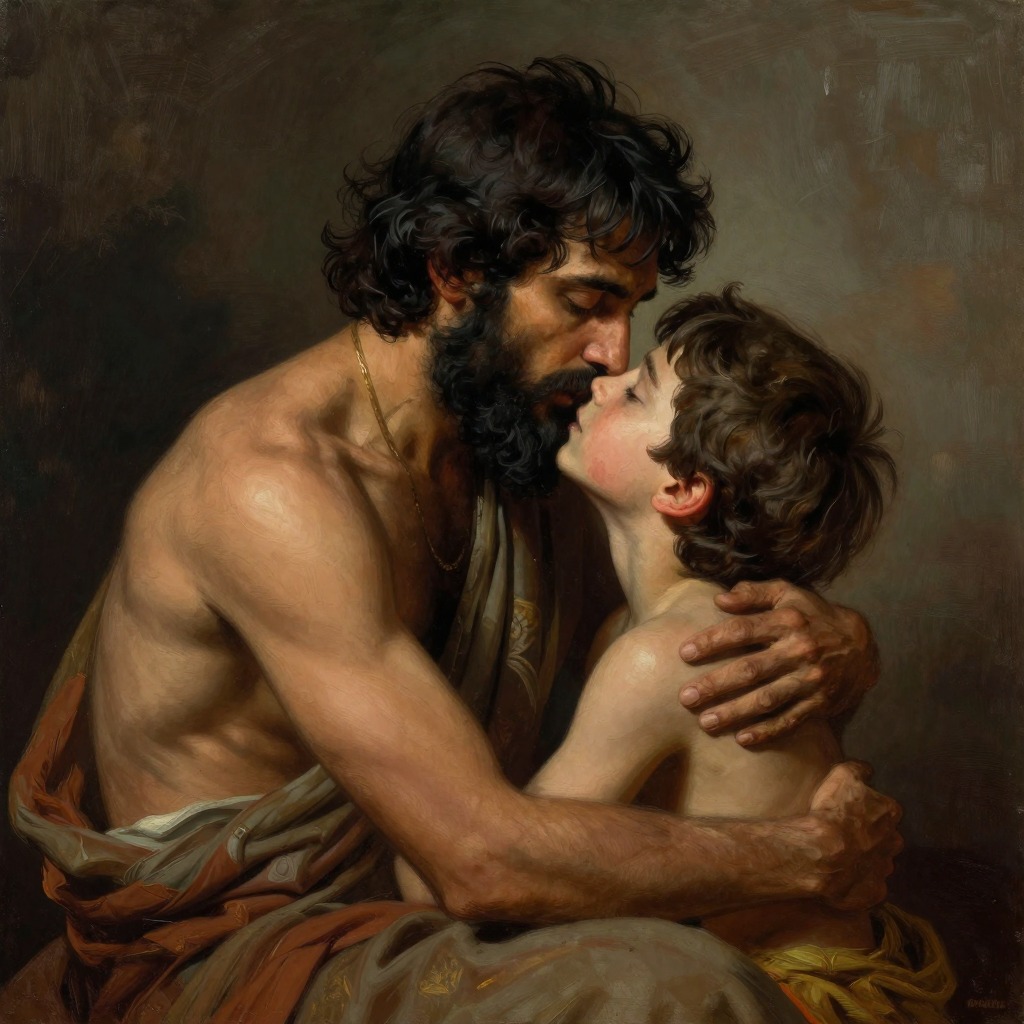
This wound, this blind love for his son, becomes the final catalyst for Siddhartha's transformation. He had once told Kamala that he was like a star, while childlike people were like falling leaves, incapable of true love . But now, with his son, he has become completely a childlike person, suffering for another, lost to a love, having become a fool on account of love . He feels this passion is Sansara, a murky source, yet also necessary, coming from the essence of his own being . Through this suffering, he learns to love the world not as an idea, but as a living reality. He comes to see that the blind love of a mother for her child, the stupid pride of a father, are not childish notions but expressions of the indestructible Brahman . The wound finally blossoms when he confesses everything to Vasudeva, who listens with the silent, absorbing attention of the river itself . In that moment, Siddhartha stops fighting his fate. He realizes that his son, like all beings, is on his own path, and that his love for him, however painful, is part of the oneness of all life. The wound ceases to be a source of suffering and becomes a source of understanding, allowing him to finally achieve the cheerfulness of a knowledge that is in agreement with the flow of events . In his final teaching to Govinda, Siddhartha articulates the lesson his son taught him: that love, not words or doctrines, is the most important thing, and that the world must be loved as it is, not compared to some imagined perfection .