
The Burden of Future Knowledge
REThis flow follows Tabitha Moore’s changing relationship with memory, certainty, and the ethics of intervention.
increasing Bearing strength in each event
 decreasing
Bearing strength in each eventdecreasingUseful Memories

Useful Memories
Tabitha Moore initially treats future knowledge as a toolkit for money, writing, health, and prevention.
Practical Advantage
She recalls technologies, careers, cultural events, and personal tragedies.
Confidence
The knowledge gives her a sense that life can finally be planned correctly.
Memory Gaps

Memory Gaps
Tabitha Moore discovers that her memories are selective, emotionally distorted, and often missing the details needed for intervention.
Human Limits
She forgets names, dates, faces, and the reality of Ashlee Taylor’s abuse.
Ethical Anxiety
The gaps expose the danger of treating memory as omniscience.
Intervention and Death
Intervention and Death
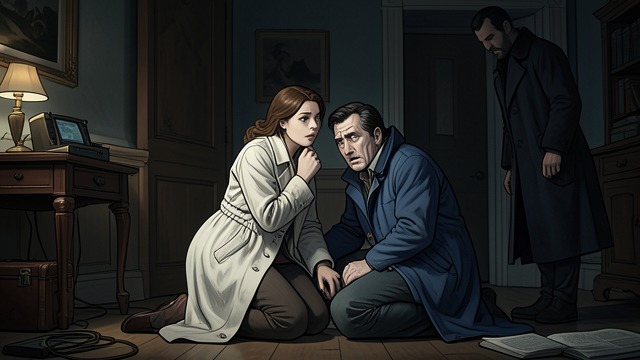
Tabitha Moore saves Darren MacIntire but indirectly contributes to Jeremy Redford’s fatal pursuit.
Moral Exchange
History does not simply improve; one altered outcome creates another.
Responsibility
Tabitha begins to question whether causing change is different from causing harm.
Butterfly Consequences

Butterfly Consequences
The timeline develops consequences Tabitha Moore never remembers: Shannon’s pregnancy, new friendships, Ashlee’s removal, and family conflict.
Loss of Control
Every correction changes the conditions around the next decision.
New Reality
The future becomes less a destination than a field of unpredictable branching.
Knowledge Without Escape
Knowledge Without Escape
Tabitha Moore realizes that remembering a disaster does not guarantee she can avoid it.
Repeated Trauma
The second timeline restart proves that foresight can coexist with helplessness.
Humility
She begins valuing immediate relationships over the fantasy of mastering history.
Summer 1998
September 1998
October 1998
October to November 1998
After the Halloween attack
