
The Limits of Police Justice
1Q84This flow traces how institutional caution repeatedly leaves vulnerable people unprotected and pushes the protagonists toward private action.
increasing Bearing strength in each event
 decreasing
Bearing strength in each eventdecreasingA Victim Silenced

A Victim Silenced
Evidence without prosecution
Police see signs of abuse on Tamaki’s body, but the case is treated as suicide and her husband faces no criminal charge. Her family’s silence reinforces the official conclusion.
A failure that shapes Aomamé
Aomamé interprets the outcome as proof that formal systems may not protect victims. Her later killing of an abuser develops from this failure, not from confidence in the law.
Madame’s Private Network
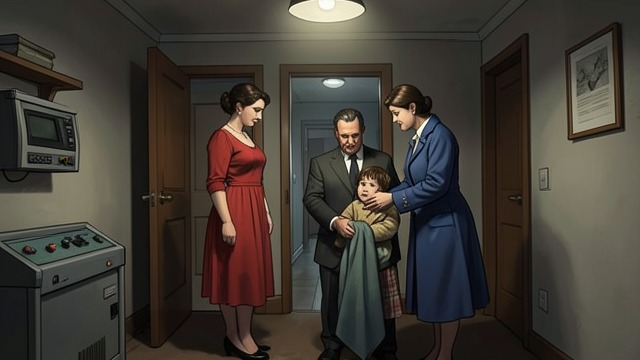
Madame’s Private Network
Help outside the courtroom
Madame creates a safe house and coordinates lawyers, volunteers, and Tamaru to protect abused women and children. The network offers immediate care that official procedures often cannot supply quickly.
A parallel form of justice
The system can shelter and support survivors, but it also operates beyond ordinary public oversight. Its methods grow from a real institutional gap while creating new ethical risks.
Tsubasa’s Case
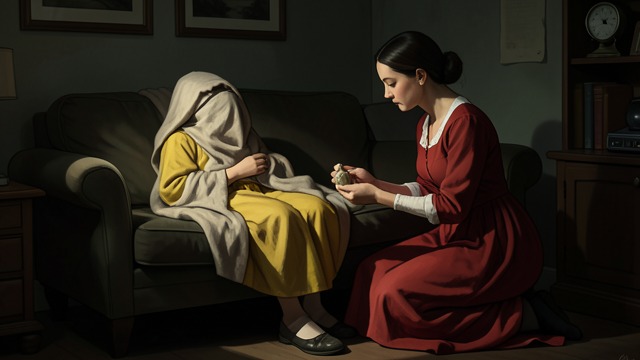
Tsubasa’s Case
A crime with no easy report
Tsubasa’s injuries point to repeated rape, but she can scarcely speak and her parents remain aligned with the abuser. Madame fears that reporting the case may return the child to the people who endangered her.
Protection versus procedure
The decision to shelter Tsubasa protects her immediately but avoids the formal process that might establish accountability. Her safety and the search for justice become competing needs.
Ayumi’s Official Limits
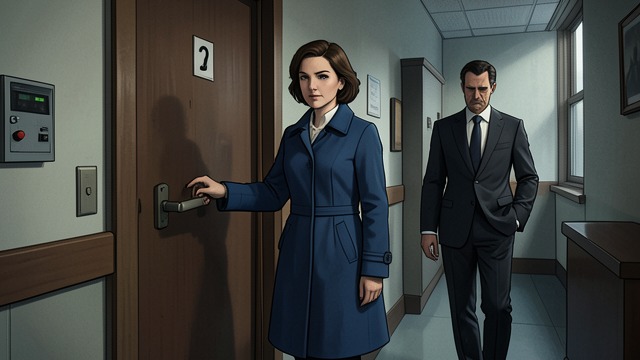
Ayumi’s Official Limits
Information is difficult to access
Ayumi explains that even a police officer cannot casually obtain old files without written requests and supervisory approval. The organization is slow and resistant to work outside routine channels.
Suspicion without a case
Reports about withdrawn children and hidden finances do not meet the standard of concrete evidence. The Pioneers’ closed grounds remain beyond ordinary investigation.
Aomamé’s Choice Outside the Law

Aomamé’s Choice Outside the Law
A target beyond reach
Madame believes the hidden leader will continue abusing girls unless someone intervenes. Legal action appears remote, and the leader remains protected by the organization.
A dangerous alternative
Aomamé is asked to consider assassination, a response that repeats the private justice she used against Miyama. The book leaves open whether this choice can prevent harm without creating another form of violence.
after Tamaki’s suicide
after her daughter’s death
late spring 1984
during her inquiry into the Pioneers
near the ending
