
The Sea, the Desert, and Disappearance
2666This thread traces how the novel’s landscapes become images of refuge, exposure, death, and the limits of human knowledge.
increasing Bearing strength in each event
 decreasing
Bearing strength in each eventdecreasingThe Seabed Child

A Different World Beneath the Surface
The Boy and the Bath
Hans Reiter sinks to the bottom of a washtub rather than behaving like an ordinary child. He imagines himself belonging to the sea’s lower world, not to forests or land.
A Lasting Image
Seaweed, darkness, and underwater silence recur throughout his life. The seabed offers an alternative to the exposed surface where history and violence unfold.
The Soldier’s Retreat
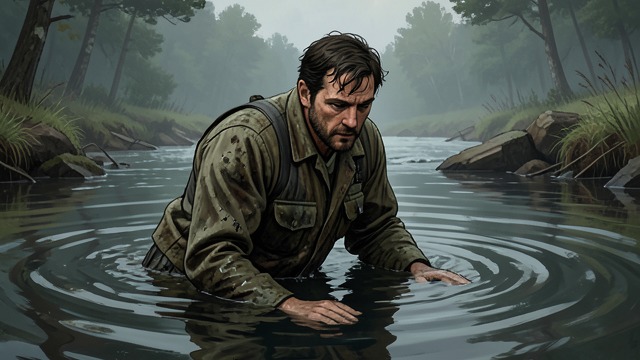
A Landscape Without Safety
March and Battle
Reiter crosses rivers, fields, forests, and ruined settlements during the war. His movements are often detached, as if he is a diver passing through a world he cannot fully inhabit.
Escape Through Water
He repeatedly imagines swimming or sinking below the surface. The sea becomes both refuge from the war and a possible route toward disappearance.
The Desert City
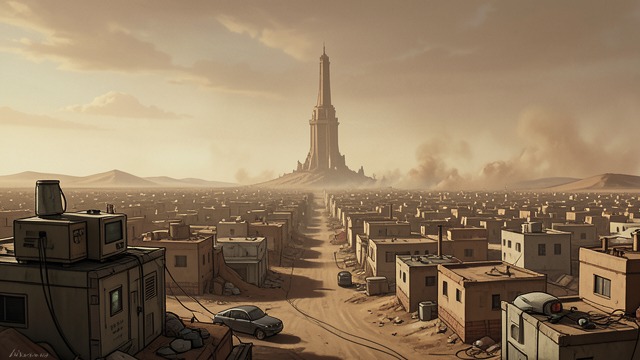
An Urban Sea of Dust
Expansion
Santa Teresa sprawls across the desert, its neighborhoods and industrial parks growing faster than its infrastructure. The city seems temporary, like a camp that could be moved at any moment.
Exposure
The open land offers little shelter from heat, violence, or disappearance. The desert’s scale turns individual bodies into small, easily lost traces.
Bodies in the Desert
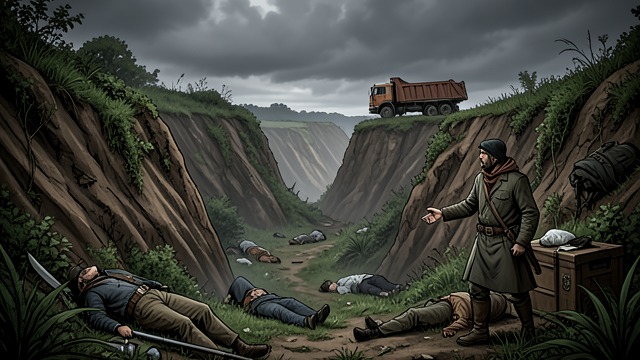
The Dump and the Ravine
Repeated Discoveries
Women’s bodies appear in ravines, vacant lots, roadside ditches, and dumps. The desert is not a single crime scene but a vast space where evidence can be scattered or erased.
Disappearance as Method
The landscape helps the killers and frustrates investigators. It also exposes how easily poor and migrant women can be rendered socially invisible before and after death.
The Horizon of the Unfinished
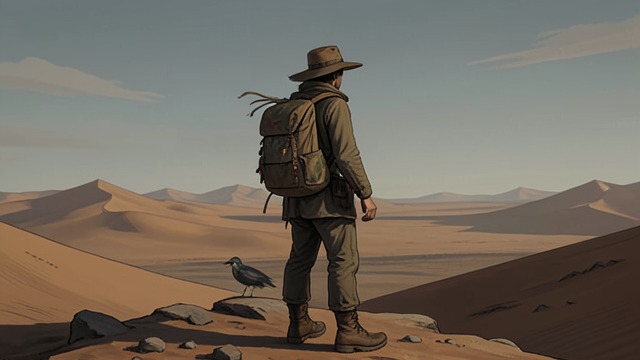
A Place Beyond Closure
Arrival Without Reunion
Archimboldi reaches Mexico, while the critics’ search approaches but never secures him. Santa Teresa remains a point of convergence without becoming a final answer.
The Vanishing Point
The number 2666 gestures toward a future beyond the novel’s present. The desert and the unseen horizon make closure feel impossible, while leaving the story’s violence insistently present.
Hans Reiter’s early childhood
1941–1945, during the eastern campaign and retreat
1997, during the critics’ stay in Santa Teresa
1993–1997, as the femicides accumulate
Near the novel’s ending
