
The Culture of Fear
A Clash of KingsThis thread examines how violence becomes a governing language across armies, castles, and households.
increasing Bearing strength in each event
 decreasing
Bearing strength in each eventdecreasingPunishment as Rule
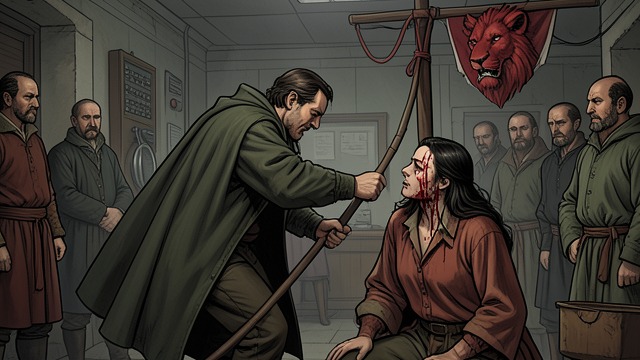
Public Violence
Royal example
Joffrey Baratheon uses beatings and threats against Sansa Stark to display his authority.
Institutional support
Members of the Kingsguard obey cruelty even when it violates the ideals of knighthood.
Result
Fear replaces legitimacy and teaches every subject to hide inner resistance.
The Captive March
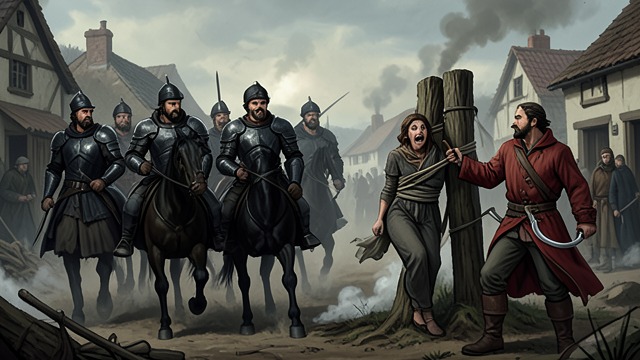
Violence Without Fronts
Collapse
Ser Gregor Clegane's force moves through the Riverlands, killing villagers and taking captives.
Interrogation
The Tickler turns information gathering into systematic torture.
Consequence
Civilian life disappears from the distinction between army, outlaw, and occupying force.
Harrenhal's Regime
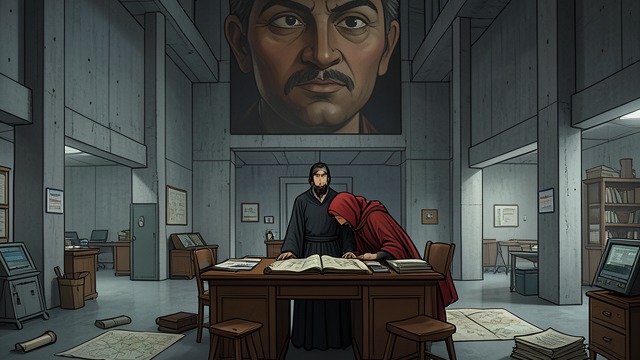
Monsters in Office
Administration
Harrenhal is ruled by Weese, Ser Amory Lorch, Vargo Hoat, and later Roose Bolton.
Continuity
Different banners change the castle's authority without changing the servants' vulnerability.
Theme
The castle reveals that tyranny is not a personal aberration but a repeatable system.
The Ironborn Occupation
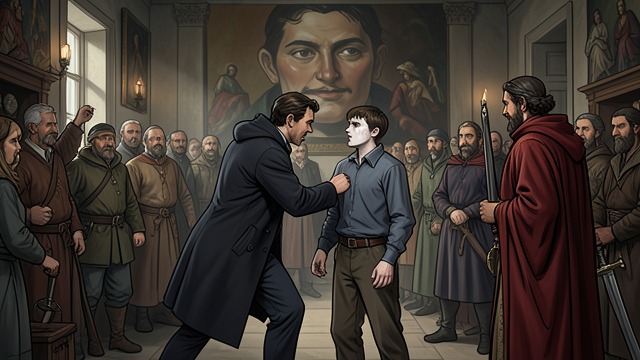
Terror in the Great Hall
Demonstration
Theon Greyjoy forces Bran Stark to announce submission before Winterfell's people.
Execution
Mikken is killed for resisting, and Hodor is beaten for speaking.
Result
The occupation turns familiar household spaces into instruments of public intimidation.
The Burning Aftermath
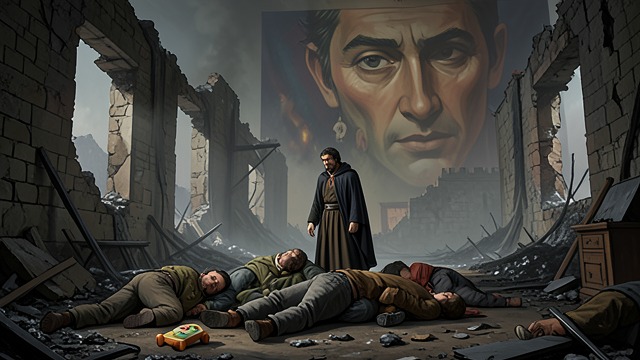
Ruin as Policy
Destruction
Ramsay Snow burns Winterfell and kills its remaining defenders.
Erasure
The castle's living community is replaced by corpses, ash, and broken structures.
Meaning
The destruction demonstrates how conquest seeks not only control but the removal of memory and belonging.
early story
middle journey
late middle war
after Winterfell's capture
near ending
