centuries before the main story
The Saint Theresa Prelude
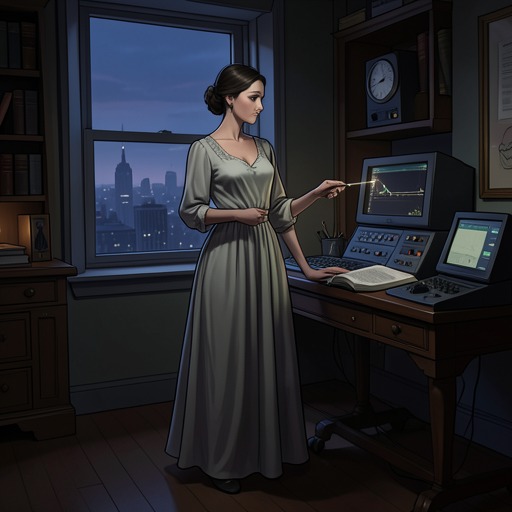
The narrator invokes Saint Theresa, who as a child set out with her little brother to seek martyrdom, only to be turned back by their uncles. Her spiritual ambition later found an epic outlet in reforming a religious order.
The prelude contrasts Theresa’s historic achievement with later women whose ardor has no fitting outlet. Their noble impulses are often dismissed as inconsistency because society offers them narrow opportunities and no coherent vocation.
early autumn 1829
The Brooke Sisters at Tipton
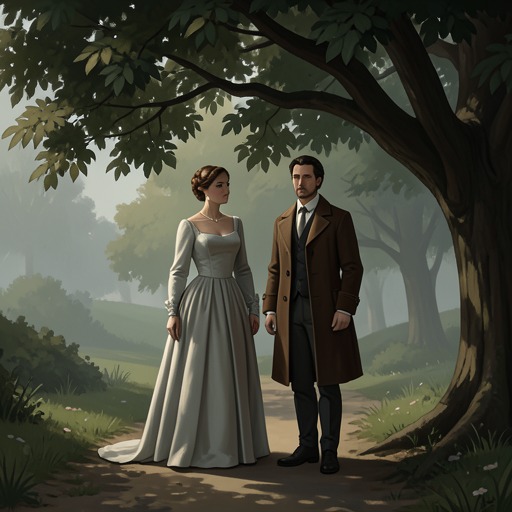
[Dorothea Brooke and Celia Brooke](entity:relation-recall-relation-dorothea-brooke-and-4d39bd0ccc6a) live with their bachelor uncle, [Mr. Brooke](entity:character-recall-character-mr-brooke-adbd382b41db), at [Tipton Grange](entity:location-recall-location-tipton-grange-997244cd5e0e). Dorothea is beautiful, intensely religious, and eager to make her life useful; Celia is gentler, more practical, and quietly skeptical of her sister’s extremity.
The narrator presents Dorothea as a modern Theresa without a clear field for her energies. She longs for a wise guide and meaningful work, while the conventions of provincial society expect little more of women than agreeable domesticity.
early autumn 1829
The Inheritance of Jewels
Celia persuades Dorothea to open their late mother’s jewel box. Dorothea gives Celia the amethyst necklace and pearl cross, then unexpectedly keeps an emerald ring and bracelet for herself, admiring their colors despite her scruples about luxury.
Their exchange exposes their different temperaments: Celia wants ordinary pleasures without guilt, while Dorothea tries to turn even aesthetic delight into a moral question. Their affection survives the small flare of criticism between them.
autumn 1829
Casaubon Meets Dorothea
At dinner, Dorothea meets [Edward Casaubon](entity:character-recall-character-edward-casaubon-21ffbdd23269), a learned clergyman preparing a vast work on religious mythology. His solemn manner and talk of reconstructing ancient belief fascinate her; she imagines that his learning and spiritual understanding can guide her into a larger life.
[Mr. Brooke](entity:character-recall-character-mr-brooke-adbd382b41db)’s rambling conversation and [Sir James Chettam](entity:character-recall-character-sir-james-chettam-335e76f7853c)’s practical proposals only sharpen Dorothea’s sense that Casaubon represents a world of ideas beyond her reach. She mistakes his formal attention for a deep intellectual fellowship already waiting to be shared.
autumn 1829
Sir James Offers a Horse
Sir James offers Dorothea a trained chestnut horse, but she abruptly says she will give up riding. Casaubon interprets her reluctance as a private principle, and Dorothea is delighted that he seems to understand the inward life behind it.
Sir James meanwhile assumes that Dorothea’s kindness and interest in his cottage plans signal affection. His misreading foreshadows the difference between practical companionship and the intellectual, moral union Dorothea believes she is seeking.
autumn 1829
Dorothea’s Cottage Plans
Sir James asks to see Dorothea’s plans for improved cottages and promises to consult his land agent about building them. Dorothea imagines that better homes could spread through the parishes and make the lives of laborers more humane.
Her enthusiasm is practical as well as idealistic, but she assumes Sir James’s cooperation is only an extension of his suitability as a future brother-in-law. Celia recognizes the mismatch more clearly than Dorothea does.
October 1829
Casaubon’s Proposal
[Mr. Brooke](entity:character-recall-character-mr-brooke-adbd382b41db) tells Dorothea that Casaubon has asked permission to propose marriage. Dorothea immediately says she will accept, believing that marriage will let her assist his scholarship, learn from him, and enter a life of serious purpose.
Mr. Brooke warns her about Casaubon’s age and health, but does not press the matter. Dorothea’s answer is shaped less by knowledge of the man than by her desire to submit voluntarily to a guide she imagines wise and spiritually generous.
October 1829
Celia Learns of the Engagement
Dorothea accepts Casaubon’s written proposal and later tells Celia that she is engaged. Celia is distressed by the match but offers her sister tenderness, hoping she will be happy despite her own doubts about Casaubon.
Dorothea interprets her sister’s unease as a difference in taste rather than a warning. Casaubon, pleased by Dorothea’s devotion, believes he has found a wife whose affection will comfort and assist him.
October 1829
Mrs. Cadwallader Opposes the Match
[Mrs. Cadwallader](entity:character-recall-character-mrs-cadwallader-a1d2df73fbcc) learns that Dorothea is to marry Casaubon and calls the match disastrous. She informs Sir James, who is shocked and wishes Dorothea’s guardian had stopped her from marrying an older, frail scholar.
[Mr. Cadwallader](entity:character-recall-character-mr-cadwallader-96dab2f9f8af) refuses to intervene because Dorothea has chosen for herself and he cannot know that another match would make her happier. The community’s concern mixes genuine affection with class assumptions and comic certainty about women’s lives.
late autumn 1829
The Engagement Takes Shape
During the engagement, Casaubon visits the Grange frequently, while Dorothea begins learning Greek and Latin so she can help with his work. He encourages her to copy Greek characters but does not share her wider hopes for knowledge or social improvement.
Dorothea sees each small permission as a path into intellectual fellowship. Casaubon, by contrast, anticipates a wife who will be devoted, appreciative, and useful within the limits he considers appropriate for women.
late autumn 1829
Will Ladislaw at Lowick
During a visit to [Lowick](entity:location-recall-location-lowick-bf46dd64ed4d), Dorothea meets [Will Ladislaw](entity:character-recall-character-will-ladislaw-499d3fa83d13), Casaubon’s young cousin, sketching in the grounds. Will is lively and artistically inclined, while Casaubon describes him as unfocused and unwilling to choose a profession.
Dorothea tries to interpret Will’s uncertain direction charitably, seeing possible vocation where Casaubon sees self-indulgence. Will, who has received financial support from Casaubon, is already restless under his cousin’s judgments and expectations.
late autumn 1829
Will’s Continental Departure
Will leaves for the Continent without settling on a definite destination or career. He believes that genius should remain open to possibility, while the narrator cautions against premature predictions about what he may become.
The narrative also asks readers to look beyond public judgments of Casaubon. His scholarship may be futile, but he has an inward life, disappointments, and fears that deserve sympathy even when his self-importance is evident.
Lydgate’s youth and the years before 1829
Lydgate’s Medical Calling
A boyish encounter with a book on anatomy awakens [Tertius Lydgate](entity:character-recall-character-tertius-lydgate-a10ba74456b5)’s interest in the human body. He studies in [London](entity:location-recall-location-london-420923d4a60a), Edinburgh, and [Paris](entity:location-recall-location-paris-c02b439ce220), hoping to reform medicine and make scientific work directly useful to patients.
Lydgate arrives in [Middlemarch](entity:location-recall-location-middlemarch-6cd2a8887c84) with ambitious plans, confidence in his independence, and little sense of how money, social pressure, and personal vanity can constrain a career. His scientific idealism is genuine, but it coexists with class prejudice and a taste for comfort.
during Lydgate’s medical studies in Paris
Lydgate’s Parisian Love Affair
In [Paris](entity:location-recall-location-paris-c02b439ce220), Lydgate falls in love with the actress Laure after she accidentally kills her husband onstage. He defends her as innocent, follows her to Avignon, and plans to ask her to marry him.
Laure confesses that the killing was deliberate and says she never wants another husband. Lydgate’s devotion collapses, leaving him determined to judge women scientifically—a resolution that proves no protection against later romantic illusion.
autumn 1829
Rosamond Meets Lydgate
At [Stone Court](entity:location-recall-location-stone-court-228ca2cad3ae), [Rosamond Vincy](entity:character-recall-character-934582970e46) and her brother Fred encounter Lydgate during a visit to their uncle [Peter Featherstone](entity:character-recall-character-c9d0f593a7fe). When Lydgate hands Rosamond her whip, their eyes meet, and she takes the moment as the beginning of a romance she has already imagined.
Rosamond is attracted not only to Lydgate’s appearance and intelligence but to his family connections and the social elevation she expects marriage to bring. Lydgate admires her beauty and accomplishments without recognizing how differently they imagine their future.
late autumn 1829
Fred’s Debt to Caleb
Fred could not repay a debt of 160 pounds, so he asked Gail Gash to sign a note as a guarantor. Gail trusted him and signed; Fred thought that good luck or his uncle's inheritance would soon allow him to pay off the debt easily
late autumn 1829
Fred’s Failed Horse Bargain
To raise money to pay off debts, Fred took the horse to Hensley. Adding some cash, he exchanged the horse for a gray horse that he thought had potential and could be sold for a good price. Unexpectedly, the horse was aggressive and injured before he could sell it
late autumn 1829
Fred Confesses to the Garths
Fred told Gile and Susan that he could only repay fifty pounds. Susan took the savings she had originally set aside for her son Alfred's education, and Mary also contributed her own money, making the cost of Fred's actions tangible and painful. For the first time, Fred realized that he was not
late autumn 1829
Mary Rejects Fred’s Proposal
Fred told Mary that he loved her, asked her to give him some encouragement, and promised that as long as she would marry him, he could become better. Mary refused to commit herself to a lazy, dependent, and jobless man. She did not deny her feelings for him, but insisted that
late autumn 1829
Featherstone’s Conditional Gift
Peter Fetherston asked Fred to bring a letter from Nicholas Bursteinrod, the letter involving someone saying that Fred had borrowed money with the expected inheritance as collateral. After that, he gave Fred one hundred pounds. The money was less than Fred expected, yet Fetherston still manipulated him with the
late autumn 1829
Bulstrode Refuses Vincy’s Request
Walter Vincsi asked Burstead to deny that Fred had ever tried to borrow money using Fetherstone's estate as collateral. Burstead refused, saying he was unwilling to help sustain this foolish scheme of making money, as it might harm Fred's moral well-being
winter 1829
Featherstone’s Last Will
When Peter Fetherston was ill in bed, his relatives crowded around Stone Garden, watching for anything he might leave as an inheritance. One night, he asked Mary Gath to open a iron box and burn one of his wills; Mary refused, because she did not want to attract suspicion or
several months after Featherstone’s death
The Wills Are Read
At the funeral and reading of the will of Fetherstone, the family learned that an earlier will left a large sum of money to Fred; but a later will left the land and remaining property to Joshua Rig Fetherstone, and directed that most of the remaining wealth be given to the poor house
after the reading of the wills
Fred Loses the Inheritance
After the later will was recognized, Fred's hope of becoming a rich man collapsed. His father angrily insisted that he return to university to take the exams, while Fred found it difficult to accept that the future he had always thought would come easily was now gone. The collapse of his inheritance forced Fred to
late 1829
Lydgate’s Hospital Appointment
Bur proposed appointing Ledgate as medical director of the new fever hospital and sought to hire salaried priest Walter Tuke to replace Candon Felbrissar. This appointment became a test of local factions, religious influence, and professional independence
late 1829, during the honeymoon in Rome
Dorothea’s Roman Disillusionment
In [Rome](entity:location-recall-location-rome-3ec0a741c1f4), Dorothy faced the strange and dizzying city before her, finding it vastly different from her imagined vibrant history. Kasupen's bland explanations of art and antiquity offered her little companionship, and his scholarship began to resemble a maze rather than a broad intellectual world. Dorothy felt lonely and
late 1829, during the Roman honeymoon
The Failed Promise of Scholarship
Dorothy asked Kasupung to organize the extensive notes into the book he promised to write. He reprimanded her for judging work he himself could not understand, while she protested that she only wanted to help
autumn 1829
Lydgate’s First Meeting with Rosamond
At the Watanabe household, Liedigert listened to Rosamund sing, and was attracted to her musical talent and beauty. She saw his attention as proof of the budding feelings between the two; he considered her to be an ideal wife who could bring peace and refinement to his life
winter 1829–1830
Lydgate and Rosamond Become Engaged
After a period of flirtation, Ledgate visited Rosamund and found that he no longer visited her, which made her very sad. Her tears stirred his tenderness, and he suddenly confessed to her; within half an hour, the two of them got engaged. Ledgate convinced himself that this
winter 1829–1830
Featherstone’s Death and Rigg’s Inheritance
Festerstone tried to persuade Mary to burn a will before dying. His funeral attracted relatives hoping to inherit the estate. A later will left Stone Garden and its land to Joshua Rig Festerstone, while other family members received little or nothing
winter 1829–1830
The Garths Face Fred’s Debt
After Fred’s horse bargain fails, he admits to the Garths that he cannot repay the bill he secured with Caleb’s signature. Susan gives up the savings she had set aside for Alfred’s training, and Mary contributes her own money.
Caleb refuses to condemn Fred as irredeemable, but the Garths’ sacrifice makes the cost of his irresponsibility unmistakable. Fred’s remorse and love for Mary become motives for a more serious change.
winter 1829–1830
Lydgate Takes Fred’s Fever Case
Fred develops typhoid fever after his journey to Houndsley. [Mr. Wrench](entity:character-recall-character-mr-wrench-9017c7744b2b) initially misjudges the illness, but Lydgate recognizes the danger, changes the treatment, and assumes responsibility for the case.
The episode strengthens Lydgate’s reputation among some townspeople and sharpens professional hostility from others. His care also brings him into closer contact with Rosamond, whose attention during the illness deepens his attachment.
winter 1829–1830
Lydgate and Rosamond’s Courtship Deepens
While Fred recovers, Lydgate and Rosamond develop an intimate ease through brief conversations and shared attention. He thinks their flirtation can remain harmless because he is not ready to marry; she assumes their mutual fascination is already a secure romance.
Their different readings of the relationship foreshadow the marriage’s central conflict. Rosamond wants a husband who will provide a refined social life, while Lydgate hopes for a wife who will quietly support his work.
winter 1829–1830
Lydgate Wins Rosamond
After an interval of deliberate distance, Lydgate returns to the Vincy home and finds Rosamond visibly hurt by his formal manner. Her tears move him, and he embraces her; she confesses her feelings, and their engagement becomes explicit.
Lydgate believes he has found a loving partner who will admire his ambitions. Rosamond believes that the marriage will lift her into the world of refinement and rank she has long imagined.
January 1830
The Casaubons Return to Lowick
Dorothea and Casaubon return from [Rome](entity:location-recall-location-rome-3ec0a741c1f4) to [Lowick Manor](entity:location-recall-location-lowick-manor-1177748dd87b). The winter landscape and familiar rooms seem diminished to Dorothea, whose imagined marriage has not become the active, guiding partnership she expected.
Celia announces her engagement to [Sir James Chettam](entity:character-recall-character-sir-james-chettam-335e76f7853c), a match Dorothea once hoped for. Dorothea is pleased for her sister, even as her own marriage feels increasingly confined and uncertain.
early 1830
Lydgate’s Ambitions and Blind Spots
The narrative follows Lydgate’s scientific ambitions, his hope of reforming provincial medicine, and his confidence that he can avoid the compromises that weaken other men. His pride, social assumptions, and lack of financial foresight already undermine that confidence.
His attraction to Rosamond is part of this blindness: he mistakes her beauty and accomplishments for a readiness to understand and support the intellectual life he values.
early 1830
The Bulstrode–Farebrother Conflict
Bulstrode seeks to replace Farebrother as chaplain at the old infirmary with Tyke, presenting the change as a matter of spiritual duty. Farebrother admits that the salary would help him, but does not disguise his weaknesses or pressure Lydgate for support.
Lydgate weighs friendship, professional advantage, and the merits of the candidates. His eventual vote for Tyke leaves him uneasy because he knows that personal ambition may have influenced him.
winter 1829–1830, in Rome
Will Returns to Rome’s Acquaintance
Will encounters Dorothea in [Rome](entity:location-recall-location-rome-3ec0a741c1f4) and visits her while Casaubon is away. Their conversation gives him a glimpse of her loneliness and intellectual hunger, while Dorothea is grateful to find someone who listens and responds freely.
Will criticizes Casaubon’s scholarship, and Dorothea asks him not to repeat the criticism. His attraction deepens, but she still understands their bond as friendship grounded in Casaubon’s family ties.
after the Roman journey
Casaubon Resents Will’s Return
Will writes to Casaubon about ending his dependence and finding work in England. [Mr. Brooke](entity:character-recall-character-mr-brooke-adbd382b41db) instead invites him to the Grange and draws him into political and editorial work, while Casaubon resents the young man’s presence near Dorothea.
Dorothea tries to remain loyal to her husband while enjoying the rare companionship Will provides. Casaubon’s silence and jealousy make their domestic distance more painful.
1830
Casaubon Forbids Will’s Employment
When Will’s work for [Mr. Brooke](entity:character-recall-character-mr-brooke-adbd382b41db) becomes clear, Casaubon writes to forbid him from accepting a position that would make him conspicuous in the neighborhood. Will refuses to let his benefactor’s wishes control his life and replies that gratitude cannot mean permanent dependence.
Dorothea tells Casaubon she favors Will’s independence, then proposes that Will be given a fair share of the family property. Casaubon treats this as interference and insists that the family question is his to decide.
1830–1831
Brooke’s Political Campaign Begins
[Mr. Brooke](entity:character-recall-character-mr-brooke-adbd382b41db) acquires the [Middlemarch Pioneer](entity:organization-recall-organization-middlemarch-pion-a030133258e6) and begins considering a parliamentary campaign, with Will helping him shape political arguments and articles. The effort brings public attention to Brooke’s neglected estate and exposes him to criticism as a poor landlord.
Will’s work is more substantial than his earlier dilettantism, but his reasons for staying in the neighborhood remain mixed with his desire to remain near Dorothea.
1831
Dagley Challenges Brooke
At Freeman’s End, the angry tenant Dagley confronts [Mr. Brooke](entity:character-recall-character-mr-brooke-adbd382b41db) about poor repairs and low investment in the estate. He has heard distorted rumors about Reform and believes political change may drive landlords away.
Brooke is shocked to be insulted on his own land. The encounter reveals the distance between his philanthropic political talk and the hardships of tenants who need practical improvements.
1831
Caleb Returns to Estate Management
Sir James and [Mr. Brooke](entity:character-recall-character-mr-brooke-adbd382b41db) invite [Caleb Garth](entity:character-recall-character-caleb-garth-49341484eb51) to resume management of their estates. Caleb is delighted by the chance to improve buildings, farming, and tenant conditions through practical work.
His renewed employment also means Mary can remain at home instead of taking a distant teaching post. Caleb’s reverence for useful labor becomes a quiet counterpoint to the prestige-seeking politics around him.
1831
Fred Returns to Study
After losing the prospect of Featherstone’s inheritance, Fred decides to return to university and pass his examination, though he still does not want to enter the Church. He remains unsure what work he can do and worries that Mary will not trust him until he proves himself.
His renewed effort is not yet a settled vocation, but it marks a departure from passive reliance on luck and family wealth.
1831
Ladislaw Accepts the Pioneer
Will accepts [Mr. Brooke](entity:character-recall-character-mr-brooke-adbd382b41db)’s offer to help edit the [Middlemarch Pioneer](entity:organization-recall-organization-middlemarch-pion-a030133258e6) and assist with political work. He finds himself increasingly engaged in Reform, public argument, and practical questions of social change.
His work gives him purpose, but he remains emotionally attached to Dorothea and aware that his position in [Middlemarch](entity:location-recall-location-middlemarch-6cd2a8887c84) may be seen as beneath his family connections.
1831
The Railway Surveyors Are Attacked
At [Frick](entity:location-recall-location-frick-260269190804), laborers attack railway surveyors after rumors that the railway will destroy their land and livelihoods. Fred rides in to break up the assault, protects [Caleb Garth](entity:character-recall-character-caleb-garth-49341484eb51)’s assistant, and helps restore order.
Afterward Fred assists Caleb with measuring work and discovers that he enjoys practical land management. The encounter gives him a possible occupation that suits his abilities better than the Church.
1831
Fred Joins Caleb’s Work
Fred asks Caleb whether he could learn estate and agricultural work. Caleb warns him that he must love the work itself and not be ashamed of it, then agrees to consider taking him on.
Caleb consults Susan and decides that helping Fred become useful is his duty, even though the Vincys may object. The decision gives Fred a path toward earning Mary’s respect through sustained work.
1831
Lydgate’s Debts Deepen
Lydgate’s expensive household and disappointing practice leave him owing money to tradesmen. He tries to reduce expenses, but fears that exposing their financial situation will hurt Rosamond and undermine the comfortable life she expects.
His debt turns his scientific ambitions into a daily struggle with bills and dependence. He resents the narrowing of his life while recognizing that his own pride and lack of foresight helped create the crisis.
1831
Rosamond Secretly Seeks Help
Rosamond blocks Lydgate’s plan to sell their house by privately asking [Borthrop Trumbull](entity:character-recall-character-borthrop-trumbull-6daac5d9ef14) to stop the sale, then writes to Sir Godwin Lydgate asking for financial help without her husband’s knowledge. She believes she is protecting their status and preventing a humiliating move.
Her secret interventions deepen the breach between husband and wife. Lydgate values honesty and independence, while Rosamond sees concealment as a reasonable way to secure the life she wants.
early 1832
Sir Godwin Refuses Assistance
Sir Godwin writes to Lydgate refusing the thousand pounds Rosamond requested. He objects to being approached through her and says Lydgate must now manage entirely on his own.
Lydgate realizes Rosamond acted secretly and angrily confronts her. Their conflict exposes how little trust remains between them and how differently each understands the duties of marriage.
early 1832
Rosamond and Will’s Misguided Encounter
Rosamond tells Will about Casaubon’s codicil, which would deprive Dorothea of her inheritance if she married him. Will is shocked, interpreting the clause as an insult to Dorothea and a barrier placed on their future.
Rosamond imagines that Will’s attention to her signals a romantic preference, but he leaves declaring that he will never marry her. His outburst increases her humiliation and sets up the painful misunderstanding that follows.
early 1832
Raffles Reveals Will’s Family
At the Larcher sale, [John Raffles](entity:character-recall-character-john-raffles-d106dc24c859) recognizes Will and later tells him that his mother, [Sarah Dunkirk](entity:character-recall-character-sarah-dunkirk-368648c2c756), came from a family involved in disreputable pawnbroking. He implies that Will’s maternal family background is compromised, though his mother had fled it.
Will is shaken by the possibility that others will use the story to discredit him. The revelation connects his identity to Bulstrode’s concealed past and makes social acceptance more precarious.
early 1832
Bulstrode Confesses to Will
Bulstrode tells Will that [Sarah Dunkirk](entity:character-recall-character-sarah-dunkirk-368648c2c756) was his mother’s daughter and that he had known she was alive when he concealed her existence from his wife. He offers Will a substantial allowance as restitution for the inheritance lost through that concealment.
Will rejects the money, condemning the dishonest business through which Bulstrode built his fortune. His refusal preserves his sense of honor but leaves him without the financial security he might have accepted under other circumstances.
early 1832
Bulstrode’s Past Becomes Public
Raffles’s story spreads through [Middlemarch](entity:location-recall-location-middlemarch-6cd2a8887c84) after his death at [Stone Court](entity:location-recall-location-stone-court-228ca2cad3ae). Residents connect Bulstrode’s wealth to disreputable dealings and speculate that his money and religion have concealed a criminal past.
The rumors also entangle Lydgate, whose debts were paid by Bulstrode just before Raffles died. Suspicion transforms a private loan and a disputed medical treatment into a public scandal.
early 1832
Bulstrode Faces the Town Hall
At a public meeting about sanitary measures, [Frank Hawley](entity:character-recall-character-frank-hawley-7e962e5ffbda) demands that Bulstrode explain accusations connected to Raffles and his fortune. Bulstrode does not offer a convincing denial and leaves the meeting with Lydgate’s support.
Lydgate’s act of assistance is interpreted as evidence that he has been bribed or compromised. The public confrontation makes Bulstrode’s disgrace and [Lydgate’s reputational crisis](entity:state-recall-state-lydgate-1ddea0b42fa6) inseparable in the town’s imagination.
early 1832
Harriet Stands by Bulstrode
[Harriet Bulstrode](entity:character-recall-character-harriet-bulstrode-779c288c0c47) learns from her brother that her husband’s past is being publicly exposed. After retreating alone to absorb the shock, she returns to Bulstrode in plain mourning dress and silently offers him her loyalty.
She cannot declare him innocent, but she refuses to abandon him. Her choice turns their marriage into a shared endurance of shame rather than a defense built on denial.
early 1832
Lydgate Refuses to Explain Himself
Lydgate recognizes that the town has condemned him without proof, but concludes that public self-defense would only reinforce suspicion. He refuses to make a statement that might implicate Bulstrode or appear to be self-exoneration.
His silence protects his own principles as he understands them, yet allows gossip to harden into apparent fact. He begins to consider leaving [Middlemarch](entity:location-recall-location-middlemarch-6cd2a8887c84) and abandoning the hospital work he once believed would define his life.
early 1832
Dorothea Defends Lydgate
Dorothea hears the scandal and insists that Lydgate’s conduct must be investigated rather than condemned by rumor. She tells Mr. Farebrother and others that she believes in Lydgate’s integrity and wants to clear him.
Her response grows from gratitude for his care during Casaubon’s illness and from her conviction that public opinion is not proof. She chooses solidarity with a suffering neighbor over caution about appearances.
early 1832
Dorothea Meets Will and Rosamond
Dorothea visits Lydgate’s home seeking medical counsel and unexpectedly finds Will with Rosamond. Seeing them together, she leaves quickly, troubled by the possibility that she has misunderstood their relationship and that her own visits to Will may have seemed improper.
The encounter intensifies her confusion just as she is trying to defend Lydgate and help Rosamond. Will, meanwhile, feels that Dorothea has seen him in a compromising light and has moved farther away from him.
early 1832
Rosamond Rejects Will’s Love
After Dorothea’s visit, Will tells Rosamond that he loves Dorothea and has never loved anyone else in the same way. Rosamond learns that she has mistaken his attention and gallantry for a promise of preference.
The revelation wounds her pride and destabilizes her private romantic fantasy. Will’s harshness is part of his anger and grief, but it leaves Rosamond in a state of shock that makes her more receptive to Dorothea’s later sympathy.
early 1832
Dorothea and Will Reconcile
Dorothea returns to Rosamond and explains that Lydgate is not guilty of the wrongdoing people attribute to him. She tells Rosamond that Lydgate’s love and concern for her remain strong, and urges her to recognize their marriage as a bond worth protecting.
Rosamond confesses what Will told her about his love for Dorothea, clearing the misunderstanding that had poisoned Dorothea’s thoughts. The women embrace, and Dorothea’s compassion helps Rosamond turn back toward her husband.
after the town-hall scandal
Lydgate Accepts a Narrower Life
With his reputation damaged and the hospital plan in doubt, Lydgate resolves to remain in [Middlemarch](entity:location-recall-location-middlemarch-6cd2a8887c84) and do what work he can. He accepts that his scientific ambitions may be reduced and begins considering economies and a more modest practice.
He remains deeply troubled by the loan from Bulstrode, which others interpret as a bribe, but he cannot see a way to restore his reputation without violating his own sense of loyalty and propriety.
early 1832
Bulstrode Resumes His Exile Plan
Bulstrode, afraid that Raffles’s return will expose his past, revives his plans to withdraw from business and leave [Middlemarch](entity:location-recall-location-middlemarch-6cd2a8887c84). He considers reducing his involvement in the hospital and relocating with Harriet.
He frames these decisions as religious prudence, but the narrative shows that fear of disgrace and the desire to escape judgment are driving him. His private moral crisis is intensified by the possibility that his wife will learn the truth.
early 1832
Caleb Plans Fred’s Future
[Caleb Garth](entity:character-recall-character-caleb-garth-49341484eb51) arranges for Fred to manage [Stone Court](entity:location-recall-location-stone-court-228ca2cad3ae) under his supervision, with the prospect of gradually acquiring the stock and a secure livelihood. The plan offers Fred practical training and a chance to build an honest future with Mary.
Caleb’s generosity is motivated by his belief that young people deserve help when they are willing to work. Susan worries about the burdens he takes on, but recognizes that his decision is an act of conscience.
early 1832, after Christmas
Raffles Returns to Stone Court
[Caleb Garth](entity:character-recall-character-caleb-garth-49341484eb51) finds Raffles ill on the road and takes him to [Stone Court](entity:location-recall-location-stone-court-228ca2cad3ae). He informs Bulstrode, who arrives and decides to stay with the sick man, while Lydgate diagnoses a dangerous condition and prescribes quiet, food, and tightly controlled medicine.
Bulstrode fears that Raffles may reveal his history, but also hopes that the man’s illness will remove the threat. Caleb refuses to pry into their relationship, yet his knowledge of Raffles’s words changes his dealings with Bulstrode.
early 1832
Caleb Quits Bulstrode’s Service
Caleb tells Bulstrode that he can no longer act as his agent after hearing Raffles’s account of the banker’s past. He refuses to repeat the story to others, but says his conscience will not let him continue working for Bulstrode.
Bulstrode asks him to reconsider, but Caleb’s decision is firm and compassionate rather than punitive. His silence protects Bulstrode from immediate exposure, even as his withdrawal signals that trust has been broken.
early 1832, after several days of illness
Raffles Dies at Stone Court
Raffles’s condition worsens while Bulstrode watches over him at [Stone Court](entity:location-recall-location-stone-court-228ca2cad3ae). Lydgate orders that alcohol be withheld and that opium be administered only in measured doses; later, Bulstrode allows the housekeeper to give Raffles brandy after she argues he is dying from weakness.
Raffles dies before Lydgate can reassess him. The circumstances leave Lydgate uncertain whether Bulstrode followed medical instructions, and that uncertainty later becomes the basis for a public accusation.
early 1832, after Raffles’s burial
Bulstrode’s Scandal Reaches the Town
Raffles’s acquaintances spread the story of Bulstrode’s former connection to a dishonest pawnbroking business and his concealment of [Sarah Dunkirk](entity:character-recall-character-sarah-dunkirk-368648c2c756) from her mother. The town combines those revelations with the suspicious circumstances of Raffles’s death.
Lydgate’s sudden ability to pay his debts becomes part of the same rumor. The public no longer separates what is known from what is guessed, and both men become targets of moral condemnation.
early 1832
Bulstrode Is Challenged Publicly
At the town-hall meeting, [Frank Hawley](entity:character-recall-character-frank-hawley-7e962e5ffbda) demands that Bulstrode answer the accusations linked to Raffles and explain why he gave Lydgate a thousand pounds. Bulstrode protests that he is being attacked by hostile men but cannot restore his standing.
Lydgate leaves the meeting with him, a gesture that the crowd reads as confirmation of complicity. He becomes publicly associated with the banker’s disgrace, even though he does not know the full story.
early 1832
Harriet Learns the Truth
After visiting friends and sensing that something is being concealed, [Harriet Bulstrode](entity:character-recall-character-harriet-bulstrode-779c288c0c47) goes to her brother Walter. He tells her about the public scandal and the accusations against her husband.
Harriet privately confronts the shock, changes into plain mourning clothes, and returns to sit beside Bulstrode. Though she cannot know whether he is innocent, she chooses to share his disgrace rather than abandon him.
early 1832
Lydgate’s Reputation Collapses
Lydgate learns that he is widely suspected of taking a bribe and helping Bulstrode conceal Raffles’s death. He understands that his silence and the loan’s timing make it nearly impossible to prove his innocence to the town.
He refuses to launch a public defense and accepts that he may have to leave [Middlemarch](entity:location-recall-location-middlemarch-6cd2a8887c84). His ideals of independent scientific work are now entangled with debt, reputation, and moral uncertainty.
early 1832
Dorothea Offers Lydgate Support
Dorothea asks Lydgate to explain the circumstances of the loan and Raffles’s treatment. She listens without judgment and tells him that she believes his conduct was honorable, while acknowledging that he feels uneasy about accepting Bulstrode’s money.
She proposes funding the hospital and helping him recover his professional footing. Lydgate refuses to rely on her money as a continuing subsidy, but her belief briefly restores his confidence and sense of possibility.
early 1832
Lydgate Chooses to Leave
Although Dorothea hopes to keep the hospital independent and persuade Lydgate to stay, he decides he cannot guarantee that he will remain in [Middlemarch](entity:location-recall-location-middlemarch-6cd2a8887c84). He believes his financial needs and Rosamond’s distress make departure unavoidable.
The decision reflects his diminished trust in his own ambitions and his belief that he must prioritize his wife’s happiness. Dorothea’s offer of help gives him comfort but cannot dissolve the conflict within his marriage.
early 1832
Will Misreads Dorothea’s Encounter
Will visits Rosamond and tells her he intends to leave [Middlemarch](entity:location-recall-location-middlemarch-6cd2a8887c84), but she reveals that Casaubon’s codicil would make Dorothea lose her property if she married him. Will is shocked and declares that he will never ask Dorothea to make such a sacrifice.
Rosamond, who had imagined Will’s attention as romantic interest, realizes that he loves Dorothea. She feels wounded and humiliated, while Will’s pride and honor keep him from speaking directly to Dorothea about his feelings.
early 1832
Will Returns to Lowick
Will sends Dorothea a note asking to see her before leaving [Middlemarch](entity:location-recall-location-middlemarch-6cd2a8887c84). She is away when it arrives, but after returning from [Freshitt](entity:location-recall-location-freshitt-16fa81297706) she meets him in the library at [Lowick](entity:location-recall-location-lowick-bf46dd64ed4d).
Will explains that he rejected Bulstrode’s money because it came from a tainted source and that he is leaving to make his own way. Dorothea is moved by his sense of honor, but neither clearly understands the other’s deepest feelings.
early 1832
Dorothea and Will Part Again
Will speaks of an attachment he cannot pursue because of the injury to Dorothea’s dignity and the divide created by her fortune. Dorothea thinks his words may concern another woman and says only that he has acted rightly.
He leaves [Middlemarch](entity:location-recall-location-middlemarch-6cd2a8887c84), while Dorothea remains unaware that he was speaking of her. The misunderstanding turns their separation into a deeper private grief for both.
early 1832
Fred’s Stone Court Opportunity
Bulstrode agrees that Fred may rent and manage [Stone Court](entity:location-recall-location-stone-court-228ca2cad3ae) under [Caleb Garth](entity:character-recall-character-caleb-garth-49341484eb51)’s supervision. Caleb sees the arrangement as a chance for Fred to become a capable farmer and gradually acquire the stock.
The opportunity offers Fred a stable livelihood and a possible future with Mary. It also turns the property that Fred once expected to inherit into a place he can earn through labor and responsibility.
early 1832
Fred Resists the Clerical Path
After passing his degree, Fred considers entering the Church because his father expects it, but he admits to Farebrother that he dislikes theology and preaching. He asks the Vicar to learn whether Mary would accept him if he chose another line of work.
Mary says she loves Fred but will not promise marriage until he does something worthy. Farebrother conveys her answer and, despite his own feelings for her, helps Fred pursue the work that might make him a reliable husband.
early 1832
Farebrother Warns Fred
At the [Green Dragon](entity:location-recall-location-green-dragon-51d199585649), Farebrother finds Fred returning to billiards and notices Lydgate betting. Fred draws Lydgate away by saying Farebrother wants to speak with him, then leaves with the Vicar.
Farebrother admits that he could have let Fred relapse because he himself loves Mary, but chooses to warn him instead. He tells Fred that his future with Mary depends on proving himself dependable, not merely claiming affection.
early 1832, during Raffles’s final illness
Bulstrode Grants Lydgate a Loan
After initially refusing Lydgate’s request for a thousand pounds, Bulstrode reconsiders while watching Raffles’s condition worsen. He writes a check, and Lydgate accepts the money with immense relief, believing he can pay his debts and preserve his practice.
The loan saves Lydgate financially but creates a damaging appearance of obligation at precisely the moment Bulstrode fears exposure. Lydgate does not understand that the banker’s motives may be mixed with a desire for silence.
early 1832, the night before the town-hall meeting
Raffles Dies After Opium and Brandy
Bulstrode administers opium to Raffles under Lydgate’s directions but also gives him brandy after the housekeeper argues that he is dying from weakness. Raffles falls into a deep, unnatural sleep and dies the following morning.
Bulstrode removes the opium phial and hides the brandy bottle. Lydgate sees the patient’s death and is uncertain about what happened, while the missing evidence later feeds the town’s suspicions.
early 1832, after Raffles’s death
Caleb Withdraws from Bulstrode
Caleb tells Bulstrode that Raffles’s account has made it impossible for him to continue as the banker’s agent. He will not repeat the story, but he cannot keep working for a man whose past he now believes was dishonest.
Bulstrode begs him to reconsider, and Caleb refuses without triumph or condemnation. His quiet moral independence signals the collapse of Bulstrode’s trusted place in the local community.
early 1832
Bulstrode’s Public Disgrace
At a public meeting, Hawley challenges Bulstrode to answer the accusations about his past and the suspicious death at [Stone Court](entity:location-recall-location-stone-court-228ca2cad3ae). Bulstrode is unable to clear himself before the assembled townsmen and leaves with Lydgate’s assistance.
The scandal damages both men: Bulstrode loses the authority he built through religious philanthropy, while Lydgate is treated as a possible accomplice. Their reputations are judged by rumor as much as by evidence.
early 1832
Harriet Chooses Her Husband
Harriet learns that Bulstrode’s past is being exposed and withdraws to her room to absorb the shock. She returns to him wearing plain mourning dress and touches his hand without asking him to defend himself.
Her support is not a declaration that he is innocent; it is a choice to remain with him in disgrace. Bulstrode’s former authority over her gives way to a more vulnerable dependence on her loyalty.
early 1832
Dorothea and Will’s Reunion at the Grange
Will visits the Grange to collect his sketches and unexpectedly encounters Dorothea. He tells her that he is leaving and that he would not have accepted Bulstrode’s money even if offered under better circumstances.
Dorothea’s joy at seeing him is mixed with confusion and fear that he may be attached to Rosamond. Their parting is full of unspoken feeling, while each believes the other may have chosen distance for reasons of honor.
early 1832
Lydgate Is Ostracized
The town’s suspicion of Lydgate becomes open hostility. Patients abandon him, colleagues treat him as compromised, and the hospital’s independent management is threatened by Bulstrode’s retreat.
Lydgate continues working, but his professional ambitions shrink under financial pressure and social contempt. The public’s lack of proof does not prevent it from treating him as guilty.
early 1832
Lydgate Rejects the Hospital Plan
Bulstrode proposes merging the New [Fever](entity:state-recall-state-fever-b617404a5abb) Hospital with the old infirmary and combining their management. Lydgate recognizes that the arrangement would end his independent authority and expose his work to the doctors who have opposed him.
Because he is no longer confident he can stay or succeed, Lydgate refuses Dorothea’s invitation to support the hospital. He believes it would be dishonest to accept her money for a plan he may soon abandon.
early 1832
Lydgate Confesses His Debt
Lydgate tells Dorothea that he has been financially strained and accepts that his marriage, practice, and ambitions have become difficult to reconcile. He acknowledges that he may have compromised his independence by accepting Bulstrode’s loan.
Dorothea believes in his integrity and offers to replace the loan from her own funds. She sees the help as a way to restore his freedom and support his work, not as a claim over him.
early 1832
Lydgate Refuses Dorothea’s Money
Lydgate declines Dorothea’s offer to finance the hospital and free him from debt, saying he cannot accept money without adequate guarantees or become dependent on her generosity. He has already lost confidence in his ability to maintain his ambitions.
Dorothea’s offer is generous but cannot overcome his pride and fear that she would be subsidizing work he may not accomplish. He asks her instead to clear him in the eyes of others and to see Rosamond.
early 1832, the morning after Lydgate’s confession
Dorothea Sees Will with Rosamond
Dorothea visits the Lydgate home and unexpectedly sees Will holding Rosamond’s hands while speaking intensely to her. She withdraws without confronting them and drives to the hospital to find Lydgate.
She interprets the scene as evidence that Will may love Rosamond, and her own belief in their special bond is suddenly shaken. Her jealousy and confusion are tempered by concern for the suffering couple before her.
early 1832, later that day
Dorothea and Will’s Final Parting
Will meets Dorothea at the Grange and explains that he is leaving [Middlemarch](entity:location-recall-location-middlemarch-6cd2a8887c84), but he believes the codicil and the town’s suspicions make a future between them impossible. Dorothea misreads his confession of love as a declaration about another woman and answers that he has acted rightly.
They part with both still loving each other, but neither can say enough to correct the misunderstanding. Dorothea’s tears follow him as he leaves, while Will remains convinced that he must not seek her fortune or lower himself in her eyes.
1832
Fred Settles at Stone Court
With Caleb’s guidance, Fred begins managing [Stone Court](entity:location-recall-location-stone-court-228ca2cad3ae) for [Harriet Bulstrode](entity:character-recall-character-harriet-bulstrode-779c288c0c47). He learns the practical work of farming and gradually builds a reputation as a capable land manager.
The arrangement gives Fred a route to economic independence and makes his marriage to Mary possible. His early failures are not erased, but his conduct changes through sustained labor.
1832
The Garths Accept Fred
Caleb tells Susan that he has decided to help Fred become a useful man, despite her doubts about the Vincy family’s pride and Fred’s earlier irresponsibility. Susan reluctantly supports the decision because she trusts Caleb’s judgment and values his generosity.
Fred begins with the humiliating task of learning to write legibly and manage accounts. Caleb’s patience gives him a chance to grow into the work rather than merely inherit an opportunity.
1832, after Fred begins work at Stone Court
Fred and Mary Commit to Each Other
Mary tells Fred that she loves him but will not marry him until he proves himself through steady work. Fred accepts the condition and begins to take his responsibilities more seriously, with Caleb’s support.
Farebrother, who loves Mary himself, does not interfere or exploit Fred’s weakness. His restraint and encouragement help the younger couple move toward a marriage based on earned trust.
1832, after Dorothea’s visit to Rosamond
Dorothea and Will Confess Their Love
After hearing from Rosamond that Will loves her, Dorothea goes to [Lowick Church](entity:location-recall-location-lowick-church-0336ef8c052c) and later learns that he has returned to [Middlemarch](entity:location-recall-location-middlemarch-6cd2a8887c84). During a storm, they meet in the library and openly acknowledge their love.
Will still believes that marriage is impossible because of Casaubon’s codicil and his own poverty. Dorothea tells him she does not care about wealth and would rather share hardship than remain separated.
three weeks after their declaration
Dorothea Marries Will
Dorothea and Will decide to marry despite the loss of Casaubon’s property and the opposition of her family. She rejects the idea that wealth or social rank should determine whether their union is possible.
Their marriage turns a long-suppressed love into a shared life and public work. Dorothea gives up inherited status and money, choosing partnership with Will over the security her husband’s will had placed before her.
after the public scandal
Bulstrode Leaves Middlemarch
Bulstrode prepares to leave [Middlemarch](entity:location-recall-location-middlemarch-6cd2a8887c84) with Harriet, hoping distance will soften the disgrace surrounding his past. He continues to frame his departure as a matter of health and religious purpose.
The scandal has destroyed the public influence he once used in service of his beliefs. Harriet remains beside him, but their life together is permanently altered by what she now knows.
after Dorothea’s marriage to Will
The Chettams Reconcile with Dorothea
Celia’s affection for Dorothea eventually overcomes the Chettams’ opposition, and Sir James agrees to renewed family visits. He never approves of Dorothea’s marriage to Will, but he accepts the relationship because of his wife’s love for her sister.
The reconciliation reflects the novel’s emphasis on ordinary loyalty rather than public judgment. Family ties persist even when people remain divided in their opinions.
years after the main events
Fred and Mary Build a Family
Fred and Mary marry and establish a solid, affectionate household at [Stone Court](entity:location-recall-location-stone-court-228ca2cad3ae). Fred becomes a respected farmer and writes a work on crop cultivation and cattle-feeding, while Mary writes stories for their sons.
Their marriage succeeds because Fred’s love is joined to practical work and Mary’s clear-eyed affection. The couple’s happiness is modest but durable, and their children grow up amid the Garth family’s shared labor and care.
later years
Lydgate’s Professional Success
Lydgate eventually builds a successful practice and writes a treatise on gout, but he never achieves the scientific discovery that once defined his ambitions. His practice alternates between [London](entity:location-recall-location-london-420923d4a60a) and a European bathing place, and he remains convinced that he has failed.
He and Rosamond maintain a comfortable marriage, though she continues to frustrate him through quiet resistance and he gradually yields. His career brings income and respectability, but not the life of intellectual achievement he once imagined.
after Lydgate’s death
Rosamond’s Second Marriage
Lydgate dies at fifty, leaving Rosamond and their children financially provided for through life insurance. She later marries an older, wealthy physician and describes her happiness as a reward for her patience with Tertius.
The marriage she once imagined as a perfect romance has ended in comfort rather than intellectual partnership. Rosamond never openly disparages Dorothea, whose generosity she remembers from the worst crisis of her life.
the novel’s closing years
Dorothea’s Unhistoric Influence
Dorothea does not become famous for a public achievement, but she builds a life of active work beside Will and finds a useful place in his political efforts. Their marriage gives her a shared purpose that her first marriage could not provide.
The narrator concludes that Dorothea’s influence was diffuse rather than celebrated: the people around her were changed by her generosity and sympathy. The world’s improvement depends partly on such unrecorded acts, performed by people whose names history does not preserve.