Lannister–Tyrell alliance
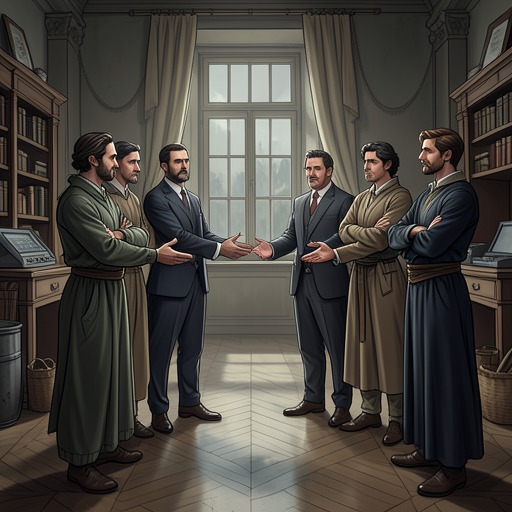
A Clash of KingsThe Lannister–Tyrell alliance is a political and military partnership created in the aftermath of Renly Baratheon’s assassination. Its decisive instrument is the proposed marriage between King Joffrey Baratheon and Margaery Tyrell: a dynastic bargain intended to bring House Tyrell and its bannermen into the defense of the Iron Throne, while replacing the alliance that had previously centered on Renly. The arrangement transforms the balance of the War of the Five Kings by converting a former rival coalition into the royal government’s most important source of reinforcement.
Political Circumstances
The alliance emerges because Renly’s death leaves his queen, Margaery Tyrell, Ser Loras Tyrell, and a large force of soldiers at Bitterbridge without the king they had followed. Varys reports that many of the lords who remain at Storm’s End have now come under Stannis Baratheon’s authority, making the Tyrell position uncertain and urgently valuable. Tyrion Lannister identifies the opening: if Ser Loras can be won to the royal cause, Lord Mace Tyrell and the wider Tyrell host may follow. The calculation depends on the recognition that the Tyrells had loved Renly, not necessarily Stannis, and that grief and political uncertainty have created a moment in which allegiance can be redirected.
The proposal is deliberately distinguished from ordinary bribery. Tyrion argues that lesser lords might be swayed by gifts, but that Highgarden cannot be purchased so simply. Petyr Baelish confirms that Ser Loras is the crucial intermediary because Mace Tyrell favors him, despite having two older sons. The alliance therefore works through family influence as much as through promises of reward: winning the Knight of Flowers is presented as the route to winning Highgarden.
Marriage as Strategy
Tyrion’s solution is to imitate the method by which Renly built his own coalition. Rather than rely on scattered bribes or abstract appeals to loyalty, the crown will offer a marriage that binds the Tyrells to the royal house. Tyrion proposes that Joffrey marry Margaery, and Varys immediately understands the political consequence. Margaery is young, highborn, and already associated with the prestige of a queen, while her previous marriage to Renly was never consummated. That detail allows the Tyrells to present her as available for a new dynastic union without treating her former marriage as a continuing obstacle.
The plan also attacks a central weakness in Joffrey’s position. Sansa Stark remains his existing betrothed, but her father was executed for treason and her brother Robb Stark is in open rebellion. Cersei Lannister therefore argues that Sansa is politically unsuitable, while the High Septon declares that the Faith considers the earlier contract invalid because Robert Baratheon made it before the Stark crimes were revealed. The religious ruling clears the legal and ceremonial path for Margaery, making the new marriage appear not merely expedient but permissible within the institutions of the realm.
Public Formation of the Coalition
The alliance is publicly staged through the reception of the Tyrells at court. Mace Tyrell enters with Ser Loras and Ser Garlan Tyrell, all three dressed alike in green velvet trimmed with sable, a coordinated display of family identity and rank. Joffrey honors them with chains of roses in soft yellow gold, each bearing a golden disc marked with the Lannister lion in rubies. He declares that the roses support the lion just as the might of Highgarden supports the realm, turning the political bargain into a visible emblem of reciprocal dependence.
Ser Garlan then makes the marriage offer openly. He describes Margaery as the delight of House Tyrell and stresses that, although she was wed to Renly, the marriage was never consummated and she remains innocent. He further claims that she has heard tales of Joffrey’s wisdom, courage, and chivalry and has come to love him from afar. The rhetoric is courtly, but its function is practical: Garlan presents the match as both an emotional choice and a union of houses. Joffrey initially performs reluctance because he is promised to Sansa, yet Cersei and the High Septon supply the political and religious justifications for abandoning that promise.
Joffrey finally accepts the proposal, declaring that he is free to heed his heart and will gladly wed Margaery. The scene gives the alliance a royal sanction before the assembled court. It also produces an immediate personal consequence for Sansa Stark, who realizes that she is free of the engagement but must conceal her relief because Cersei warns her not to let the king appear humiliated. The Tyrell marriage thus begins as a public celebration while simultaneously exposing how individual lives are subordinated to the needs of dynastic politics.
Military and Institutional Consequences
The alliance is intended to deliver more than a queen. Tyrion’s reasoning explicitly links Margaery’s marriage to the adhesion of Mace Tyrell and his bannermen, giving the Lannister regime access to the power of Highgarden at a moment of military crisis. The need is sharpened by the approach of Stannis’s forces. His army surrounds Storm’s End, a massive castle that makes the besieging host appear small beneath its pale stone walls, while his fleet advances toward King’s Landing in a carefully organized formation of ten lines, each containing twenty ships. The plan includes archers and spearmen for the city walls and transports for the main host, demonstrating the scale of the threat the royal coalition must answer.
Stannis’s naval assault is nearly destroyed when the chain across the mouth of the Blackwater Rush is raised. Galleys crash into the taut boom, two or three feet above the water, and many ignite amid burning wood, red-hot steel, and green Wildfire. The disaster turns the river mouth into a barrier of fire and wreckage. Against this background, the Tyrell alliance offers the Iron Throne the reinforcements and political consolidation that the defenses of King’s Landing require. Its importance is therefore structural: the marriage is a mechanism for converting Highgarden’s troops, wealth, and dynastic position into royal power.
Meaning and Limits
The Lannister–Tyrell alliance joins two houses whose interests are not identical. The Lannisters need soldiers and legitimacy after Renly’s collapse and during Stannis’s assault; the Tyrells need a royal connection capable of preserving their influence after the death of the king they had supported. The public language of roses supporting the lion presents the relationship as harmonious, but the bargain rests on mutual calculation. The Tyrells are not won by affection for the Lannisters; they are drawn toward a settlement that offers their house access to the throne, while the crown uses marriage to contain the political consequences of Renly’s death.
The alliance also demonstrates how power in the realm is made visible through ceremony. The matching green velvet, the golden roses, the ruby Lannister lions, the queen’s proposed marriage, and the High Septon’s ruling all convert military necessity into an apparently natural order. Yet the same ceremony reveals its coercive underside in Sansa’s forced repudiation and in Joffrey’s staged choice. The coalition’s strength lies precisely in this fusion of battlefield necessity, inherited symbolism, legal authority, and family ambition: the lion does not stand alone, and the roses do not merely decorate the crown; together they make a new center of power.