Night's Watch
A Clash of KingsThe Night's Watch is the ancient sworn brotherhood stationed at the Wall, a military order whose members surrender ordinary family, property, inheritance, and political ambition in exchange for a single lifelong duty: guarding the realms of men against dangers from the north. Its importance lies in the widening gap between that solemn purpose and the institution's depleted, improvised reality. It must defend a civilization that is distracted by the War of the Five Kings, while recruiting from criminals, fugitives, and unwanted boys and confronting signs that the wildlings and the dead are becoming organized threats.
Purpose and Vows
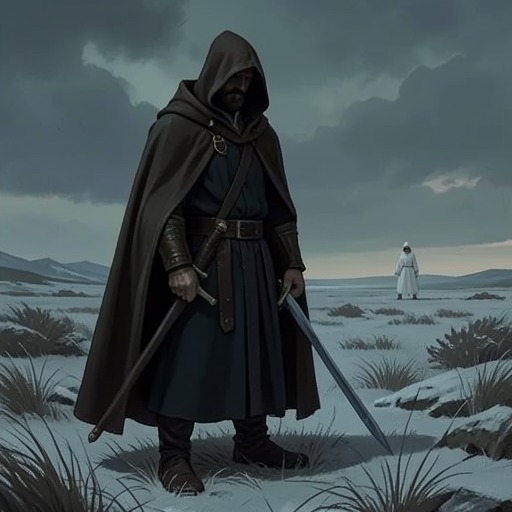
The order's identity is defined by the vows spoken by Jon Snow beneath the rising moon, with Ghost listening and the mountains bearing witness. A brother declares that his watch begins with the gathering night and ends only with death; he will take no wife, hold no lands, father no children, wear no crowns, and seek no glory. He pledges to live and die at his post as the sword in the darkness, the watcher on the walls, the fire against the cold, the light that brings the dawn, the horn that wakes sleepers, and the shield that guards the realms of men. These words turn service into a total renunciation of private life. They are not merely ceremonial promises: Jon understands that once spoken they cannot be unsaid and that they will change a man's life forever.
The order's discipline also rests on a demanding moral distinction between personal justice and institutional purpose. When Jon objects to Craster's brutality and injustice, Jeor Mormont answers that Craster has sworn no vows to the Night's Watch, is not subject to its laws, and therefore cannot simply be punished by the brotherhood. Mormont acknowledges the nobility of Jon's heart but insists that the order cannot set the whole world to rights; it has other wars to fight. The exchange reveals a painful form of neutrality. The Watch's code limits its authority even when its members recognize wrongdoing, preserving its capacity to serve as a military shield while forcing individuals to endure compromises that violate their private sense of justice.
Recruitment and Social Composition
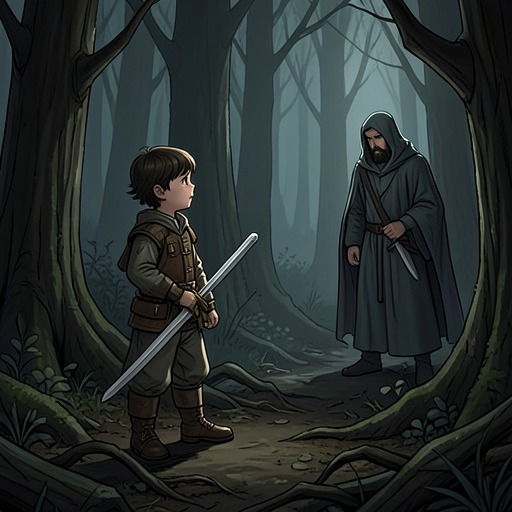
The Night's Watch no longer receives only idealistic defenders. Yoren tells Arya Stark that Lord Eddard gave him his choice of the dungeons, where he found no little lordlings, and that he has taken thirty men and boys bound for the Wall. Half would readily betray a disguised girl to the queen for a pardon and a few silvers; the other half might do the same after raping her. Yoren therefore orders her to become Arry, an orphan boy, to keep to herself, and to avoid drinking more than necessary because even finding privacy to relieve herself will be difficult among such companions. His warning presents recruitment as both necessity and danger: the order needs bodies badly enough to accept men whom ordinary society has imprisoned or discarded.
The same process brings Lommy Greenhands and Hot Pie into the column. Yoren has taken some orphan boys from the streets with promises of food and shoes, while others have been found in chains. His blunt explanation that the Watch needs good men but will have to make do with those available exposes the order's diminished condition. The Wall is maintained by a community assembled from social margins, and its vows attempt to transform that unstable population into brothers. Yet the coercive circumstances of recruitment remain visible beneath the language of honor, making the order both a refuge from the kingdoms and a repository for the kingdoms' unwanted people.
Organization and Operations
The order is organized as a functioning military expedition rather than a loose band of watchmen. During the ranging beyond the Wall, Jarman Buckwell's scouts ride first, followed by the vanguard under Thoren Smallwood, Jeor Mormont with the main force, Ser Mallador Locke with the baggage train and packhorses, and Ser Ottyn Wythers with the rear guard. The column consists of two hundred men and half again as many mounts. Its movement depends on scouting, command hierarchy, animals, baggage, written reports, and the maintenance of communications across an immense wilderness.
Ravens are essential to that system. Mormont takes two cages of ravens so the expedition can send word as it travels, while Samwell Tarly is required to tend the birds and help carry the Lord Commander’s messages. Sam protests that another brother could care for them and that he could write instead, but Jon reminds him that he has said the vows and is now a brother of the Night's Watch. The exchange gives administrative labor the same institutional weight as swordplay. Sam's duties with the ravens are not a consolation prize but part of the order's military infrastructure, linking the isolated ranging to Maester Aemon, Castle Black, and the wider realm.
The Watch's fixed base is also adapted to the seasons. Castle Black's underground wormwalks, seldom used in summer, become indispensable when snow drifts forty or fifty feet high and ice winds howl out of the north. Those tunnels are described as what holds the castle together through winter, revealing that the order's survival depends not only on walls and weapons but also on inherited practical knowledge of climate, shelter, and supply. The arrival of a white raven from the Citadel announcing summer's end intensifies the sense that the coming winter will be longer and harsher than the recent one.
Threats Beyond the Wall
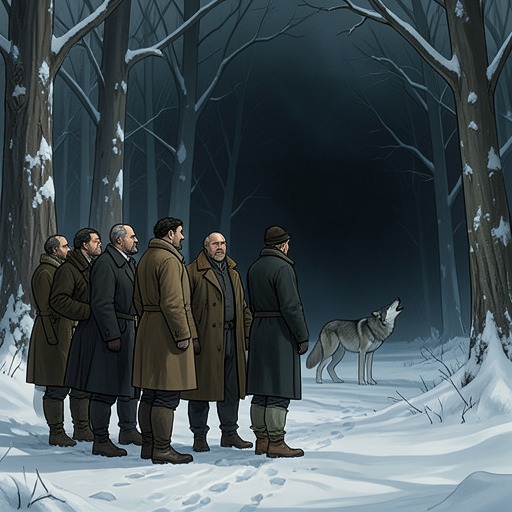
The ranging begins with confidence but gradually acquires the atmosphere of an investigation into absence. Mormont's force passes four empty villages and finds no wildlings; even the game seems to have fled. Men who left Castle Black joking and trading stories grow silent and short-tempered. None admits fear, since they are brothers of the Night's Watch, but Jon feels the unease in the haunted forest. The missing inhabitants are not simply a local inconvenience. Their disappearance suggests that a dispersed population is gathering somewhere beyond the order's immediate reach.
At Craster's settlement, Mormont learns that Mance Rayder is gathering the wildlings in the Frostfangs. Craster confirms enough of the reports to condemn the Lord Commander to a sleepless night, and the location changes the strategic meaning of every deserted village. The Watch must warn the Wall and the king. When Qhorin Halfhand reports that wildling chiefs possess wargs, mammoths, and more strength than the Watch had imagined, Mormont refuses to dismiss the claim merely because it may have been exaggerated by a captive trying to preserve his life. Whether true or false, the Wall must be warned, and so must every claimant to the Iron Throne if those rulers expect to claim the realm.
The order's fear is shaped by an even more terrible precedent. Too many rangers have been lost in the preceding two years, including Benjen Stark, and two of his men were found dead in the wood only for their corpses to rise in the chill of night. Jon remembers the wight Othor with burning blue eyes and cold black hands, seeing it again in dreams. Mormont's insistence on warning every king therefore carries a double meaning: the Night's Watch is defending the political realm from a threat that the political realm is too divided to perceive, while the order itself has direct evidence that death beyond the Wall does not necessarily end a man's service to violence.
Political Isolation and Significance
The Night's Watch claims neutrality in the struggle for the Iron Throne, but its danger cannot remain separate from southern politics. Mormont orders that warnings go to both the Wall and the king, then broadens the instruction to all kings, true and false alike: if they would claim the realm, they must defend it. This is a practical rejection of partisan allegiance. The order does not choose among competing crowns because its stated object is the survival of the whole realm, yet its appeal also exposes the weakness of that principle. The kings are busy contesting sovereignty while the institution charged with defending everyone lacks the authority to compel their attention.
The order's public image is further complicated by the way other authorities handle its members. Arya Stark escapes King’s Landing disguised as Arry because the queen’s guards are searching for a highborn girl, not a skinny boy with chopped hair. Later, a queen's officer carries a seal and warrant demanding a person hidden among Yoren's recruits. The Watch's association with the Wall can conceal identity from royal surveillance, but it cannot permanently place its members outside royal power. In another case, Tyrion Lannister sends Janos Slynt to the Night's Watch by ship, instructing him to report to Lord Commander Mormont and assuring him that the needs of the order have not been forgotten. The appointment functions simultaneously as punishment, exile, and reinforcement, showing how the kingdoms use the Watch as a destination for politically inconvenient men.
The order's vows also stand in sharp contrast to the surrounding aristocratic world. Its brothers renounce crowns and glory, while kings, lords, and soldiers fight to possess them. Its shield is imagined as protecting all realms, yet the men who perform that work are often recruited from prisons or the streets. Its discipline demands courage without pretending that fear can be eliminated: Jon tells Sam that everyone is afraid and that only fools would deny it, because fear is not shameful; what matters is how it is faced. The Night's Watch therefore represents both an ideal of collective defense and an institution under material and political strain. Its final image is the dwindling fire beside the vows: if the Wall ever falls, all the fires will go out.