Power resides where men believe it resides
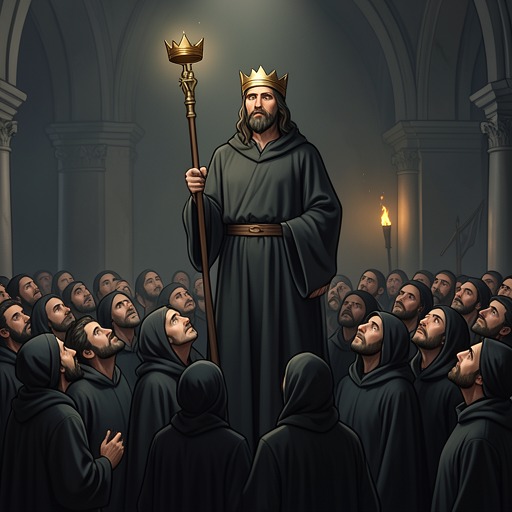
A Clash of Kings“Power resides where men believe it resides” is the clearest statement of Varys’s political philosophy: authority is not automatically contained in a crown, a law, a god, or even the sword that enforces a command. Power exists where people recognize it, obey it, or are persuaded that it exists. The expression gives a principle to the unstable politics of the War of the Five Kings, where competing claims become effective only when swords, institutions, rituals, and crowds convert belief into action.
Varys’s Riddle and Its Answer
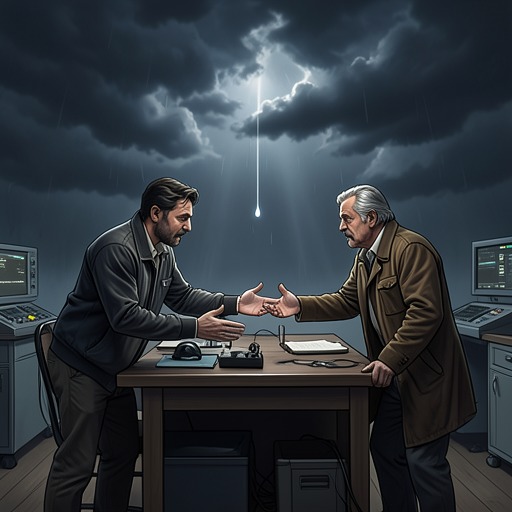
The expression emerges from Varys’s conversation with Tyrion Lannister about a riddle involving a king, a priest, a rich man, and a swordsman. The crucial question is who lives, who dies, and whom the swordsman obeys when each superior figure offers a different command. Tyrion first reduces the problem to force: kings and other powerful men can summon additional swords, while the man holding the weapon remains the immediate agent of death. Varys presses further, asking where those swords came from and why their bearers obey at all.
The exchange rejects any single, stable source of authority. Knowledge, divine sanction, and law may each claim to ground power, yet Varys recalls that on the steps of Baelor’s Sept, the High Septon, the Queen Regent, and Varys himself were as powerless as ordinary craftsmen in the crowd. Eddard Stark’s execution therefore becomes a political puzzle rather than a simple act by one identifiable killer: Joffrey Baratheon gave the command, Ser Ilyn Payne swung the sword, but the larger question is whose power made that command possible. Varys’s answer is that belief supplies the invisible structure connecting command to obedience.
When Tyrion asks whether power is merely a mummer’s trick, Varys refines the metaphor rather than abandoning it. Power is “A shadow on the wall,” but the shadow can kill, and a very small man can cast a very large one. The image captures both the insubstantial and material aspects of authority: political power depends on appearances and shared conviction, yet its consequences include death, punishment, and the direction of armies. The expression is thus not a claim that power is unreal. It is a claim that belief is the mechanism through which an apparently unreal authority acquires real effects.
Claims, Law, and the Sword
The declaration of Stannis Baratheon demonstrates how belief must be organized into a public claim. His proclamation identifies him as the trueborn son of Steffon Baratheon and Cassana of House Estermont, denies that Joffrey Baratheon, Tommen, and Myrcella are legitimate children of Robert Baratheon, and attributes their birth to incest between Cersei Lannister and Jaime Lannister. Stannis then asserts that birth and blood entitle him to the Iron Throne and calls upon “all true men” to declare their loyalty.
This document invokes several kinds of legitimacy at once. It uses genealogy, inheritance, legal language, the honor of House Baratheon, and the authority of Stannis’s seal. Its final religious formula places the claim under the Light of the Lord, while its royal title presents the disputed succession as an already established fact. Yet the proclamation cannot make Stannis king by words alone. Its success depends on whether lords, soldiers, and subjects accept the account of legitimacy and act upon it.
Renly Baratheon offers the opposing logic of conquest and recognition. He argues that Robert Baratheon’s right to the Iron Throne was ultimately secured by his warhammer, not by the genealogical explanations remembered by maesters. In Renly’s view, his own claim is as good as Robert’s because he possesses a vast camp and the ability to command loyalty. He is willing to confirm Robb Stark in his lands, titles, and honors, and even to tolerate the title King in the North if Robb bends the knee and performs homage. Renly separates the word “king” from the practical relations of fealty, loyalty, and service: a title may be granted or tolerated, but obedience is the power he must possess.
The confrontation between Stannis and Renly makes the expression’s central tension explicit. Stannis insists that the Iron Throne is his by rights and treats everyone who denies that right as an enemy. Renly counters that the whole realm denies Stannis, from dying old men to unborn children, from Dorne to the Wall. Stannis possesses a legal argument, but Renly points to the absence of popular and political recognition. Neither brother’s position is merely abstract: each requires men to treat his claim as binding, and the coming conflict will determine which belief can command more swords.
Crowds and the Collapse of Official Authority
The riot in King’s Landing provides the most violent demonstration of the expression. When the crowd turns on the royal procession, its cries attack Joffrey Baratheon, Cersei Lannister, Tyrion Lannister, and the ruling order they represent. The crowd also invokes rival names, including Robb Stark, Stannis Baratheon, and Renly Baratheon, revealing that several competing ideas of kingship circulate through the city at once.
Then the political language changes. Hunger overrides dynastic allegiance as the crowd chants for bread. In that moment, the named kings are forgotten and “King Bread” rules alone. The phrase is both grotesque and exact: the immediate power in the street belongs neither to the crowned boy nor to the rival claimants but to the collective demand that commands the crowd’s bodies. The gold cloaks still possess weapons and official authority, yet their spear line nearly breaks because the people no longer behave as subjects who accept the procession’s legitimacy.
The response shows how quickly belief can be restored, redirected, or replaced by force. Jacelyn Bywater orders the City Watch forward, riders drive into the crowd, and Ser Mandon Moore cuts off the hand of a man who briefly seizes Joffrey’s leg. Tyrion Lannister, Bronn, and the armed escort force a passage back toward the castle. The crown survives the immediate assault not because ceremony has persuaded the crowd, but because organized violence reasserts control. The scene therefore complicates Varys’s maxim: belief is decisive, but when belief collapses, authority may temporarily continue through the concentrated use of swords.
Ceremony and the Production of Rule
The return of Tywin Lannister to King’s Landing shows power being rebuilt through ceremony. Tywin rides into the hall in elaborate red and gold armor, arrives before the Iron Throne, and receives Joffrey’s public invitation to assume governance of the realm until the young king comes of age. Tywin solemnly accepts, and Joffrey fastens the Hand’s chain around his neck. The ritual transforms a military victor and dominant political actor into the recognized governor of the realm.
The ceremony does more than announce a decision. It gives visible form to a transfer of authority, places Tywin beside Cersei Lannister at the council table, and allows Joffrey to appear as the source of the office even while his minority limits his practical independence. Heralds, trumpets, armor, chains, and the Iron Throne make power legible to the assembled nobles. The pageantry persuades the court that governance has an ordered center.
The honors granted to House Tyrell extend the same political construction. Joffrey presents Mace Tyrell, Loras Tyrell, and Garlan Tyrell with golden chains of roses bearing the lion of Lannister, declaring that the roses support the lion as the might of Highgarden supports the realm. The image converts alliance into a visual hierarchy: House Tyrell’s military and material strength is acknowledged, but it is represented as support for the Lannister monarchy. Ceremony thus turns a coalition of interests into an apparent structure of legitimate rule.
Meaning and Political Significance
The expression links private belief to public institutions. A proclamation asks subjects to accept a version of succession; a battle tests whether soldiers will die for it; a crowd can revoke its practical force through refusal; and a ceremony can make a newly arranged distribution of authority appear continuous and proper. The same political world contains inheritance law, religious endorsement, military conquest, popular consent, fear, and spectacle, but none is sufficient in isolation. Each becomes powerful when others treat it as authoritative.
Its sharpest irony is that the people who speak most confidently about rightful rule are often dependent on recognition they cannot command directly. Stannis has the language of law but faces widespread rejection. Renly has followers and military presence but must still demand homage. Joffrey has the crown but loses control of the street. Tywin gains effective governance through the ritual performance of deference by the king. Varys, meanwhile, has neither crown nor gold nor the favor of the gods, yet his understanding of how belief operates gives him a form of influence disproportionate to his formal rank.
“Power resides where men believe it resides” therefore functions as both explanation and warning. Political authority is constructed, but construction does not make it harmless or fragile in any simple sense. A shadow can kill when enough people organize themselves around it; a title can command armies when subjects believe it carries obligation; and a starving crowd can briefly replace royal ideology with the blunt sovereignty of need. The expression names the invisible agreement behind visible rule and shows how quickly that agreement can be contested, redirected, or violently remade.