The Kingsguard vows
A Clash of KingsThe Kingsguard vows define the ideal and burden of service in the white cloak. They require a knight to defend the king, obey him, keep his secrets, do his bidding, and give his life for his sovereign. Yet the same knight is also expected to love and protect his family, defend the innocent and the weak, respect the gods, and obey the laws. The vows therefore signify more than military loyalty: they place royal duty, chivalric morality, kinship, religion, and law inside one office, where those obligations can become mutually irreconcilable.
The White Cloak and Its Duties
Jaime Lannister describes the vows as a relentless accumulation of commands: “Defend the king. Obey the king. Keep his secrets. Do his bidding. Your life for his.” Alongside these royal obligations stand the broader demands of knightly conduct: “Love your sister. Protect the innocent. Defend the weak. Respect the gods. Obey the laws.” His complaint is not that the vows are empty, but that they are all binding at once. A Kingsguard knight can satisfy one duty only by risking betrayal of another, so the white cloak becomes an instrument for measuring impossible choices rather than a guarantee of moral clarity.
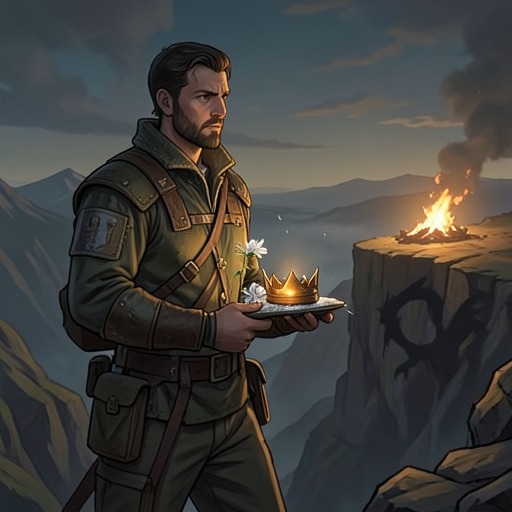
Jaime’s own history gives the conflict its sharpest form. He recalls that he was the youngest man ever to wear the white cloak, but the honor is inseparable from the name Kingslayer and from the accusation that he betrayed everything the cloak represented. His account presents the vows as a structure in which obedience is never merely obedience: serving the king may mean concealing evil, while refusing the king may mean violating the very oath that makes a Kingsguard knight what he is.
A Vow Tested by Tyranny
The murder of Lord Rickard Stark and the death of Brandon Stark expose the extreme conditions under which the vows are tested. Jaime stood at the foot of the Iron Throne in white armor and a white cloak while Aerys Targaryen’s pyromancers burned Lord Rickard and forced Brandon into a fatal struggle against the cord around his throat. Afterward, Gerold Hightower told Jaime that he had sworn “to guard the king, not to judge him.” The statement expresses the strictest interpretation of the Kingsguard’s role: the knight is a shield for the sovereign, not an authority empowered to decide whether the sovereign deserves protection.
Jaime’s recollection makes that interpretation morally unstable. To guard Aerys was to remain beside a king who was inflicting deliberate cruelty, while to intervene against him was to become an oathbreaker in the eyes of the royal order. Jaime rejects the claim that he killed Aerys to avenge the Starks, insisting that the Starks were nothing to him, yet he also calls the killing his finest act. The contradiction between public condemnation and private moral justification shows how the vows can preserve the appearance of honor even when the king’s conduct has made ordinary honor impossible.
Conflicting Orders and Competing Laws
The wider story places the Kingsguard vows beside other systems of obligation. The Night’s Watch, for example, teaches that its members cannot “set the world to rights” because the Watch has other wars to fight. Its discipline similarly narrows personal morality into institutional purpose, but the Kingsguard serves a single ruler whose commands may themselves threaten the realm. The contrast reveals two forms of sworn service: one bound to a collective defense against dangers beyond the Wall, the other bound to the person of the king and therefore vulnerable to the king’s character.
Other scenes show how political actors invoke law, surrender, and authority selectively. At Riverrun, Edmure Tully defends the hanging of men who arrived with Ser Cleos by calling them false envoys: they had accepted hospitality and freedom within the castle, then attempted to free Jaime Lannister. Ser Rodrik Cassel likewise demands that Theon Greyjoy surrender Winterfell and his life for King Robb Stark’s justice, offering freedom to those who had murdered no children. These episodes do not state the Kingsguard vows directly, but they illuminate the same problem: a sworn rule gains meaning through interpretation, and competing authorities claim the right to decide which obligation governs a crisis.
The Cost of Sworn Identity
The vows transform a knight’s future by excluding ordinary forms of private life and personal advancement. The parallel oath of the Night’s Watch makes that logic explicit: the sworn man must take no wife, hold no lands, father no children, wear no crowns, and seek no glory. The Kingsguard vows are not identical, but Jaime’s description shows the same sacrificial principle at work. The white cloak demands that the knight’s body, secrecy, obedience, and life belong to the king before they belong to himself.
That totalizing promise creates a permanent conflict between identity and action. Jaime is remembered publicly as Kingslayer, while he understands the killing of Aerys as a response to the king’s monstrous rule. The title compresses a disputed moral history into a single accusation, demonstrating how a vow can judge a man after the circumstances that produced his choice have been forgotten. The white cloak remains a visible emblem of honor, but its wearer may be condemned either for obeying too faithfully or for refusing obedience at the moment when obedience becomes shameful.
Narrative Significance
The Kingsguard vows function as a test of whether institutions can preserve morality when their commands are divided against themselves. They promise order through absolute service, yet their absolute language creates the conditions for tragedy: defending the king may abandon the weak, obeying the king may violate the laws, and keeping his secrets may make complicity indistinguishable from loyalty. Jaime Lannister’s memories turn the vows from ceremonial ideals into a battlefield of conscience, where the central question is not whether an oath was spoken, but which part of it can still be honored when the sovereign has made every choice culpable.