
The Politics of Bargains
A Court of Thorns and RosesThis flow examines how promises and magical bargains govern power, coercion, and survival.
increasing Bearing strength in each event
 decreasing
Bearing strength in each eventdecreasingThe Treaty Debt
The Treaty Debt
Law as Power
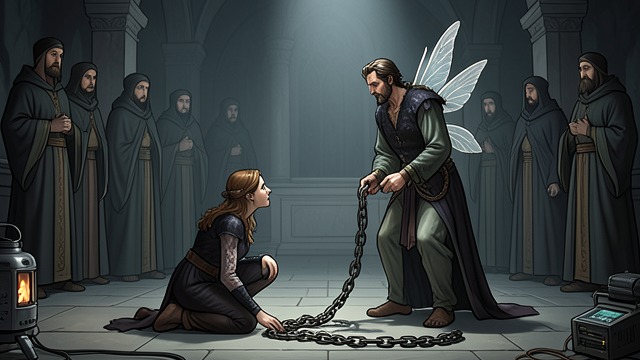
Tamlin invokes The Treaty to demand a life for Andras. Feyre discovers that a forgotten legal system still governs humans who no longer remember its terms.
Choice Within Coercion
The bargain offers death or exile, making consent formally present but morally compromised.
The episode establishes a central question: when law is enforced by overwhelming power, can obedience still be called justice?
The Hidden Contract
The Hidden Contract
Silence as Clause
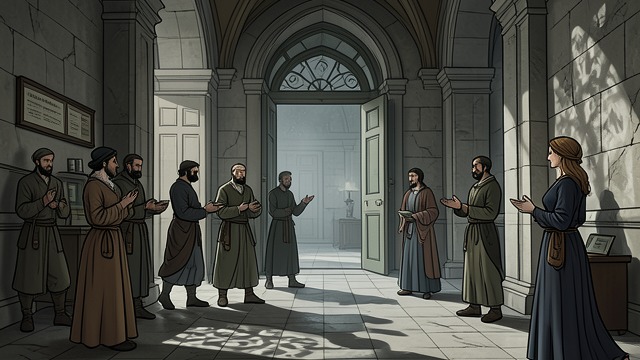
Amarantha's curse prevents the Spring Court from explaining its terms. The inhabitants must communicate through implication, staging, and behavior.
Feyre as Interpreter
Feyre gradually learns to read what is not said: open doors, public conversations, unusual warnings, and Tamlin's repeated insistence that she remain safe.
The curse turns interpretation into survival. Language is not absent; it is displaced into gesture and omission.
The Rhysand Bargain

The Rhysand Bargain
Necessity
Feyre accepts Rhysand's healing because infection threatens her life. Her decision is shaped by love for Tamlin and the need to continue the trials.
Unequal Terms
The bargain creates an obligation to spend one week each month in the Night Court. Rhysand's refusal to explain every condition preserves his advantage.
The exchange is both exploitative and protective. It demonstrates that bargains in Prythian can save a life while permanently redistributing freedom.
The Riddle Loophole
The Riddle Loophole
Exact Wording
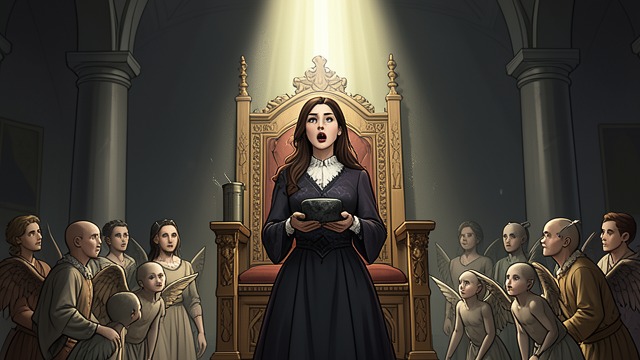
Amarantha promises that solving the riddle will break the curse immediately, while leaving the timing of trial-based liberation deliberately vague. Feyre recognizes the danger of imprecise language too late.
Love as Answer
The riddle describes love as sought, offered, gentle, dangerous, and capable of slow destruction. Feyre's answer satisfies the magical terms.
The scene shows that legal precision can defeat tyranny, but only when emotional understanding supplies what literal reasoning cannot.
The Cost of Freedom
The Cost of Freedom
Liberation
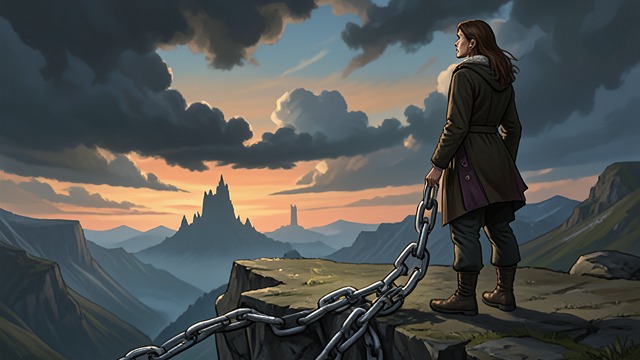
The High Lords and courts are released from Amarantha's rule. Feyre's sacrifice makes the political victory possible.
Residual Debt
Feyre remains bound to Rhysand and carries guilt for the faeries killed in the trials. Freedom does not return her to an untouched self.
The novel rejects the idea that liberation restores the past. Every escape creates obligations, memories, and new forms of uncertainty.
the night Tamlin claims Feyre
the months before the curse breaks
after Feyre's first trial
the day of the third trial
after Amarantha's death
