Feyre's Resurrection as High Fae
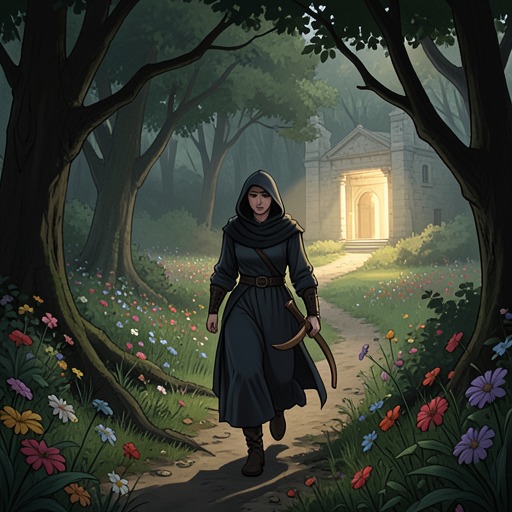
A Court of Thorns and RosesFeyre's Resurrection as High Fae is both a literal return from death and the culmination of the political and ritual crisis under Amarantha. In the throne room, Feyre lies dead after killing Amarantha, but the High Lords answer her sacrifice by giving portions of their power to her body. Their collective act restores her life and remakes her identity: the mortal who entered Prythian through the Wall emerges as an immortal High Fae, alive within the same court that had watched her die.
Death and the Reversal of the Ordeal
Feyre's transformation follows the most extreme consequence of her three trials. She has endured captivity, public violence, and the demand to kill in order to break Amarantha's hold, and the final confrontation leaves her dead on the floor of the throne room. The reversal is staged through a sharp contrast between bodily finality and suspended possibility. From the perspective of her surviving consciousness, everything is black, warm, and thick, yet the darkness is bordered with gold; she struggles upward toward Tamlin and toward life before gasps of air return her to the world.
The restoration does not erase what has happened. When Feyre wakes, she remembers that she remains in the throne room and understands that she truly died. She also confronts the fact that she killed the three faeries required by the last trial. Resurrection therefore brings no clean reset: it returns her to the scene of judgment with the memory of violence intact, making survival inseparable from moral burden and political consequence.
The High Lords' Gifts
The rebirth begins with a collective intervention by the High Lords. The High Lord of the Autumn Court approaches Tamlin and extends a clenched hand; when he opens it, a glittering spark falls onto Feyre and flares against her chest. The High Lords of the Summer Court and Winter Court follow, each dropping a shining kernel onto her body, while Tamlin bows his head in gratitude.
The High Lord of the Dawn Court then contributes a drop of light, described as brighter than the others, and the High Lord of the Day Court offers a similar gift before leaving with a sad smile directed toward Tamlin. These separate gestures form a sequence rather than a single anonymous spell. Each court participates visibly, and the restoration becomes an act of shared power among rulers whose lands have been held under Amarantha's domination for forty-nine years.
Rhysand also gives Feyre a portion of his power. He presents the gift as payment for what she has given, saying that the High Lords will bestow what their predecessors have granted to few before and that the exchange makes them even. His contribution links the resurrection to his bargain with Feyre and to the larger economy of Faerie Bargains: her sacrifice is answered through an exacting transfer of power, not through unearned mercy.
Tamlin, Love, and the Act of Revival
Tamlin's role is both intimate and political. He watches as the other High Lords place their lights upon Feyre, then forms a strange, shining bud in his palm. He brushes aside her matted hair, tells her that he loves her, and lays his hand over her heart. The gesture completes the other offerings, concentrating the gifts of the High Lords in a personal act of devotion.
Tamlin's intervention also explains why the scene is witnessed by the gathered High Fae and faeries. The crowd watches in damp-eyed silence, with some members praising the glorious power of their High Lords. The resurrection is thus a private declaration enacted before a public community: Tamlin's love is spoken to Feyre's apparently dead body, while the courts' gifts announce the restoration of a political order after Amarantha's defeat.
Transformation into High Fae
Feyre's return changes more than her physical condition. Once alive, she notices that her skin gleams with a strange light and that her fingers appear longer. She feels strong, fast, and sleek, and then recognizes the decisive truth: she has become High Fae. The event converts the boundary between the Mortal Realm and Prythian into a change within her own body.
Her new state is immediately legible through heightened sensation. She can sense Tamlin behind her and detect the richer scent of rain and spring meadow associated with him; she can also hear his breath, as well as the breathing, whispering, weeping, and celebration of the hall. Immortality is therefore introduced through altered physical perception before it is explained as a political status. Feyre wakes not merely healed, but remade according to the power that had once separated her people from the courts beyond the Wall.
Political and Thematic Significance
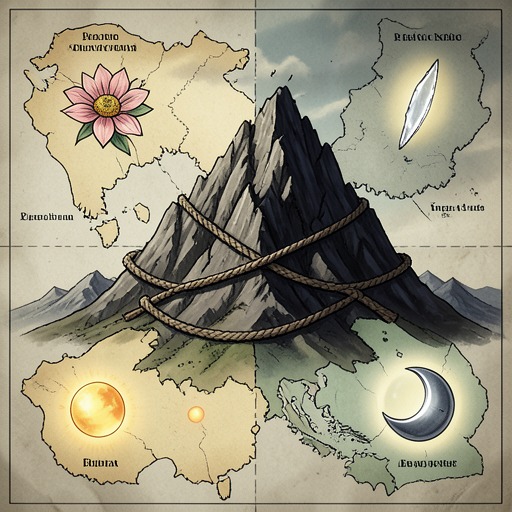
The resurrection reverses the history that structures Feyre's world. Humans had once been enslaved by High Fae overlords, and the War ended with the Treaty and the construction of the Wall, dividing the High Fae and faeries in the North from mortals in the South. Feyre's crossing into Prythian initially appears to be an invasion of that forbidden boundary; her conversion into High Fae makes the division newly unstable, because she now belongs bodily to both the memory of mortal suffering and the immortal society that inherited its power.
The event also contrasts with Amarantha's method of rule. Amarantha seized the powers of the seven High Lords through deception, drugging them at a ball and extracting their magic from their bodies before conquering Prythian. The High Lords' restoration of Feyre reverses that logic. Power is no longer stolen from rulers and concentrated in a tyrant; it is voluntarily distributed by multiple courts to revive someone who has acted against tyranny. Her body becomes the site where political power is surrendered, shared, and reborn.
The scene completes a larger pattern of thresholds and ritual renewal. Calanmai marks the official beginning of spring, and the Great Rite regenerates the magic on which the crops depend through the annual participation of the seven High Lords. Feyre's resurrection occurs after the ritualized trials and at the moment Amarantha's rule collapses, so personal rebirth echoes seasonal and communal renewal. Yet the transformation remains unsettled: Feyre wakes among the High Fae with heightened senses, a changed body, knowledge of her own death, and no simple return to the mortal life she left behind.