Jurian
A Court of Thorns and RosesJurian is a legendary human warrior whose betrayal of Clythia, a powerful faerie commander’s sister, reshapes the history of the War and helps explain Amarantha’s enduring hatred of humans. Though he is dead before the main action begins, his eye, finger bone, and magically preserved consciousness remain present Under the Mountain, turning his punishment into both a trophy of conquest and a constant emblem of the violence connecting Hybern, Prythian, and the mortal realm.
Identity and Historical Position
Jurian commanded mighty human armies during the War between mortals and the High Fae. His military importance placed him directly against Amarantha, the King of Hybern’s most lethal general, whose forces fought on the front lines against humans and any High Fae or faeries who defended them. The conflict ended only after six mortal queens crafted the Treaty, which divided the world between the immortal realm and the cowering mortal territories, but Jurian’s conduct during the War ensured that the settlement could not erase its personal atrocities.
Jurian was a mortal warrior, yet his influence extended into the highest levels of faerie power. Clythia, Amarantha’s younger sister, fell in love with him and secretly sought him out despite fighting beside Amarantha. Jurian exploited that attachment rather than returning it as a genuine bond. He endured months as Clythia’s lover in order to obtain information about Amarantha’s forces, making intimacy a method of military espionage and converting a private relationship into a weapon against an enemy commander.
Betrayal of Clythia
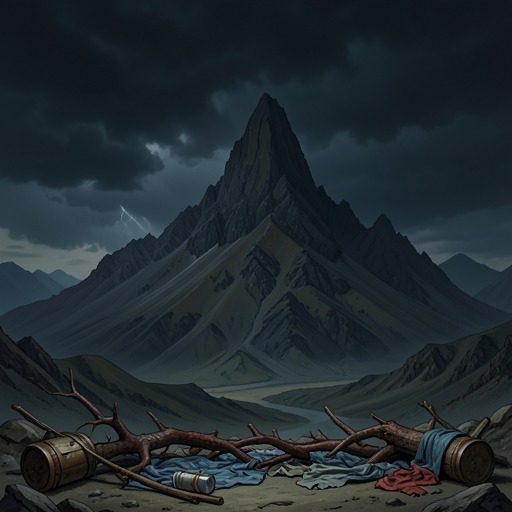
Jurian’s betrayal culminated in the torture and murder of Clythia. After extracting the information he needed, he tortured and butchered her, then crucified her with ash wood so that she could not move while he killed her. He left the pieces of her body for Amarantha to find. The deliberate staging of the corpse transformed a military betrayal into a message of calculated cruelty, and Clythia’s death became the decisive wound in Amarantha’s relationship to humanity.
Amarantha had been known for torture and killing, but she had been unable to kill Jurian while Clythia loved him. Her restraint was not mercy toward a human enemy; it was an act of attachment to her sister. Once Jurian used Clythia and destroyed her, that restraint collapsed. Alis describes Amarantha’s resulting rage as nearly catastrophic, and later events confirm that Jurian’s betrayal became one of the central memories through which Amarantha justified her hatred of humans.
Final Confrontation and Punishment
Jurian and Amarantha later faced each other on a battlefield. Their forces used their soldiers as shields until nearly all the troops on both sides were dead. Jurian had been given some protection against Amarantha, but it did not save him once the two entered single combat. Amarantha defeated him, dragged him back to her camp, and spent weeks torturing and killing him.
The punishment did not end with Jurian’s death. Amarantha kept his finger bone and his eye, preserving the eye through magic and binding Jurian’s soul and consciousness to it. As a result, he remains trapped within the object, forced to watch through the eye while Amarantha carries it as part of her regalia. Clythia had promised Jurian that he would never die, and Amarantha turned that promise into an eternal sentence: continued existence without freedom, severed from the body and reduced to the awareness of a captive witness.
Presence Under the Mountain
Jurian’s remains appear during Amarantha’s rule as the eye set into her ring and the finger bone hanging from her necklace. When Amarantha addresses the eye, she treats it as an audience capable of appreciating her cruelty. During the confrontation involving Feyre Archeron and Tamlin, she invokes Jurian while mocking the human woman whom she claims failed to save him. The objects therefore function simultaneously as evidence of Jurian’s identity, instruments of psychological intimidation, and symbols of Amarantha’s possession of the past.
Lucien Vanserra confirms that the object really is Jurian’s eye and explains the nature of the enchantment binding him. Lucien’s own missing eye makes the description especially immediate: Amarantha has an obsession with retaining bodily trophies from those she defeats. Jurian’s mutilation is consequently not an isolated punishment but part of a wider practice in which conquest is made permanent by collecting and displaying the bodies of enemies.
Political and Thematic Significance
Jurian’s history helps connect individual betrayal with imperial violence. The King of Hybern sent commanders to infiltrate faerie courts and kingdoms, while Amarantha later used trade, diplomacy, and accumulated military power to seize Prythian. After deceiving the High Lords and stealing much of their power, she ruled for forty-nine years and gathered the most vicious faeries under her protection while preparing an assault on human lands. Jurian’s story belongs to the earlier War, but its consequences continue inside this later regime: Amarantha’s private vengeance becomes part of the ideological and emotional machinery of domination.
His preserved eye also embodies a fractured form of historical memory. Jurian is neither fully absent nor truly alive; he survives as a dismembered consciousness displayed by the woman who defeated him. The eye makes the past visible while denying it any independent voice. Amarantha controls what remains of him, just as she controls the High Lords, their courts, and the territories beneath her rule. His fate exposes the cost of treating people as instruments—first in Jurian’s use of Clythia for military information, then in Amarantha’s reduction of Jurian to a trophy and captive spectator.
Jurian’s legacy is therefore deliberately double. He is remembered as a formidable commander whose deception helped destroy Clythia, but he is also made into the object of a punishment so prolonged that it exceeds ordinary death. Through him, the narrative presents war not as an ended historical episode but as a chain of surviving bodies, grievances, and appropriated memories. The Treaty may have stopped the slaughter between the mortal and faerie realms, yet Jurian’s eye remains a grotesque reminder that political settlements do not dissolve the violence that produced them.