The Bogge
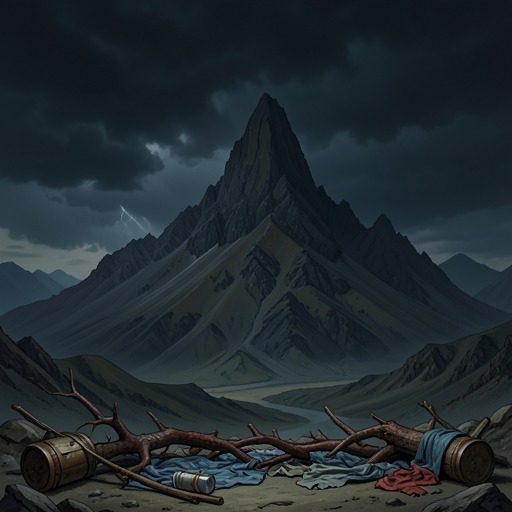
A Court of Thorns and RosesThe Bogge is a creature that should not be in the lands of Prythian, yet its intrusion into the forest exposes a terrifying rule of existence: it becomes real, and capable of killing, when someone looks at it and acknowledges it. Its encounter with Feyre Archeron and Lucien Vanserra is brief but decisive. The Bogge is never clearly described, and that refusal of visibility makes it more frightening than a fully displayed monster; its power is conveyed through cold, disturbed vegetation, an intrusive voice, and the characters’ desperate effort not to see it.
Nature and Rules
The Bogge is defined less by appearance than by the conditions governing its presence. Lucien Vanserra identifies it as a creature that cannot be hunted or killed by ordinary means, explicitly denying even the usefulness of Feyre Archeron’s beloved ash arrows. He explains that the danger begins when the creature is looked at or otherwise acknowledged: at that moment, it becomes real and can kill the person who has recognized it. The rule gives attention a physical consequence. Perception is not passive observation but an act that grants the Bogge the reality it needs to become lethal.
The encounter also makes the Bogge’s existence radically different from that of an ordinary animal or enemy. It is present enough to be heard and felt, yet its body remains outside direct confirmation. Feyre hears a voice inside her head urging her to look, while the surrounding plants recoil as the cold presence passes through the brush. The creature therefore attacks both the senses and the will, attempting to make its victim participate in the act that will endanger her. Its threat depends on compelled recognition rather than straightforward pursuit.
Encounter in the Forest
Feyre encounters the Bogge while traveling through the forest with Lucien Vanserra. She fixes her gaze on an approaching tree trunk and refuses to blink, although her eyes fill with tears from the strain. Around her, something moves through the brush, and the cold that has accompanied it remains close enough to make the plants recoil in its wake. Feyre does not look toward the thing. Her refusal is the practical action that keeps the encounter from becoming fatal.
The danger passes only after the cold disappears into the brush. Lucien Vanserra exhales, their horses shake their heads, and even the crocuses seem to straighten again, giving the scene a visible aftermath without ever revealing the Bogge’s form. Feyre’s question about what happened receives a warning rather than a description. When she asks whether it was the Suriel, Lucien answers that it was not, distinguishing the Bogge from the other supernatural beings she has begun to learn about.
Lucien’s explanation confirms that the encounter was not merely an atmosphere of fear. He tells Feyre that the Bogge moved close to them and that she heard its voice in her head. His grim relief that she did not look underscores how narrow the margin of survival was. The creature’s failure to kill her is not the result of overpowering it, but of withholding the acknowledgment it requires.
Threat to the Spring Court
The Bogge’s appearance has consequences beyond Feyre Archeron’s private terror. Lucien Vanserra reports to Tamlin that the creature was in the forest and must have slipped through the border. Tamlin responds with immediate lethal seriousness: the fork in his hand folds in on itself as he reacts to the news, and he leaves to hunt the intruder. The Bogge thus becomes a security breach as well as a monster, signaling that the boundaries of the Spring Court are not completely secure.
Lucien Vanserra has already stated that the Bogge cannot be faced or killed, but he adds that Tamlin can. This contrast establishes Tamlin as possessing an ability beyond the ordinary limits described for the creature. It also changes the meaning of his departure. He is not simply responding to a frightening report; he is accepting responsibility for removing a danger that others cannot confront. Feyre later watches the moonlit garden for his return, despite recognizing that waiting for him is unreasonable, and sees movement outside rather than Tamlin himself. The Bogge’s appearance therefore extends its threat into the household, leaving uncertainty even after the forest encounter has ended.
Narrative Function and Significance
The Bogge introduces a form of horror built on anticipation, concealment, and rules that contradict ordinary human experience. Feyre’s instinct is to look toward danger, identify it, and prepare to fight it with her ash arrows. The Bogge makes those familiar responses disastrous. Looking, naming through recognition, and attempting direct confrontation would all bring the threat closer to material reality. Survival instead requires disciplined refusal: Feyre must remain aware of danger without granting it the acknowledgment it seeks.
This encounter also marks a turning point in Feyre Archeron’s understanding of Prythian. She recognizes the scene as the world she had imagined when she first considered that the wolf might have been a faerie: a realm containing creatures that make humans speak in hushed tones. The Bogge is consequently not only an immediate danger but evidence that the supernatural world is more alien and less controllable than the visible courtly life of the Spring Court suggests. Its unseen body, inward voice, and reality-changing rule make it an emblem of the peril that lies beyond human categories.
The creature’s brief appearance leaves a durable pattern behind. It cannot be defeated simply by courage, weapons, or visual knowledge; it must first be denied the recognition through which it becomes real. That principle gives the Bogge its distinctive place in the story’s supernatural ecology and makes its later reported presence a test of Tamlin’s exceptional power, the Spring Court’s vulnerable borders, and Feyre’s capacity to survive a danger she is forbidden to see.