The Seven High Lords of Prythian
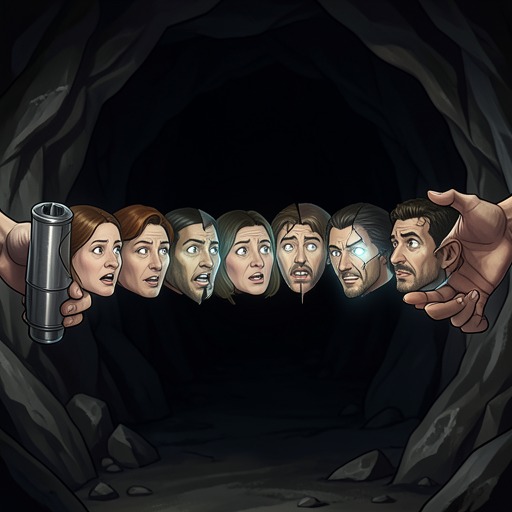
A Court of Thorns and RosesThe Seven High Lords of Prythian are the rulers of the seven Courts that divide and govern Prythian. They represent the highest visible concentration of faerie sovereignty in the novel: beings believed capable of leveling buildings, breaking apart armies, and killing before an opponent can react. Their power structures the boundary between the Mortal Realm and Prythian, but their history also shows that immense authority can be compromised by trust, deception, and the seizure of magical power.
Identity and Political Order
The Seven High Lords govern the Spring, Summer, Autumn, Winter, Dawn, Day, and Night Courts. To mortals living near the Wall, this arrangement is known only through fragmentary accounts and fearful legend. Prythian is not a single kingdom under one monarch; it is a divided realm whose seven rulers possess separate territories and powers, each Court described as deadly in its own way. The Suriel emphasizes that the High Lords are not merely powerful but “Power,” a formulation that turns their political rank into an almost elemental condition.
Their authority is also part of the postwar order established between humans and faeries. After the War, the Treaty divided the world between the faerie-ruled North and the mortal South, while the Wall enforced the separation. The High Lords therefore rule within a system shaped by conquest, treaty, and continuing mistrust. Human communities have no standing army capable of guarding the Wall and depend on the Treaty for protection, even while fearing that the High Fae could destroy them with ease.
Vulnerability to Amarantha
The High Lords’ legendary status does not make them invulnerable. Amarantha spent fifty years presenting herself as a harmless or reforming courtier, moving from Court to Court while claiming to repair the damage caused by Hybern during the War. Her reputation as the “Never-Fading Flower” helped her win the confidence of the rulers she intended to overthrow. The trade routes she promoted concealed the movement of her personal forces into Prythian, turning diplomacy and commerce into instruments of infiltration.
Amarantha finally acted when the High Lords gathered at a ball held in her honor. She placed a potion stolen from the King of Hybern’s spell book into their wine. Once they drank it, the rulers were rendered helpless and their magic was exposed. Amarantha then extracted their powers from within their bodies, leaving them only the most basic elements of their abilities. The seizure transformed the political balance of Prythian almost immediately: with the seven rulers drastically weakened, Amarantha conquered the realm within days.
The consequences lasted forty-nine years. The Courts became subject to Amarantha’s rule, and many of the most vicious creatures in Prythian—including beings considered too terrible even for the Night Court—gathered under her protection. Her regime was not merely a replacement government but an armed occupation and a preparation for further conquest. Amarantha used the authority stolen from the High Lords to hold Prythian while building an army for an eventual attack on the Mortal Realm and other human territories.
The High Lords and the Treaty’s Legal Order
The High Lords stand behind the political world in which the Treaty operates, but the novel contrasts their formal authority with the instability of personal rule. The Treaty defines a severe penalty for unprovoked human attacks on faerie-kind: “A life for a life.” Its terms are presented as binding and precise, yet the broader security promised by the agreement depends on rulers maintaining control over their subjects and borders. Reports of faeries crossing the Wall and attacking human villages suggest that the treaty system has become vulnerable to hidden orders and unauthorized—or deliberately sanctioned—violence.
Amarantha’s seizure of the High Lords demonstrates how quickly law can become secondary to coercive power. She does not abolish the old order so much as capture its rulers, reduce their magic, and place them beneath her personal discretion. This logic reaches its most explicit form in the bargain she offers Feyre Archeron. Feyre’s completion of three tasks is supposed to secure Tamlin’s freedom, the breaking of his curse, and the release of the Spring Court, but Amarantha later exploits the wording of the agreement and claims that she may free them whenever she chooses. The old hierarchy remains recognizable, yet its protections have been emptied of force.
Individual Courts and Visible Representatives
The evidence identifies several High Lords through their Courts rather than through a complete list of names. Tamlin is the High Lord of the Spring Court, though the power Feyre sees in him during Amarantha’s reign is only a remnant of what he once commanded. His diminished condition makes the stolen magic tangible: the ruler of a Court still bears the title, but his capacity to act has been deliberately stripped away.
At the restoration of Feyre, the High Lord of the Summer Court appears as a brown-skinned, young-looking man dressed in blue and green, with a garland of roses over his white-blond hair. The High Lord of the Winter Court stands beside him in white and gray, wearing a crown of shimmering ice. The High Lord of the Dawn Court is recognized by his gold-and-ruby clothing and unusually bright radiance, while the High Lord of the Day Court wears white and gold and has dark skin that seems to gleam with an inner light. Rhysand represents the Night Court and is the last of the named rulers to approach Feyre.
The High Lord of the Autumn Court is also present, accompanied by Lucien Vanserra’s father. He offers Tamlin a clenched hand and releases a glittering spark over Feyre. The scene presents the Courts as distinct in color, imagery, and manner, while also showing their rulers acting together in a rare collective gesture. The evidence does not supply the personal names of all seven rulers, but it makes their separate identities legible through the visual emblems of their Courts.
Restoration and Narrative Significance
After Feyre dies in the throne room, the High Lords collectively participate in her restoration. The High Lord of the Autumn Court gives a spark first; the High Lords of the Summer, Winter, Dawn, and Day Courts follow, each placing a kernel of light upon her. Tamlin contributes his own power and declares his love before placing his glowing hand over her heart. Rhysand then steps forward while carrying a fragment of Feyre’s soul and offers another seed of light, describing the gift as what their predecessors had granted to very few before.
Feyre awakens with no pain, blood, or broken bones, but with altered strength, speed, appearance, and senses. She has become High Fae. The High Lords’ intervention therefore does more than revive a dead human: it changes her species and moves her across the central boundary between the mortal and faerie worlds. Their power, previously associated with domination and terror, becomes in this moment a collective act of restoration.
The Seven High Lords thus embody both the grandeur and the instability of Prythian’s political imagination. They are remote sovereigns feared by mortals, rulers whose magic can be stolen and whose institutions can be captured, and witnesses to the transformation of Feyre Archeron from human subject into a being capable of entering their world on new terms. Their final appearance does not erase the damage caused by Amarantha, but it marks the first visible return of a shared High Lord authority after decades of subjugation.