
Saknussemm’s Unseen Journey
A Journey to the Centre of the EarthThis thread reconstructs how Arne Saknussemm’s concealed expedition shapes the travelers’ choices and survives as a legacy of evidence.
increasing Bearing strength in each event
 decreasing
Bearing strength in each eventdecreasingThe Hidden Author

The Hidden Author
A scholar made obscure
Arne Saknussemm is known to the travelers as a learned Icelandic scholar whose works were burned after persecution for heresy. That destruction leaves later generations with little direct access to his ideas.
A surviving book and an inserted parchment give his name a new life. His disappearance from public scholarship becomes part of the reason the message seems both mysterious and important.
A concealed instruction
The cipher implies that Saknussemm found a route into the earth and left directions for a future traveler. Whether his claim is authentic remains uncertain until the expedition tests it.
His historical reputation is thus built from fragments: a name, a coded sentence, and the traces later found underground.
The Works Are Burned
The Works Are Burned
Erasure by authority
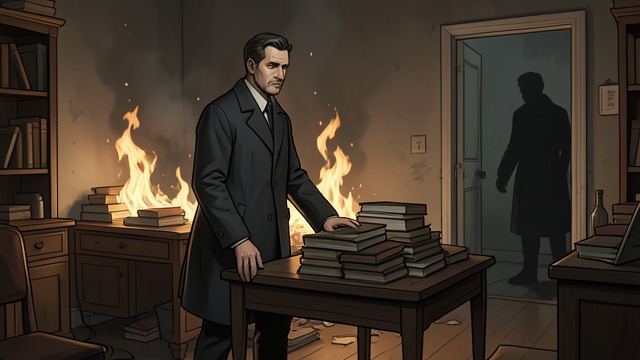
Saknussemm’s books are publicly burned at Copenhagen after he is persecuted for heresy. The destruction removes the most direct record of his scientific and travel discoveries.
For the later travelers, this history makes the surviving cryptogram appear plausibly concealed rather than casually misplaced. The burning also means that Saknussemm cannot explain his own instructions to those who follow.
Legacy through fragments
A manuscript hidden inside an old Icelandic book carries an account that formal institutions tried to erase. Its survival becomes a material link between the sixteenth-century scholar and Professor Hardwigg’s expedition.
The episode frames knowledge as vulnerable to power, but not necessarily extinguishable when a fragment survives.
The Crater Inscription
The Crater Inscription
A route marked in stone
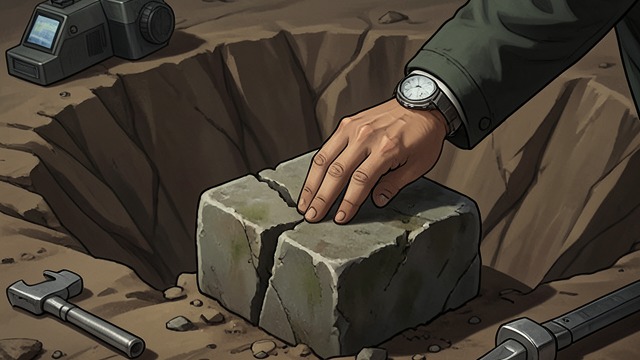
The expedition finds Saknussemm’s name cut into a block at the bottom of Sneffels crater. The inscription is the first direct physical evidence that he reached the mountain and recorded his presence there.
For Henry, who had doubted whether the journey described in the parchment ever occurred, the stone has a force that speculation cannot match. Professor Hardwigg treats it as confirmation of the author’s route.
Instructions become inherited
The shadow of Scartaris identifies the correct opening, connecting Saknussemm’s directions to the landscape itself. The travelers now follow a path chosen and marked by someone who is absent but still directing them.
His legacy acts as both guide and temptation: proof encourages them to go farther than their original doubts would have allowed.
The Dagger and Initials
The Dagger and Initials
Evidence of a traveler
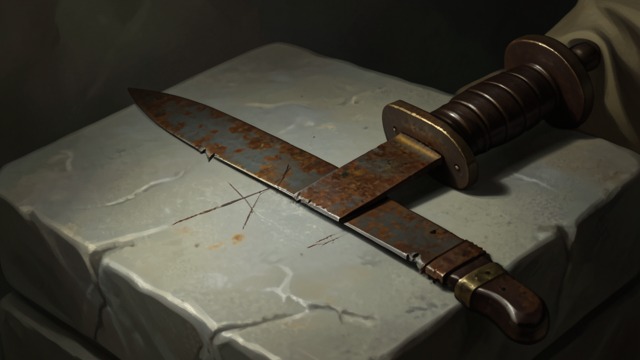
Henry finds a rusty steel dagger on a shore that resembles the party’s earlier landing place. Professor Hardwigg recognizes it as an old weapon and suspects that its owner had continued deeper into the earth.
Nearby, the travelers discover Saknussemm’s initials on a smoothed stone. The combination of an aged tool and a personal mark turns the absent explorer’s presence into a continuing chain of physical clues.
The path remains blocked
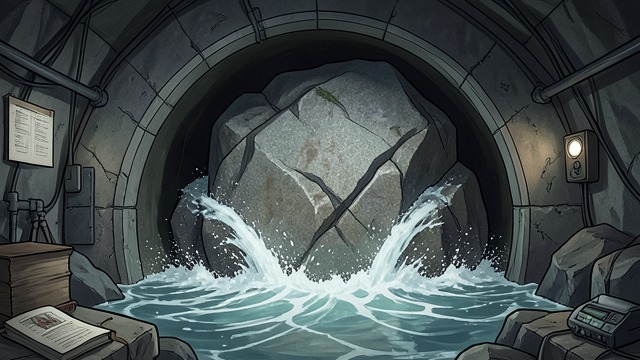
The travelers locate the tunnel beyond the inscription, only to find its entrance obstructed by granite. Saknussemm apparently passed through where they cannot, unless they can remove the fallen rock.
His achievement inspires them to blast a way forward, though the resulting flood takes control of their route.
A Predecessor, Not a Destination
A Predecessor, Not a Destination
Following what remains
Saknussemm’s trail gives Professor Hardwigg and Henry confidence to cross obstacles, but it cannot provide a complete map or guarantee a safe return. Each inscription points onward without revealing the conditions beyond it.
The explosion at the blocked tunnel transforms their pursuit into an uncontrolled passage through a flood and volcanic conduit. The expedition’s survival depends on circumstances that Saknussemm’s marks do not explain.
The unfinished record
The travelers return without reaching the earth’s center or finding Saknussemm’s final signature there. His achievement remains partly verified and partly unknown.
His enduring importance lies less in a completed destination than in the challenge his clues pose to later readers: evidence can invite discovery while leaving the greatest questions unresolved.
Sixteenth-century Iceland, before the works are destroyed
1573, during the public burning of the books
June 28, when the correct shaft is identified
Late August, after the raft is driven back to shore
During the last attempt to enter Saknussemm’s passage
