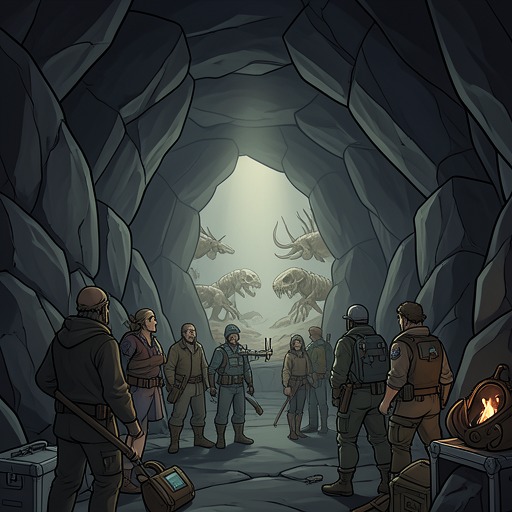
Dipterides
A Journey to the Centre of the EarthDipterides are an extinct fish encountered in the subterranean sea, where every specimen the explorers catch is blind. Their appearance links the expedition’s immediate need for provisions to its larger discovery: beneath the earth, fossil forms of life are present as living animals.
Identification and Discovery
During a fishing expedition on the subterranean sea, the explorers caught a large number of Pterychtis and fish from another supposedly extinct family, the Dipterides. Professor Hardwigg could not classify the latter exactly, but the narrator explains the name by their two fins. Their shared blindness distinguishes these fish from ordinary catches and makes the sea’s strange conditions apparent through direct observation.
Place in the Subterranean Ecosystem
The catch was substantial enough to renew the explorers’ provisions, giving the Dipterides a practical importance amid the hardships of the journey. Their presence also contributes to the travelers’ conviction that the sea contained only fish already familiar to science as fossil specimens. Rather than being merely traces preserved in rock, these ancient forms were alive in the underground waters, though sightless.
Geological and Narrative Significance
Elsewhere in the descent, the narrator reads changing strata and fossil remains as signs of a progression through geological time. He identifies a transition into Silurian rock, then observes more developed animal remains in the marbles, including a fish associated with the first form of the reptile. Against this sequence, the Dipterides belong to the expedition’s broader encounter with ancient life: fossils guide the travelers’ expectations, while their catches make those expectations tangible. The fish help turn geological speculation into an unsettlingly immediate experience of a world where life familiar from deep time persists below ground.