Lost! Lost!! LOST!!!
A Journey to the Centre of the Earth“Lost! Lost!! LOST!!!” is the narrator’s three-stage cry of recognition after he enters the wrong passage and realizes that he has lost the stream that had guided him. The phrase marks a practical mistake becoming an existential crisis: with no landmarks or apparent route back, he believes himself abandoned in a vast underground labyrinth and faces the prospect of death.
Recognition of the Mistake
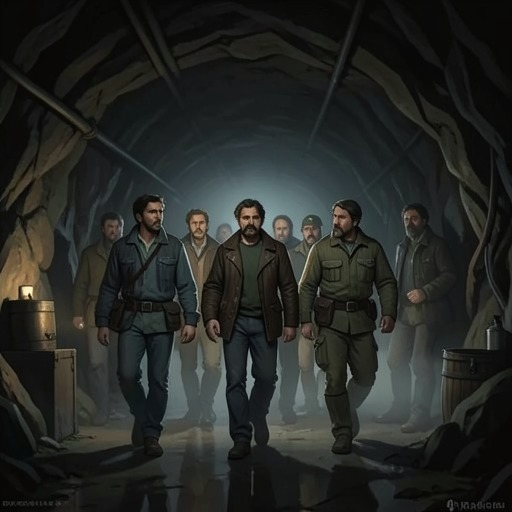
The crisis begins when the narrator takes an imprudent step in the wrong direction without noticing that the all-important torrent is gone. Only after stopping does he understand that the water must have flowed into another tunnel and that he has entered a different gallery from his companions. His questions—where they have gone, and where he himself is—give way to the repeated cry, as uncertainty hardens into recognition.
The Phrase and Its Escalation
The exact three-part exclamation grows through repetition and capitalization: “Lost!” becomes “Lost!!” and then “LOST!!!” The typography gives the realization a force that an ordinary statement would lack. It is not merely a report of location; it is the narrator’s compressed verdict on having no clue, guide, or visible sign by which to return. The following description makes the scale of that predicament feel immeasurable to his finite understanding.
Entrapment and Despair
The narrator cannot trace his steps: his feet leave no marks on the granite and shingle, and the labyrinth’s passages extend in every direction without a guide, clue, or compass. He describes the depth as a weight pressing on his shoulders, then collapses in despair before solid rock. With his lips parched and his attempts to call reduced to hoarse, hollow sounds, escape seems impossible; he imagines that all that remains is to lie down and die.
Narrative Significance
The repeated cry concentrates the reversal from travel into isolation. The narrator’s earlier mistake is small and initially unnoticed, but the disappearance of the stream removes the route’s one dependable guide; the vanished landmarks make the error irreversible in the moment. Even the thought that future observers might find his fossil bones and debate their depth turns personal terror into a bleak image of scientific discovery. The phrase therefore signals both the immediate loss of direction and the apparent extinction of hope.