Severe thirst and water deprivation
A Journey to the Centre of the EarthSevere thirst and water deprivation expose the material limits of the expedition beneath the earth: confidence in finding underground water cannot sustain the travelers when their stores run low and the passages remain dry. The crisis tests both the expedition’s plans and the relations within its small party, culminating at the junction when Professor Hardwigg gives Henry the final water he has kept for him.
Early confidence and dwindling reserves
After seven hours of travel, the explorers halt in a cavern with abundant air, but their provisions reveal a more urgent shortage: the water reserve is already half exhausted. Henry warns Professor Hardwigg that they do not have enough to last five days. The Professor answers confidently that they will find more than they need once they pass through the lava crust, reasoning that springs cannot force their way through solid stone. His assurance offers a geological explanation, not an immediate source; the party continues without having found water.
The expectation of relief gives way to rationing. As the travelers proceed through the transition rocks, Henry recognizes that water is unlikely there, and the remaining supply will last no more than three days. He regards thirst as a threat not only to the journey but to their lives, while doubting that discussion will change his uncle’s resolve. The shortage thus grows out of a mismatch between the Professor’s expectation of subterranean resources and the actual conditions of the route.
The dry gallery and the coal strata
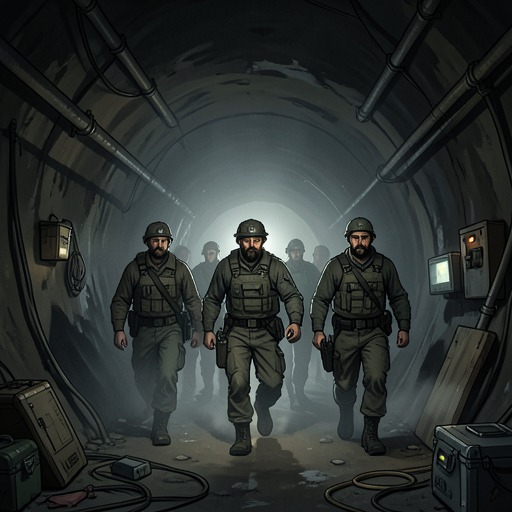
The party travels through a succession of arches and tunnels in silence. On Friday, after a night in which thirst has reduced Henry’s appetite, they continue along the gallery, negotiating its turns, climbs, and descents. Henry sees that even the Professor appears to have gone too far, but no water has been found and the explorers keep moving. Their silence and gloom register a change in the expedition: persistence is no longer buoyed by the earlier confidence that a spring will soon appear.
After about ten more hours of travel, the gallery’s appearance changes. The reflective marble, schist, calcareous rock, and red sandstone give way to a dark wall; when Henry touches it, his hand comes away black. They have reached the coal strata. The discovery identifies the geological setting, but it does not solve the shortage. At the next meal Henry can no longer eat and cares only for the few drops allotted to him. The guide Hans’s gourd, less than half full, is all the water left for the three travelers. While his companions sleep after eating, Henry stays awake, waiting for morning.
Retreat and physical collapse
The new strata make continuation untenable, and the explorers return along the route they have traveled. The retreat does not bring quick relief: on its first day, their water supply gives out completely. Schiedam is left as their only liquid, but Henry cannot bear it, and the heat and fatigue further weaken him. The party repeatedly halts; Hans and the Professor try to comfort Henry, while Henry recognizes that his uncle, too, is struggling against the journey’s exhaustion and the lack of water.
After many hours crawling, more exhausted than able to walk, the party reaches the junction of the galleries on Tuesday, July 7, at ten in the morning. Henry collapses on the dry lava floor and falls into a deep lethargy. The junction is a practical turning point: it is the place where the retreat brings them, but arrival there finds Henry nearly unable to continue. The remaining water is no longer simply a ration to divide; it becomes a decision about whom it can keep alive.
The last mouthful and a change in the relationship
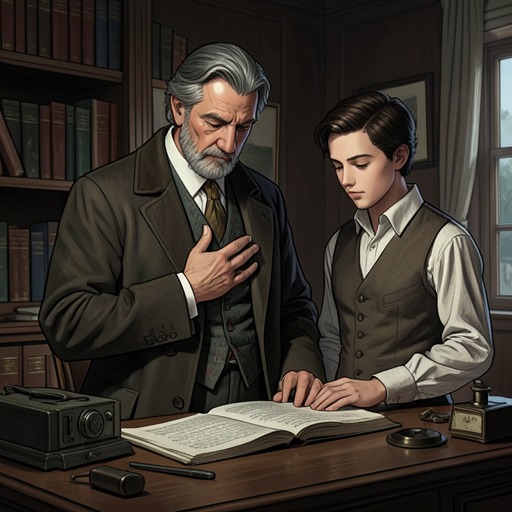
Professor Hardwigg lifts Henry and gives him water from the gourd at his side. Henry is startled: his uncle explains that this is the very last water, kept at the bottom of the bottle despite repeated temptation to drink it himself. He saved it for Henry because he expected him to collapse at the junction and wanted to restore him. The account makes the earlier shortage concrete in a single act: the reserve has not been replenished, and the Professor’s confidence has given way to a private sacrifice made during the return.
The gesture also changes how Henry understands his uncle. He is not accustomed to such tenderness from the Professor and responds by taking his trembling hands; the Professor allows the touch and looks at him with tears in his eyes. The water provides immediate relief, but the scene’s consequence is relational as well as physical: under extreme deprivation, the Professor’s guarded concern becomes visible. The ordeal therefore exposes both the expedition’s dependence on material resources and a care that his habitual manner had concealed.