The Wrong-Tunnel Detour and Water Crisis
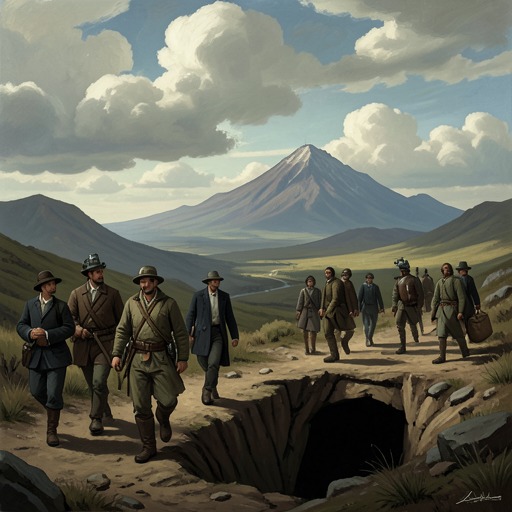
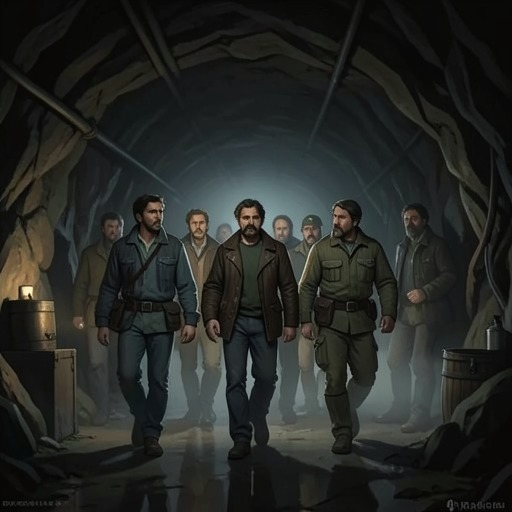
A Journey to the Centre of the EarthThe Wrong-Tunnel Detour and Water Crisis turns an uncertain choice beneath Sneffels into a test of endurance and care: after reaching a junction with four dark passages, the expedition takes the eastern tunnel, finds it blocked, and must crawl back through the underground maze. The return costs the travelers their water and nearly costs Henry his life; at the junction, Professor Hardwigg reveals that he has preserved one final mouthful for his nephew.## The choice at the junction At seventeen minutes past twelve, Henry Lawson, Professor Hardwigg, and Hans Bjelke rejoin Hans, who has stopped ahead of them. They have reached the end of the shaft, but not a clear route forward: four narrow, somber tunnels cross at the junction, and nothing indicates which one follows Arne Saknussemm’s path. The choice is therefore made without evidence to guide it. Professor Hardwigg, reluctant to show hesitation before Henry or Hans, points to the eastern tunnel, and the party enters it.
The decision is less a confident discovery than a gamble. The narrator recognizes that, without any sign distinguishing the routes, the travelers must trust to chance. Professor Hardwigg’s eagerness to press on masks that uncertainty rather than resolving it. That contrast—between the appearance of decisive leadership and the absence of reliable guidance—sets the detour in motion.
The dead end and the return
For a time, the travelers continue through a passage of lava that offers a natural, sloping route. Professor Hardwigg keeps moving with conspicuous determination, walking, sliding, climbing over fragments, and rolling down heaps of broken lava. At six in the evening the party halts after making six miles southward, although it has descended less than a mile. They eat in silence and sleep wrapped in traveling rugs; in this underground solitude, they have neither wild beasts nor people to fear.
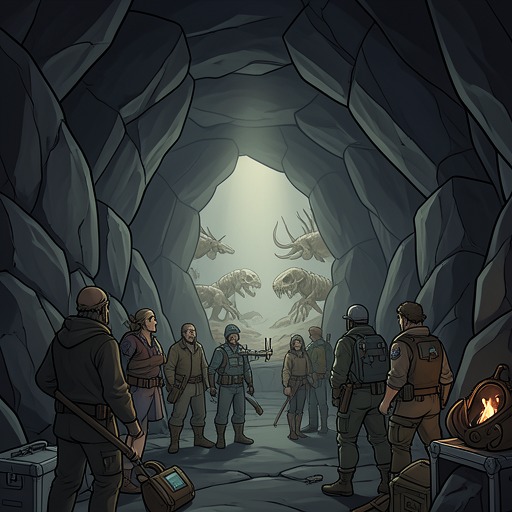
The passage eventually proves not merely difficult but wrong. After an excursion through a vast coal mine, the travelers reach a wall at six o’clock: no way forward exists to the right, left, above, or below. Hans folds his arms; Professor Hardwigg falls silent; Henry is stupefied. Once the obstruction makes clear that they are not following Arne Saknussemm’s route, Professor Hardwigg recasts the discovery as useful knowledge. He proposes turning back and predicts that they can regain the junction within three days, but Henry calculates that the return will take five days of hard work.
They set out again early the next day, with no time to spare. The reversal is punishing: Professor Hardwigg bears the mistake in concentrated, suppressed anger, Hans with his usual resignation, while Henry complains and despairs. The earlier drive forward has yielded to a grueling retreat, and Henry sees the setback as a possible defeat at the very outset of the expedition.
Thirst and the last water
The return becomes life-threatening when the party’s water runs out on the first day. The remaining Schiedam liquor is no substitute for water: Henry says it burns his throat, and even its sight is unbearable. In the stifling passage, fatigue leaves him close to collapsing. Hans and Professor Hardwigg stop to comfort him, though Henry can see that his uncle is also struggling against exhaustion and the torment of thirst. His memory of the march dissolves into a confused, nightmarish blur.
On Tuesday, July 7, after crawling on hands and knees for hours, the travelers finally reach the junction. It is ten in the morning. Henry lies inert on the dry lava while Hans and Professor Hardwigg lean against the wall and try to nibble at biscuit. Henry’s lips are swollen and scorched; he falls into a deep lethargy. The junction that had first presented an abstract problem of navigation is now the place where the cost of the wrong choice becomes unmistakably bodily.
Professor Hardwigg’s sacrifice
Professor Hardwigg approaches Henry and lifts him tenderly. His quiet expression of pity surprises Henry, who is unaccustomed to such visible softness from the Professor. Henry clasps his uncle’s trembling hands; Professor Hardwigg lets him hold them, and his eyes are wet with tears. The moment shifts their relationship from command and complaint toward mutual tenderness, expressed through touch rather than explanation.
Then Professor Hardwigg takes the gourd at his side and puts it to Henry’s lips. The water is only a mouthful, but it cools Henry’s throat and, as he describes it, brings him back to life. Professor Hardwigg explains that it is the very last water: he has guarded it in the bottom of his bottle, repeatedly resisting the desire to drink, because he expected Henry to collapse at the junction and wanted to restore him. Henry’s thirst is not fully quenched, but his throat relaxes, the inflammation of his lips subsides somewhat, and he regains enough strength to speak.
The crisis thus ends not with a new route or a renewed supply, but with the consequence of a private act of care. The expedition’s return to the junction confirms how costly its mistaken turn has been; Professor Hardwigg’s reserved mouthful keeps that cost from becoming Henry’s death. His practical authority has not prevented the error, but his willingness to endure thirst for his nephew gives the episode its decisive change: at the point where the expedition seems reduced to exhaustion and failure, Henry discovers the tenderness beneath his uncle’s relentless resolve.