Timer
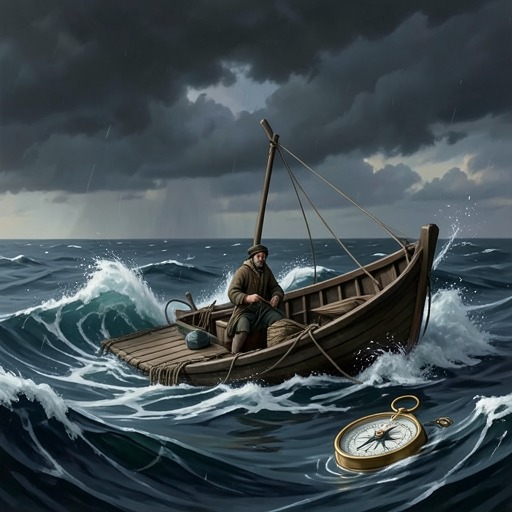
A Journey to the Centre of the EarthThe chronometer is a timekeeping instrument carried on Professor Hardwigg’s expedition, where it serves both as a record of the journey and as a tool for measurement. Most strikingly, Professor Hardwigg uses it to time a voice traveling through the underground gallery, converting an interval of forty seconds into an estimate of twenty thousand four hundred feet and revealing the daunting distance separating him from Harry.
Equipment and Record
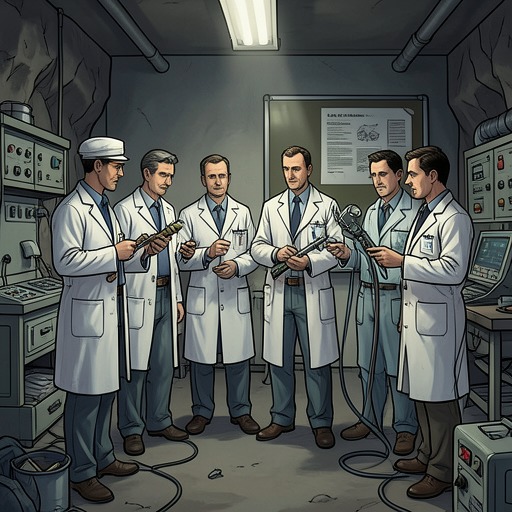
The chronometer belongs to the expedition’s scientific equipment, packed alongside instruments, arms, tools, and provisions. Before the descent, Professor Hardwigg arranges the instruments and begins a notebook for memoranda of the travels. Its first entry records Monday, June 29, at 8:17 in the morning, establishing a precise temporal reference at the outset of the underground journey.
This record-keeping function places the chronometer within a broader practice of observation: the expedition does not merely travel but attempts to register and measure what happens. Its exact time becomes especially consequential when the travelers are separated and ordinary contact is impossible.
Measuring the Echo
During the search for Harry, Henry proposes an experiment using the chronometer. Professor Hardwigg is to speak his name while Henry notes the precise second; Henry then repeats the name upon hearing it, and the elapsed time before Professor Hardwigg hears the reply provides the basis for estimating how long the sound takes to travel one way.
The test yields a forty-second interval between the two words. Professor Hardwigg halves it to twenty seconds, then applies an assumed sound speed of 1,020 feet per second to calculate a distance of 20,400 feet—described as a league and a half and one-eighth. The chronometer thus makes the echo more than an acoustic event: it supplies a measurable interval from which the explorers infer their separation.
Precision and Its Limits
The calculation gives the rescuers a way to understand the scale of the distance, but its emotional consequence is immediate. Henry receives the result as a kind of death knell and repeats the estimate in despair. The instrument’s precision does not bring Harry closer; instead, it gives numerical form to the danger of his isolation.
Elsewhere, the chronometer belongs to a larger culture of expeditionary measurement, in which instruments are expected to make unfamiliar conditions legible. Its significance lies not in an independent action of its own, but in the way a recorded second can become a geographical estimate—and, at the same time, a stark measure of how far the travelers may be from one another.