
The Second Door
A Murder Is AnnouncedA seemingly obsolete door becomes the physical clue that transforms a dubious theory into a solvable murder case.
increasing Bearing strength in each event
 decreasing
Bearing strength in each eventdecreasingA Hall of Doors
A Confusing Passage
A Household Detail
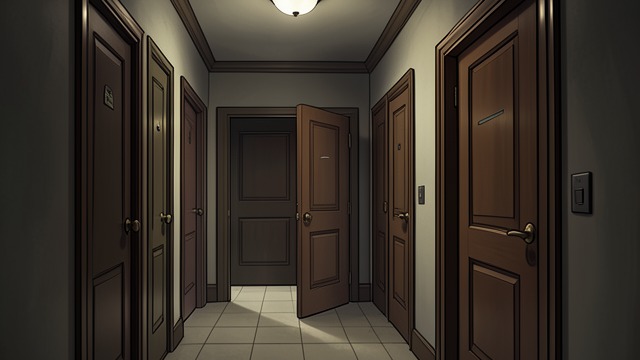
Little Paddocks has an unusually crowded hallway and several doors close together. Dora Bunner explains that one door into the drawing-room has been shut for years and is often mistaken for the working entrance.
A Mark on the Panels
Dermot Craddock notices a horizontal mark where a hall table once stood. The harmless-looking trace prompts him to ask when the furniture was moved and why.
Oil on the Hinges
The Door Opens
A False Obstacle
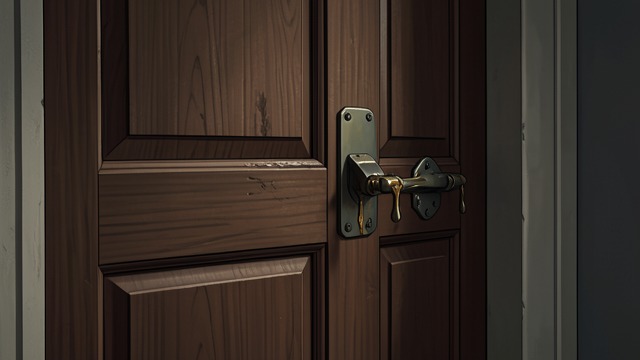
Dora Bunner describes the door as locked and bolted, but Craddock finds that its bolt slides easily. A key from the hall drawer turns without difficulty.
Fresh Preparation
The oiled lock and hinges show that the door has been used recently. Craddock now believes the hidden shooter was already in the house rather than an outsider arriving from the garden.
The Exit Route
A Route Through Darkness
The New Reconstruction
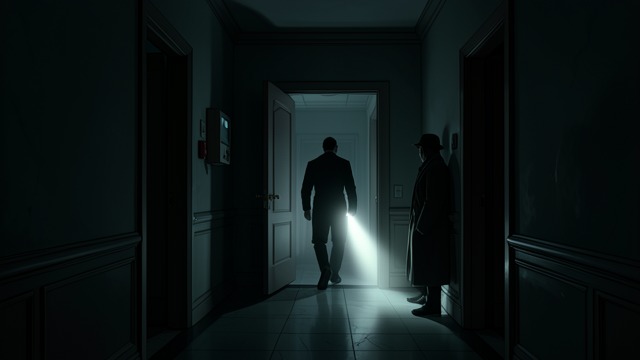
With the room’s lights extinguished, someone could slip through the second door into the hall. The flashlight would command the guests’ attention while that person approached Rudi Scherz from behind.
Suspicion Turns Inward
The clue shifts the inquiry away from the dead man’s supposed solo robbery. The possible killer must have known the house and had access to it before the attack.
Access Was Common
A Wider Circle
An Assumption Corrected
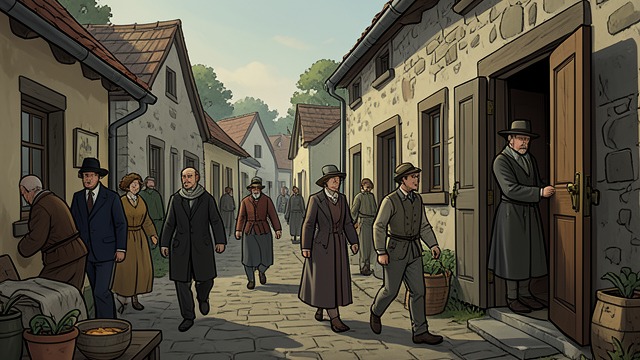
Sergeant Fletcher initially thinks only a household member could have prepared the door. Mrs Swettenham’s casual account of entering through the side door reminds him that villagers move freely between one another’s homes.
Opportunity Expands
The open-door custom means that neighbours, as well as residents, could have entered Little Paddocks while it was empty. The evidence identifies a method but does not yet identify its user.
Proof, Not Theory
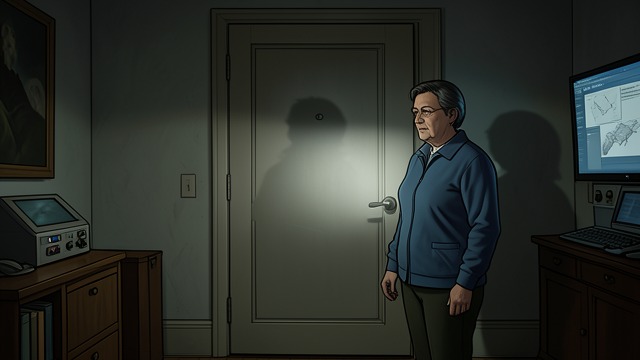
The Door’s Meaning
The Witness’s Memory
Amy Murgatroyd recalls that one person was absent from the drawing-room during the crucial moments. Her observation gives the door a human consequence: the unseen person may have used it.
A Case Reopened
The door is the concrete evidence that prevents the shooting from being dismissed as an accident. Alongside later clues, it helps establish that the intruder was killed by someone else.
The first police visit
During Craddock’s second visit
After the hidden door is discovered
During Sergeant Fletcher’s house search
After Amy Murgatroyd’s death
