Amy Murgatroyd’s murder
A Murder Is AnnouncedAmy Murgatroyd’s murder is the killing of the witness whose hesitant recollection unlocks the staged hold-up at Little Paddocks. After she begins to understand that a woman had slipped out of the drawing room during the shooting, Charlotte Blacklock kills her before that insight can be fully explained. The murder is therefore both an attempt to silence a witness and the consequence of a clue finally taking shape: “She wasn’t there.”
The witness and the unresolved clue
Amy Murgatroyd, referred to in the investigation as Miss Murgatroyd, had been present during the hold-up at Little Paddocks. The witnesses’ accounts were difficult to reconcile. As Craddock observed, they had all seen something different; the pressure of the incident did not produce a single, dependable account of what had happened. The confusion mattered because the witnesses were certain they had seen a masked man with a revolver and a torch, even though the conditions made their supposed view of him doubtful.
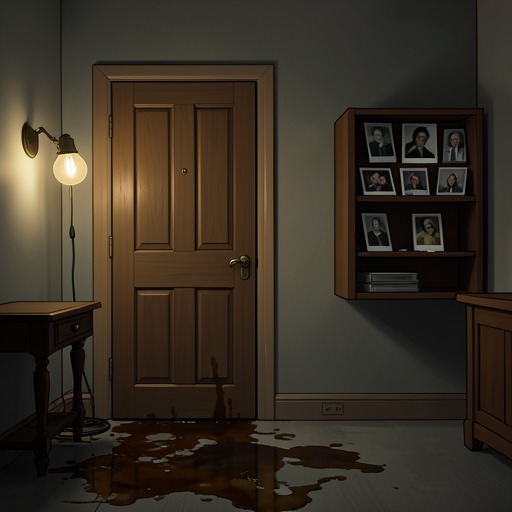
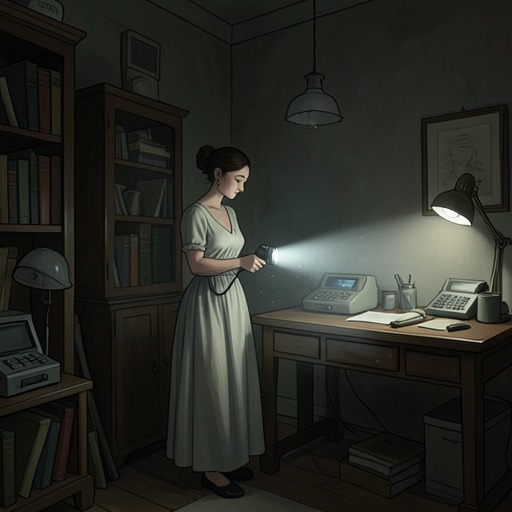
The torch had been directed at the people in the room, dazzling them. Miss Murgatroyd, however, had been positioned behind the door, with the door between her and the torch. She was not looking straight into its beam as the others were. That difference in position gave her a distinct opportunity to see what others missed, though she did not at first recognize the importance of what she had observed. Her evidence illustrates the gap between noticing something and understanding what it means.
Recollection and the fatal sentence
Miss Murgatroyd’s memory did not return as a complete account of the shooting. Jane Marple explains that people may notice details without knowing they have noticed them, and may later recall those details when they stop trying to reason them out. In Miss Murgatroyd’s case, the remembered scene had to be pieced together from the path of the torch, the people and objects it passed, and the moment the shots were fired. The decisive realization concerned not a person she could identify, but a place where someone should have been and was not.
Before leaving with Miss Hinchcliffe, Miss Murgatroyd called after her, “But, Hinch, she wasn’t there…” That brief sentence carried the crucial distinction: someone had been missing from the drawing room at the relevant moment. Miss Hinchcliffe later understood that the remark referred to a woman who had left the room through another door and was in the hall. The clue mattered because the person’s absence, rather than a clear view of the masked intruder, was what Miss Murgatroyd had retained from the confused scene.
The murder
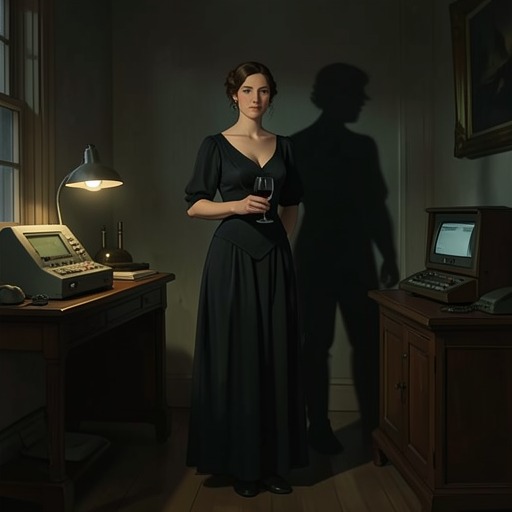
After Miss Hinchcliffe departed, Charlotte Blacklock approached Miss Murgatroyd with her scarf, offering to put it around her neck. She then used the scarf to kill her. Miss Murgatroyd could not call out, and Charlotte tightened it further. The act occurred after Miss Murgatroyd had spoken the sentence that pointed toward the concealed movement out of the drawing room.
Miss Hinchcliffe did not witness the killing. When she returned from the station, she told Jane Marple what she and Miss Murgatroyd had been discussing and regretted leaving before she had heard the explanation. She recognized that Miss Murgatroyd’s words suggested the answer lay among the women they had not eliminated. Her account established both the timing of the clue and why Charlotte might have feared that Miss Murgatroyd would identify its significance.
Consequences and narrative significance
The killing confirms that Miss Murgatroyd’s recollection threatened the secret behind the shooting. Charlotte later acknowledged killing her and said that she had not wanted to kill anyone, but had felt she had to. She singled out Dora Bunner’s death as the loss she minded most, describing herself as alone after Dora died. This confession connects Miss Murgatroyd’s murder to the broader pattern of Charlotte’s attempts to protect herself by eliminating people who could expose her.
The murder also sharpens the story’s contrast between apparent certainty and actual knowledge. The witnesses believed they had seen a gunman, but the glare and confusion undermined what they thought they knew. Miss Murgatroyd’s belated recollection proved more useful precisely because it was incomplete: she had not immediately converted her perception into an explanation. Her words redirect attention from the supposed intruder to the empty place in the room, making the witness’s death an attempted suppression of the clue that ultimately leads back to Charlotte Blacklock.