George Rydesdale
A Murder Is AnnouncedGeorge Rydesdale is the Chief Constable of Middleshire, a restrained but decisive senior officer whose confidence in careful investigation shapes the police response to the events at Little Paddocks. He listens, weighs evidence, and gives brief orders; when an experienced outsider offers a useful perspective, he is prepared to set convention aside.
Identity and leadership
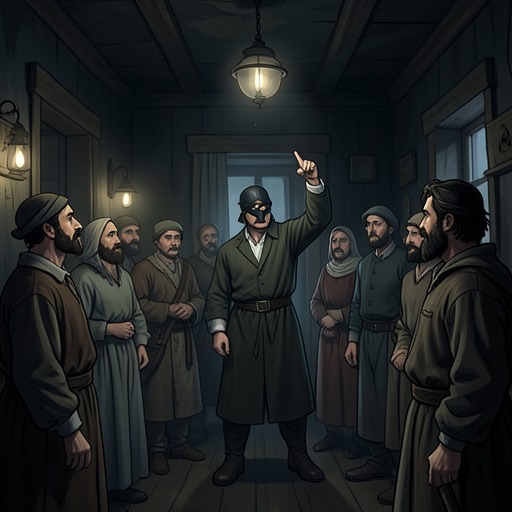
Rydesdale is described as a quiet man of medium height, with shrewd eyes beneath bushy brows. He is habitually more listener than talker. When he does speak, his unemotional manner and concise orders carry authority, and others obey. The portrait establishes a leadership style founded less on display than on attention and self-command.
Direction of the investigation
After the incident at Little Paddocks, Rydesdale recalls Detective-Inspector Dermot Craddock from Liverpool, where Craddock had been making inquiries for another case, and officially places him in charge. Rydesdale values Craddock’s intelligence and imagination, but especially his discipline: he proceeds slowly, checks each fact, and keeps an open mind until the investigation is complete. This endorsement links Rydesdale’s own measured temperament to the method he expects from the officer leading the case.
Rydesdale receives and reads the interview transcript Craddock has prepared. In a separate development, he has also just finished reading a wire from the Swiss Police concerning Rudi Scherz’s record. His attention to both the collected interviews and information from abroad reflects an investigation that tests accounts against external evidence rather than relying on first impressions.
Judgment and cooperation
When Sir Henry Clithering asks whether Jane Marple may read Craddock’s notes from the interviews conducted at Chipping Cleghorn, Rydesdale acknowledges that the request may be unorthodox but agrees. He says he has not reached his position by being orthodox and is curious to hear what she will make of the material. His decision gives Marple access to the same interview record that informs the official inquiry, making cooperation with her part of the case’s investigative process rather than a merely social consultation.
Rydesdale also arranges lunch at the Royal Spa Hotel in Medenham Wells with Craddock and Sir Henry. The invitation comes as Craddock is weighing an unresolved point and is followed by the introduction of a letter that Rydesdale and Sir Henry have received. The scene presents the Chief Constable as both a practical coordinator and a conduit for information relevant to the case.
The case’s everyday setting
The investigation unfolds amid the practical constraints of post-war village life. At Little Paddocks, Miss Blacklock explains that she has had the central heating lit because the house has felt damp and clammy, while fuel rules make access to coal dependent on being able to state that there is no other means of cooking. Elsewhere, Mrs Swettenham explains that she has brought quinces for Miss Blacklock’s jelly and entered through the side door, reflecting a local habit of neighbours moving freely between houses during the day.
A later explanation of a note about Thursday and the usual hiding place connects the investigation to informal farm barter: Thursday is when one nearby farm makes butter, and the flour bin beneath the dresser serves as a customary drop-off point, though the exchange is described as potentially illegal. These details show the ordinary arrangements through which people, goods, and information circulate around the case. Rydesdale’s investigation depends on testimony produced within that social world, where familiar access and unofficial exchange can complicate the interpretation of who entered a house and why.