Letitia Blacklock’s letters to Charlotte
A Murder Is AnnouncedLetitia Blacklock’s letters to Charlotte are both a record of a sister’s sustained care and a surviving account of the Goedler family’s history. Kept in an attaché-case belonging to Charlotte, the old letters preserve details about Sonia Goedler’s marriage to Dmitri Stamfordis, Randall Goedler’s suspicions, and the conversations that shaped the terms of his will. Their private, domestic form becomes a source of investigative evidence: Jane Marple recognizes that one passage about Randall’s inquiries into Stamfordis deserves a second reading.
Discovery and Physical Record
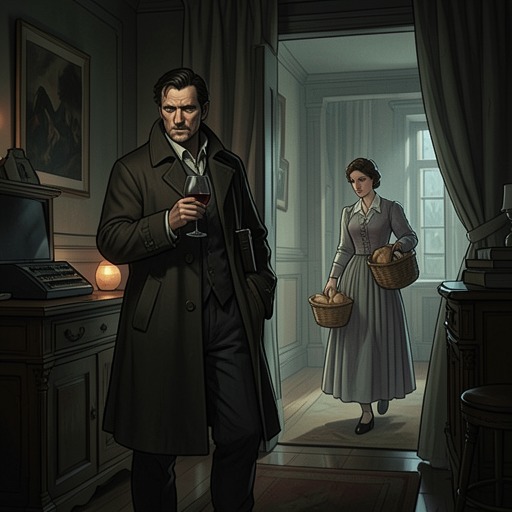
Inspector Craddock finds the correspondence in a small attaché-case among old papers and letters. The case bears the initials C.L.B., which he correctly identifies as belonging to Letitia’s sister Charlotte. Among its contents are yellowed letters signed by Letitia, as well as occasional snapshots that had been enclosed in the correspondence. The papers make the past tangible in a form different from the family photograph album: they preserve not only images, but Letitia’s own descriptions of people, household events, and business affairs.
One letter opens with a report of a picnic attended by Belle Goedler and Randall. It mentions the successful flotation of Asvogel and the premium on its preference shares, small business details that place the sisters’ correspondence within Letitia’s working life at the Goedler office. Another letter addresses Charlotte’s withdrawal from other people and her fear of a disfigurement. Letitia reassures her that the condition is not as bad as Charlotte imagines and urges her not to become morbid. Read together, the letters offer both a practical record of the world around the Goedlers and evidence of the close attention Letitia paid to her sister.
A Sister’s Care
Letitia wrote at length to keep Charlotte interested in life and to sustain her spirits while Charlotte was an invalid. The letters recount everyday happenings and seemingly minor details that Letitia thought might matter to her sister; Charlotte preserved them, along with the occasional photographs. Craddock sees the collection as a portrait of Letitia’s affectionate concern, not merely an archive of facts. Its accumulated detail is especially valuable because Letitia had since forgotten much of the past that she had once set down.
The correspondence also gestures toward the family life around the sisters. Craddock’s account of what he has found includes their father, Dr Blacklock, whom he describes as an obstinate man resistant to new ideas and methods. In a letter, Letitia asks Charlotte whether she has seen more people and encourages her to be less morbid. The paper trail thus records care as repeated attention: Letitia reports, reassures, asks after Charlotte’s health, and continues writing even when the immediate subject is ordinary household or office business.
Sonia and Dmitri
The most consequential letter recounts the conflict over Sonia’s intention to marry Dmitri Stamfordis. Letitia writes that Randall strongly distrusts him and calls him a crook and swindler, while she herself says he is attractive but not to be trusted. She tries to mediate between Randall and Sonia, but their disagreements recur when they meet. In the same letter, Letitia reports that she keeps the office running while Randall gives her a free hand, and describes his confidence in her judgment and his willingness to pursue new business ventures.
The letter also records the difference between Randall’s view and Belle’s. Belle treats Sonia’s choice as her own, reasoning that Sonia has her own money and should marry the man she wants, even if she may later regret it. Letitia, by contrast, considers the marriage potentially disastrous and emphasizes the apparent undesirability of Stamfordis. This disagreement matters beyond family opinion: it documents the hostility that surrounded Sonia’s marriage and Randall’s mistrust of the man who entered his sister’s life.
The Will and the Inheritance Clue
The letters illuminate how Sonia’s children came to be included as alternative beneficiaries in Randall’s will. Letitia later explains that she raised the possibility with Randall herself: if Letitia died before Belle, she asked, what would happen to the money? Randall initially objected to Sonia inheriting, fearing her husband would gain access to it. Letitia proposed that Sonia’s children, Pip and Emma, should receive it instead, and Randall eventually agreed to include them. Letitia says she had heard nothing of Sonia or her children since, and did not know whether they were alive or where they might be.
That account clarifies the conditional structure behind Letitia’s apparent inheritance. Randall’s fortune was held in trust for Belle during Belle’s lifetime, with the remainder intended for Letitia. If Letitia predeceased Belle, the legal offspring of Randall’s sister Sonia were the proposed alternative heirs. The correspondence therefore connects family history to a financial contingency: a conversation prompted by the possibility of Letitia’s earlier death established a route by which Sonia’s descendants could inherit.
Investigative Significance
Craddock brings one of the letters to Jane Marple, explaining how he found it and asking her to read it. He hopes the correspondence might contain facts that Letitia herself no longer remembers, perhaps even a clue to the identity of the unknown person at the center of the investigation. The letters’ value lies partly in their ordinary specificity: they preserve old names, disputes, business references, and relationships in Letitia’s own contemporary account.
At first Craddock doubts that the letter about Sonia and Stamfordis will help. Jane Marple directs him back to the sentence reporting that Randall was making inquiries about Stamfordis. Her response turns an apparently familiar family anecdote into an investigative lead. The letters do not simply summarize a past already understood; their preserved details allow the investigators to reconsider it. In that way, Charlotte’s decision to keep Letitia’s correspondence gives the inquiry a second archive—one that survives the removal of photographs from the family album and carries a clue in the words Letitia wrote long before the present investigation.