Rudi Scherz and Myrna Harris’s courtship
A Murder Is AnnouncedRudi Scherz and Myrna Harris’s courtship links Rudi’s polished attentions to the false story he told about his final errand: Myrna understood that he would take part in a sham hold-up, but not that it would end in a shooting. Their connection was neither a settled romance nor a mere passing acquaintance. It was a relationship of dates, gifts and guarded affection, and its unevenness left Myrna with information that became important only after Rudi was dead.
The Acquaintance at the Hotel
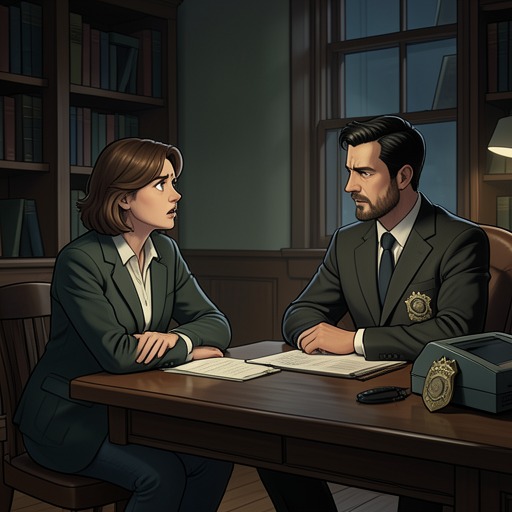
Myrna worked as a waitress in the hotel grill where Rudi worked in reception. When the police began asking who might have lent him money, his name led them to her as a woman in his life. She was alarmed to be interviewed and initially insisted that she knew nothing about the crime. Her caution was shaped by what she said she had assumed: because Rudi held a hotel job, she had thought him respectable, while also expressing a general distrust of foreigners. She wondered whether he might have belonged to a criminal gang, but Inspector Craddock told her the police believed he had acted alone.
Myrna’s first account already contained a revealing contradiction. She described the relationship as friendly and nothing serious, yet also acknowledged that she had gone out with Rudi repeatedly. The distinction mattered to her: she did not present herself as a committed partner, and she said she stayed on her guard. Rudi, by contrast, could make their meetings feel attentive and intimate without winning her full confidence.
Rudi’s Courtship and Myrna’s Doubts
Rudi had good manners and knew how to look after a girl, in Myrna’s account. He found them the best seats at the cinema, sometimes bought her flowers, and was a lovely dancer. These concrete acts explain why she continued to see him despite her reservations; the relationship offered pleasure and considerate attention, even as she questioned what he said about himself.
He talked of wealthy and important relatives in Switzerland and explained his shortage of money by saying that currency regulations prevented him from bringing funds to Britain. Myrna doubted the fit between this story and his ordinary clothes, which she did not consider especially smart. She also distrusted his tales of climbing in the Alps and rescuing people at the edge of a glacier: he had become giddy merely walking near the edge of Boulter’s Gorge. To her, his heroic stories sounded like boasting rather than reliable evidence of the life he claimed to have led.
Her suspicions did not mean she knew about his crimes. She later recalled that items had gone missing, including a diamond brooch and a small gold locket, but at the time she had not imagined Rudi responsible. His manners and his role at the hotel had made him seem safe enough to date, while his money problems and extravagant claims remained oddities rather than proof.
The Sham Hold-Up He Described
Myrna’s fuller account emerged after Craddock reassured her that he would try to keep her out of trouble. She explained that Rudi had broken a date: they were meant to go to the pictures, but he said he could not come. She was standoffish because she disliked being stood up, and Rudi answered that he had a bit of a lark planned and would not be out of pocket. He offered her a wrist-watch, then disclosed that there would be a party where he was to stage a sham hold-up.
Rudi showed her the murder advertisement he had placed. Myrna laughed at it, while Rudi treated the plan as childish and mocked what he called the English for not growing up. His casual tone helped make the scheme sound like a stunt, not a real attack. The exchange also shows that he offered Myrna a limited version of his plan: she knew of the sham robbery and the promised watch, but she did not know that he would carry a revolver.
Their disagreement over his insult to the English ended in reconciliation. That small repair sits beside the larger deception: the couple could quarrel and make up over his teasing, while Myrna remained unaware of the lethal reality he was approaching. The date he cancelled therefore became the point at which his courtship and his criminal role crossed, without Myrna understanding how far the latter would go.
After Rudi’s Death
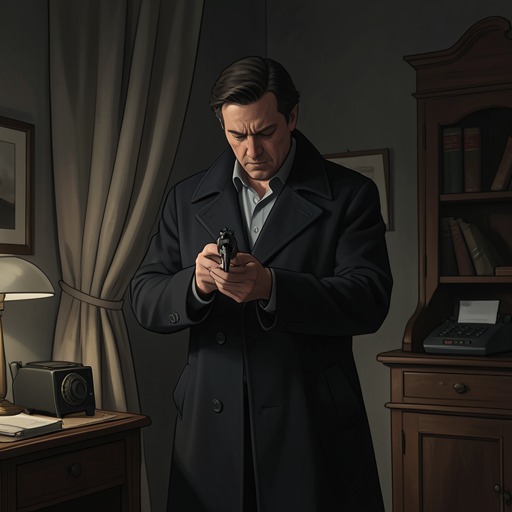
When Myrna read that Rudi had shot someone and then shot himself, she was frightened by how her prior knowledge might look. She thought the police could suspect her of being involved because she had known beforehand about the planned hold-up. She insisted that it had seemed a joke when Rudi described it and that she would have sworn he meant it that way. She had not even known he possessed a revolver, and he had never told her he intended to take one.
Her testimony consequently separates foreknowledge from complicity. Myrna knew Rudi had arranged a sham hold-up at a party and expected a wrist-watch in return; she did not know that the staged robbery would become a real shooting. The courtship had given her access to his plans, but only through the version he chose to share. Its decisive consequence was not that she helped him carry out the crime, but that her recollection exposed the gap between the harmless prank he presented and the violence he concealed.