Arizona Cave
A Princess of MarsThe Arizona cave is the remote ledge-side refuge where John Carter’s earthly flight turns into an inexplicable passage to Mars. Its narrow entrance and cavernous darkness first shelter him from pursuit; after James K. Powell’s death, it becomes the setting for Carter’s apparent separation from his own body and the transition that launches the novel’s Martian narrative.
Setting and Discovery
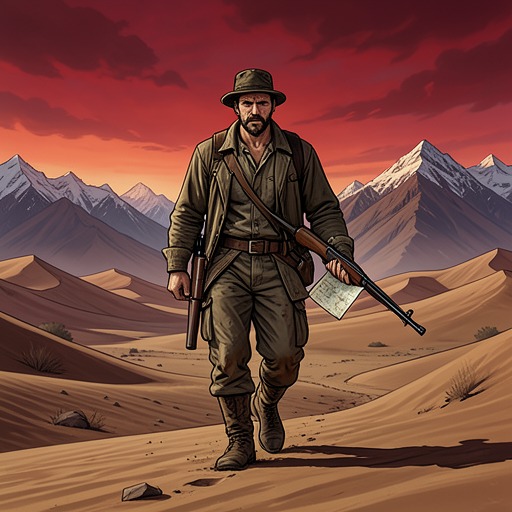
Carter reaches the cave by following a broad, level trail cut along a high cliff, with a sheer ravine dropping away on the other side. After roughly a hundred yards, the trail turns sharply right and ends at the entrance, an opening about four feet high and three to four feet wide. The constricted mouth gives way to a chamber roughly a hundred feet across and thirty or forty feet high, with a smooth, worn floor and signs of habitation in the distant past. Dense shadow obscures the back of the cavern and conceals whether further chambers lie beyond it.
The cave is both a defensible refuge and an uncertain enclosure. Carter believes one man could hold the narrow approach against an army, but the darkness within prevents him from seeing what the chamber contains. That contrast—an exposed ledge outside, a seemingly secure interior, and an unseen depth beyond—is central to the scene’s suspense.
Powell’s Death and Carter’s Collapse
At the cave, Carter lays James K. Powell on the ground and examines him carefully. He finds no sign of life, yet continues trying to revive him: he forces water between Powell’s lips, bathes his face, and rubs his hands for nearly an hour. His efforts end only when he accepts that his friend is dead. Carter leaves Powell’s body on the ledge and enters the cave to reconnoiter, carrying the grief of the loss into the refuge he has found.
As he explores, drowsiness overtakes him. He attributes it to the strain of the ride, the fight, and the pursuit, and initially believes the cave offers safety. He nevertheless knows that sleep would leave him vulnerable to the pursuing Indigenous men. When he tries to return to the entrance, he reels against the wall and falls prone on the floor. His horse later wanders down the trail in search of food and water, leaving Carter alone inside with Powell’s body still visible outside.
The Cave as Threshold
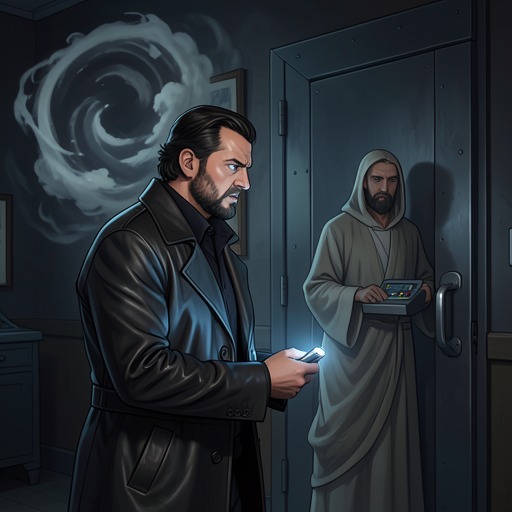
Carter remains unable to move through the long day and into the night. He hears what seem to be cautious movements behind him, but the sounds eventually stop; he can only guess at the cause of his paralysis and hope it will end as suddenly as it began. Near midnight, a moan and the rustle of something moving in the shadows provoke a violent effort of will. When the paralysis breaks, Carter stands against the cave wall, facing an unknown presence.
Moonlight then reveals the scene’s defining impossible image: Carter sees his own clothed body lying lifeless on the floor, while he stands apart from it, naked. Bewildered by the apparent transformation, he wonders whether he has died, but the pounding of his heart, gasping breath, cold sweat, and the pain of pinching convince him that he is not a wraith. The cave has made the boundary between body and self visible without explaining it, turning a place of shelter into the site of a mystery Carter cannot resolve.
Outside, the moonlit Arizona landscape and the stars provide the transition’s next focus. Carter’s attention fixes on Mars, a red star that has long fascinated him. He feels irresistibly drawn toward it, closes his eyes, and reaches out; the passage carries him across space with suddenness, followed by extreme cold and darkness. The cave is therefore not simply the location of his collapse: it is the last terrestrial setting before his arrival on Mars.
Narrative Significance
The cave links several otherwise distinct strands of the opening narrative. Its entrance is a practical refuge on the route of Carter’s escape; its chamber holds the immediate aftermath of Powell’s death; its darkness and unexplained sounds shape Carter’s paralysis and bodily separation; and its ledge becomes the point from which the horse departs, leaving him isolated. The landscape beyond it then directs his gaze to Mars, converting the cave’s enclosure into a threshold toward another world.
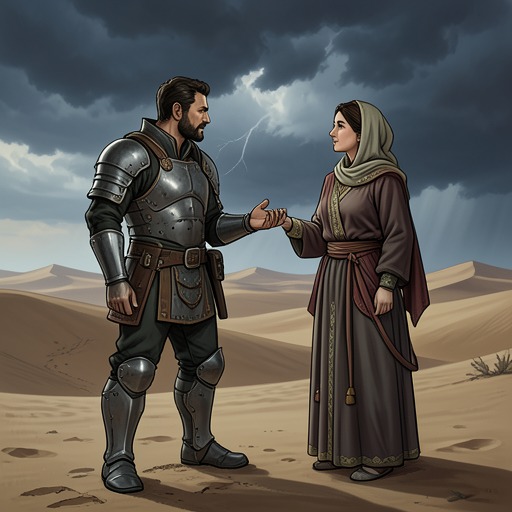
The novel’s later revelations about Martian life sharpen the cave’s role as an origin point. Dejah Thoris explains that her scientific expedition was measuring air currents and atmospheric density, while the keeper of the atmosphere plant describes a system that separates and stores the ninth ray before pumping its treated product to Mars’s air centers. These distant technical explanations contrast with the cave’s unexplained passage: the novel gives a mechanical account of how Mars sustains its atmosphere, but leaves Carter’s first crossing from the Arizona cavern governed by bodily sensation, darkness, and wonder.