Atavism and recovered compassion
A Princess of MarsAtavism and recovered compassion describes the novel’s tension between the Green Martians’ inherited, brutal social customs and a vestigial capacity for tenderness that sometimes survives beneath them. Sola’s defense of a captive Red Martian makes that tension explicit; Tars Tarkas’s unspoken response to the prisoner’s appeal shows it reaching even into the leadership of the Tharks. Against a society that treats pity as a danger, these moments suggest that the past may persist not only as legend but as a moral possibility.
A quality condemned as weakness
Sarkoja gives the Tharkian judgment of compassion its sharpest form when she rebukes Sola for expressing concern for the captive. She calls such feeling evidence of weakness and atavism, associating it with an imagined distant age when the Martian peoples were gentler. Her warning is also practical: she doubts that Tars Tarkas would entrust Sola with the responsibilities of maternity if he knew she held such sentiments. In this exchange, kindness is not merely unfashionable; it threatens a woman’s standing within a society that prizes hardness.
Sola answers by questioning the moral logic behind that society. The captive has never harmed the Tharks, she argues, and would not have harmed them had their positions been reversed. Sola contrasts the Red Martians’ peace with their fellows, except when duty requires war, with the Green Martians’ endless conflicts: against other peoples, among their own communities, and even between individuals. She traces this violence across a life, from hatching to the old Martians’ final journey down the River Iss, and says that an early death may be fortunate. Her defense is therefore more than sympathy for one prisoner. It is an indictment of the social order that makes such sympathy seem anomalous.
Sola as a living exception
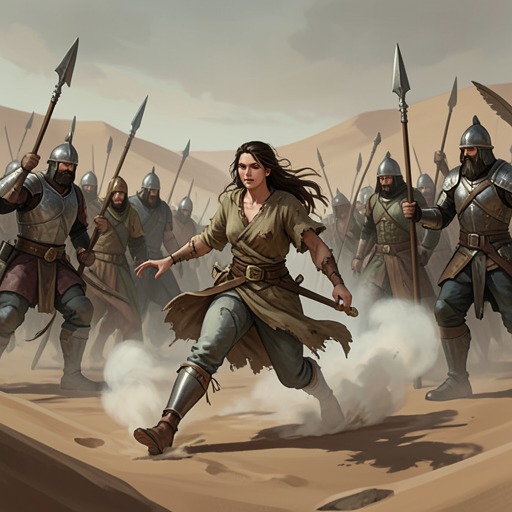
Sola’s outburst shocks the other women, who reprimand her and then fall silent. For John Carter, the episode clarifies whom he can trust: Sola is friendly to the captive and rejects the cruelty around her. He resolves to ask her openly for help escaping with the girl, although he does not know what refuge lies beyond the Tharks or how they might reach it. Compassion becomes consequential because it creates the possibility of assistance within a community where the captive’s safety cannot be assumed.
Carter later describes Sola as an atavism, a rare return to an earlier kind of loving ancestor. The label gives her difference a historical dimension: she is not simply an isolated exception, but evidence that the traits her society suppresses have not disappeared altogether. His account also distinguishes her from other Green Martian women, whom he associates with cruelty, while presenting her consistent kindness and good nature as the basis of his confidence in her. The concept thus connects a private bond of trust to a wider question about what kinds of human feeling a culture can preserve or recover.
A possible turning point at the council
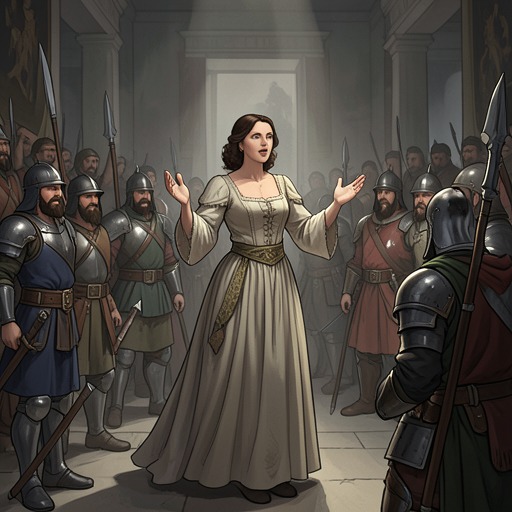
The captive’s appeal before the council turns Sola’s personal sympathy into a political proposition. She explains that her expedition from Helium was scientific and peaceful, intended to study air currents and atmospheric density. She argues that Red Martian work helps sustain the planet’s air and water, and invites the Green Martians to abandon hostility and join in efforts to regenerate a dying world. Her speech presents cooperation not as sentiment alone but as a practical alternative to a conflict that imperils the shared planet.
The assembled warriors listen in silence. Carter believes they are moved, and imagines that a leader strong enough to rise above custom might have begun a new era for Mars. Tars Tarkas stands to speak; his expression shows an inward struggle against heredity and age-old practice, and for a moment his face appears kind. The speech and this response make the council a glimpse of a different possible future: the old habits are powerful, but not so complete that an appeal to fellowship cannot reach those formed by them.
That opening closes when a young warrior strikes the captive and the council returns to its customary response. The older leaders do not openly laugh, but they smile at an act that their culture regards as comic. The contrast is decisive: a collective moment of apparent movement toward compassion is overcome by a familiar code of cruelty. The scene does not show the Tharks abandoning their customs; it shows how difficult it is for recovered feeling to become action when the surrounding culture rewards its opposite.
Memory, inheritance, and social change
The possibility of compassion is also framed through the remembered past. In a deserted Martian court, fountains, statuary, benches, and pergola-like structures remain amid yellow, moss-like vegetation. Carter imagines the vanished people who once animated the place, with families and children living amid beauty and peace, and describes the present dominant race as the eventual emergence of older instincts of culture and humanitarianism. The ruin makes the past materially visible, while the idea of a later re-emergence complicates any simple account of history as steady decline: humane traits can survive long ages of violence and rise again.
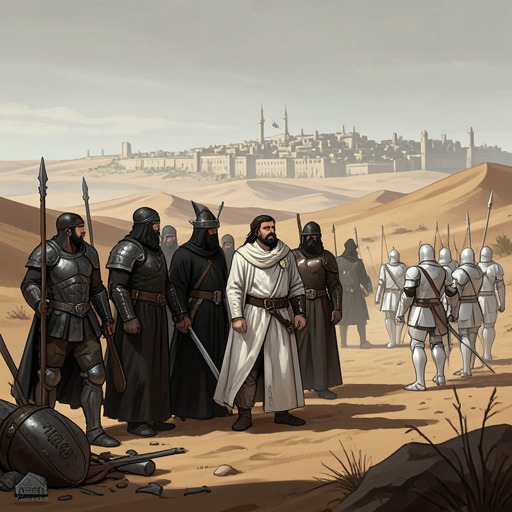
Tars Tarkas’s conduct supplies a more intimate version of that historical undertow. After Carter asks him to hold the key himself, Tarkas later releases Dejah Thoris’s fetters. Carter sees in the warrior an inner quality that he appears continually to struggle to suppress, and wonders whether it is a human instinct returned from an ancient ancestor, haunting him with the horror of his people’s practices. The release is a concrete act of restraint and care, but the narration keeps its meaning tentative: the capacity is visible in conduct without being openly confessed or made into a rejection of Tharkian custom.
The novel extends the contrast beyond individual exceptions. Carter’s account of Green Martian laughter associates common amusement with prisoners’ deaths, while the council scene shows how deeply that response is embedded in custom. By contrast, the captive’s argument offers shared labor between Red and Green Martians as a way to preserve life on a dying planet. Later, Red Martians advise Carter to earn trust and standing through military service, since Barsoom is warlike and its richest favors go to fighters; the immense Green Martian force that marches toward Zodanga likewise gathers under the prospect of loot and the shared hatred of the Red Martians. These later details do not erase the earlier appeals to compassion. They underline the scale of the culture that compassion must contend with.
Atavism is therefore both an explanation and a fragile hope. It explains why Sola can be kind and why Tars Tarkas can hesitate without pretending that either has escaped the society that formed them. It also locates compassion in a long history, as something suppressed but not irretrievably lost. The council’s aborted opening shows the limits of that hope: feeling can return, but custom may still determine what a community does with it.