John Carter
A Princess of MarsJohn Carter is a Virginia soldier of fortune whose unexplained passage from Earth to Mars begins an adventure shaped by combat, loyalty, and the effort to protect Dejah Thoris. On Mars he acquires the name Dotar Sojat through victories over two Thark chieftains; rather than treating that status as an end in itself, he turns it toward escape, rescue, and alliance. The contrast between a society that confers rank through violence and Carter’s insistence on using his strength in another person’s cause defines his role in the story.
Identity and Background
Carter introduces himself as Captain Jack Carter of Virginia. The framing account recalls him as a tall, athletic man who spent several months at the narrator’s father’s home in Virginia shortly before the American Civil War. Though the narrator was only five, the remembered figure remains vivid: the children called him Uncle Jack, and he joined their games with the same hearty good fellowship he brought to adult company. He also entertained the narrator’s grandmother with stories of a life spent in distant and unfamiliar places.
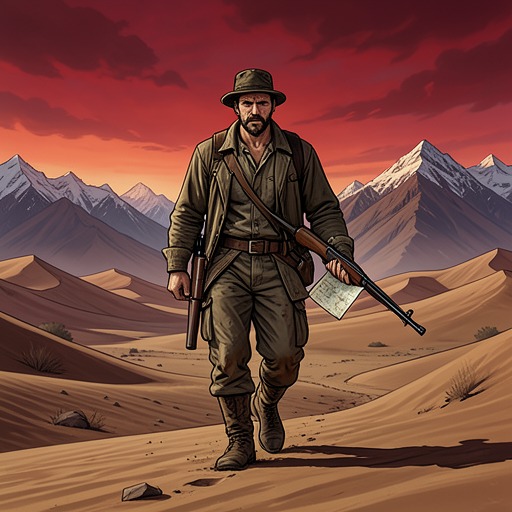
The portrait joins imposing physical presence to ease of manner. Carter stood a little over six feet, with broad shoulders and a narrow waist, and carried himself like a trained fighter. His closely cropped black hair, steel-gray eyes, and composed, courteous bearing complete the account’s image of a man whose martial capacity does not exclude warmth or social grace. The framing narrator recalls that the household loved him and that the household’s enslaved people showed him particular devotion.
Carter’s own account places him in crisis after the Civil War. He had a cavalry captain’s commission in an army that no longer existed, and several hundred thousand Confederate dollars that had lost their value. With his former state and military livelihood gone, he set out for the Southwest to seek gold. The expedition with Captain James K. Powell, a fellow Confederate officer and mining engineer, brought them to a rich quartz vein in late winter 1865. Powell estimated that they had found more than a million dollars’ worth of ore in just over three months, but their crude equipment made it necessary for one of them to return to civilization for machinery and workers.
Passage to Mars
Carter’s passage from Earth begins not with an expedition or a technical explanation but with a powerful attraction to Mars. Standing beneath the Arizona night sky, he fixes on the red planet and feels drawn toward it. He closes his eyes and stretches out his arms; the transition is immediate, marked in his account by intense cold and darkness. The narrative offers no mechanism for the event, and Carter himself says he cannot explain the phenomena he records.
He awakens certain that he is on Mars, without treating his surroundings as a dream or doubting his awareness. He finds himself on yellowish, mosslike vegetation in a broad basin ringed by low hills. In the midday sun, the heat seems comparable to what he might have experienced in an Arizona desert; nearby are quartz-bearing rocks and a low-walled enclosure. Thirsty and without visible water, he decides to explore. The familiar measure of Arizona gives his first encounter with the strange world a point of comparison, even as the certainty of his arrival makes Earth’s ordinary limits fall away.
Carter frames the wider Martian chronicle as the record of the ten years during which his dead body lay undiscovered in an Arizona cave. He says he has kept the story from the public, anticipating disbelief, and presents his manuscript as an account that future science might help readers understand. That claim places his adventures between a soldier’s testimony and a mystery the narrator cannot resolve: Carter insists on the truth of his experience while acknowledging that he cannot explain how it occurred.
Rank and the Name Dotar Sojat
Carter’s place among the Tharks is established through combat, but he does not initially understand what his victories have earned him. When Dejah Thoris asks about his arms and the insignia of a Thark chieftain, he explains that he is a prisoner and identifies himself as John Carter, from Virginia on Earth. He has not known that his equipment marks him as a chieftain.
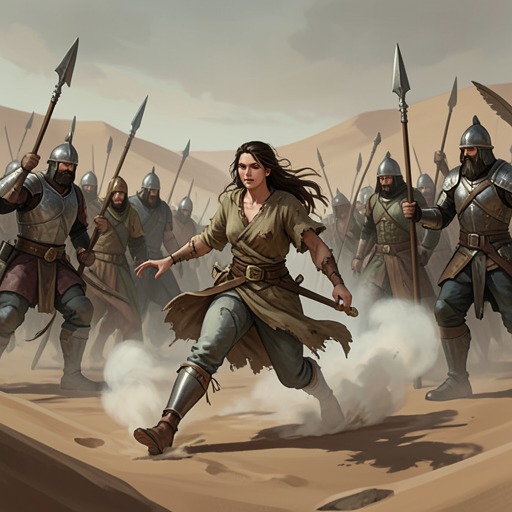
The reason becomes clear when a warrior brings him the arms and ornaments of an opponent he killed. In Thark custom, the victor takes the defeated chieftain’s metal and receives the associated standing. Carter has killed two chieftains, and his name among the warriors, Dotar Sojat, combines their surnames. The honor brings practical consequences: his new rank helps account for the freedom and tolerance he receives in the audience chamber. In this society, an act of violence is not merely a private victory; it is a public credential that alters how others treat him.
Carter’s new status also brings him into conflict with Sarkoja. He observes her speaking with Zad, a powerful warrior who has not won a kill among the chieftains and whose standing depends on another chieftain’s metal. Sarkoja presses him toward action while Zad glances in Carter’s direction. Carter initially gives the conversation little weight, but later recognizes it as a warning of Sarkoja’s hostility and her willingness to seek revenge. His status has elevated him, but it also makes him a target within the same system that grants him rank.
Dejah Thoris and the Thark Conflict
Carter’s relationship with Dejah Thoris develops under conditions of captivity. When she asks who he is, he tells her that he is also a prisoner and names himself as her protector and servant insofar as their captors allow. His claim does not erase the danger or uncertainty of their situation; it sets out the responsibility he chooses to assume within it.
That responsibility becomes a sharper conflict when Dejah Thoris withdraws from him. Carter does not understand what has offended her, but insists that she must help him arrange her escape. He tells her that once she is safe at her father’s court, she may decide what to do with him; until then, he declares himself her master and commands her aid. Her reply captures the contradiction she sees in him: a mixture of child and man, brute and noble, whose heart she cannot read. The exchange makes his protective purpose plain while showing that his confidence and forceful manner can complicate the very trust he hopes to establish.
A private disclosure from Sola widens Carter’s understanding of the people around him. She trusts him with the name of her father, Tars Tarkas, and explains that the revelation may someday help him, Tars Tarkas, Dejah Thoris, or herself. She connects this family secret to the history of her mother, whose betrayal by Sarkoja led to death and suffering for the person Tars Tarkas loved. Sola’s confidence places Carter inside a history of private loyalties and concealed wrongdoing, rather than leaving him to see the Tharks only as a hostile people.
From Captive to Ally
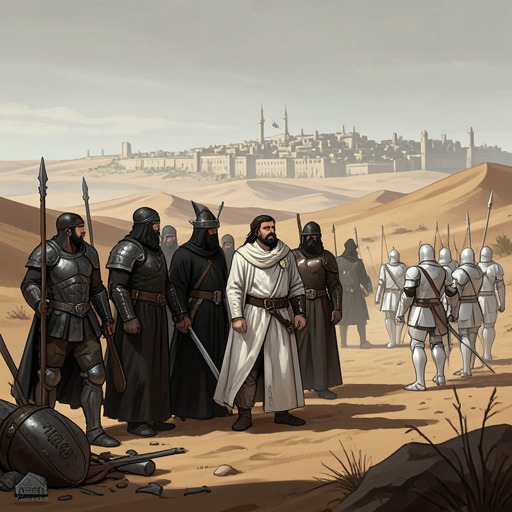
Carter’s course among the Tharks turns from survival toward collective action. After Tars Tarkas becomes jeddak, he makes Carter a full-fledged chieftain, formally recognizing the rank Carter has earned in the early weeks of his captivity. Carter immediately sees an opportunity in the warriors’ favorable attitude toward them. He tells Tars Tarkas the story of his adventures and proposes seeking Dejah Thoris, now held by the jeddak of Zodanga, and returning her to Helium.
The proposal links personal loyalty to an alliance with broader political consequences. Tars Tarkas presents the rescue to the council as a course that also promises the Tharks valuable spoils and a possible relationship with the people of Helium. Such an alliance, he argues, could help secure sustenance and allow the Tharks to increase the size and frequency of their hatchings. Carter’s appeal therefore works on more than one level: he seeks Dejah Thoris’s return, while the plan offers the Tharks a material and strategic reason to cooperate. His newly recognized chieftaincy gives him standing to advance that cause among the warriors.
Separation and Narrative Role
Carter’s devotion to Dejah Thoris becomes most urgent when they face separation. When she tells him that they have only begun a life of love and happiness before being torn apart, he insists that it will not end that way and that he will find a way through. As he holds her, a long-forgotten sequence of nine sounds returns to his awareness. He recognizes them as the key to the three great doors of the Atmosphere Plant and turns at once to Tardos Mors. The personal crisis thus opens onto a practical possibility: the words associated with Carter’s remembered knowledge may provide the means to act in the larger emergency.
The narrative’s structure reinforces the distance between Carter’s extraordinary claims and his plain self-presentation. He describes himself as an ordinary soldier of fortune, recounts the transition to Mars without a scientific explanation, and presents the events as a private chronicle withheld until after his death. Meanwhile, the framing recollection of Uncle Jack supplies an earthly portrait of sociability and loyalty before the reader encounters the warrior on Mars. These accounts converge on a central tension in the character: Carter’s strength gives him authority in a world where combat determines rank, but the decisive use he makes of that authority is to protect others, seek allies, and resist the separation he regards as intolerable.