John Carter and Tars Tarkas
A Princess of MarsJohn Carter and Tars Tarkas move from an encounter between a captured outsider and his captor toward a partnership marked by instruction, political respect, and the first signs of friendship. Their relationship matters because it gives the novel a personal measure of change within Thark society: Carter does not simply defeat or escape its rules, but challenges them through conduct Tars can recognize as both brave and useful.
First Contact and Captivity
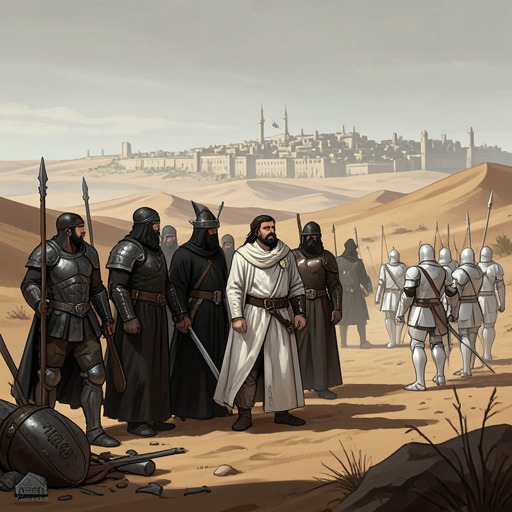
Tars Tarkas first distinguishes himself as the leader of the band that has surrounded Carter. After his warriors retreat a short distance, Tars dismounts, leaves his spear and smaller weapons behind, and approaches Carter alone. He removes a large metal armlet and holds it out in an open palm, then waits for a reply in a language Carter cannot understand. Carter reads the abandoned weapons and the troop’s withdrawal as signs of peaceful intent, and risks answering him. The scene establishes a relationship that begins not with conversation, but with gestures whose meaning each must infer.
Tars brings Carter into the community’s audience chamber and presents him to its ruler. Their formal greeting is initially opaque to Carter: Tars says the ruler’s name, and the ruler answers with Tars’s name and title. Carter later learns that exchanging names is the customary greeting between Green Martians who know one another; strangers on peaceful business exchange ornaments instead, while hostile introductions may begin with shots or a fight. Tars is not merely the warrior who captured Carter. He is virtually the community’s vice-chief, a figure able to introduce the newcomer to its ruler and explain the circumstances of the expedition.
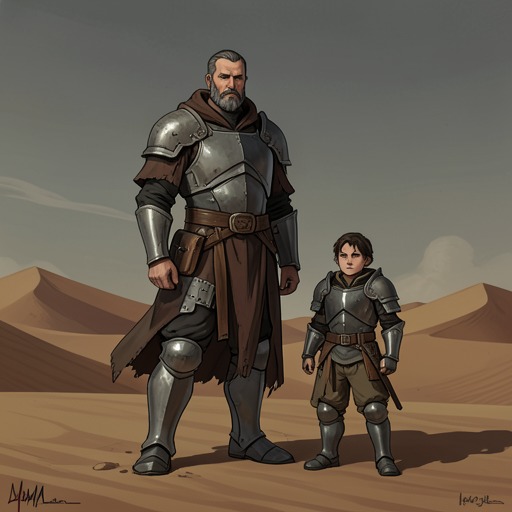
In the audience chamber, the assembled warriors inspect Carter and take an interest in his unusual physical abilities. He struggles to walk under Martian gravity, and his awkward attempts entertain the crowd; his prior feats, however, have already made him an object of interest rather than someone they simply intend to kill. Tars is present as Carter’s captor and representative, but the relationship soon becomes more complicated than the roles of guard and prisoner. Tars can interpret the customs that govern Carter’s treatment, while Carter’s behavior repeatedly unsettles the assumptions behind those customs.
Recognition, Rank, and Mutual Respect
Carter’s place among the Tharks changes when he discovers that an opponent he killed has been stripped of his ornaments and equipment. The trophies are presented to him as the recognized rewards of victory: in the community’s customary justice, the defeated warrior’s position and possessions pass to the conqueror. Carter realizes that his act has effectively made him a Tharkian chief and helps explain the freedom and tolerance he has received in the audience chamber.
Tars clarifies both the privilege and the danger of that new standing. He asks Carter how he learned the Barsoomian language so quickly, and Carter credits Sola, whom Tars had provided as an instructor. Tars acknowledges her work, but warns that Carter’s education in other matters remains incomplete. Had Carter failed to kill either of the two chieftains whose metal he now wears, Tars explains, the consequences would not have been simple execution: Tharkian warriors generally preserve prisoners for other purposes, resorting to killing only in the last extremity of self-defense.
Carter’s rank is still conditional. Tars tells him that Tal Hajus may accept him into the community if the ruler considers him worthy of service; until then, Carter will receive the respect earned by his deeds, while the chiefs above him remain responsible for delivering him to their ruler. Carter answers that he is not of Barsoom and cannot simply adopt its standards. He will act according to his conscience and the standards of his own people, and he declares that anyone who injures or insults Dejah Thoris will have to answer to him. The speech impresses the warriors because Carter joins a defense of generosity and kindness to a clear claim of fighting ability. Tars appears pleased, though he comments enigmatically that he thinks he knows Tal Hajus.
The exchange sets the pattern for their respect: Carter does not ask Tars to mistake him for a Thark, and Tars does not pretend that Carter’s place is secure. Instead, each tests the other against the values the other professes. Carter’s courage earns practical standing under Tharkian custom; his refusal to abandon his own moral obligations gives that standing a different meaning.
Instruction and the Value of Kindness
During a pause in the community’s movements, Tars teaches Carter Tharkian customs and the arts of war, including riding and guiding the great thoats. Carter receives two mounts through the warrior’s equipment he has inherited. Thark riders commonly control their dangerous animals by telepathic commands and, when a mount fails to obey, by striking it with a pistol butt. If the animal throws its rider, the encounter can become a fight for the rider’s life.
Carter takes a different approach, informed by his earlier experience with Woola. He first establishes that the thoats cannot unseat him, then gradually wins their confidence through patient, humane treatment. In a few days, the animals follow him closely, rub their snouts against him, and respond to his commands with a docility that astonishes the community. The contrast makes their relationship more than a lesson in horsemanship: Carter’s authority over the animals grows through trust as well as force.
When Tars asks how Carter has managed to tame them, Carter answers that kindness has done it. He argues that gentler treatment benefits a warrior as well as the animal: a mount that obeys reliably improves his rider’s effectiveness in battle, whereas a badly handled thoat may turn victory into defeat by throwing its rider at a critical moment. Tars does not dismiss the reasoning. He asks Carter to show him how the training works, then has him demonstrate it before Lorquas Ptomel and the assembled warriors.
The demonstration changes practice beyond the two men. Carter later observes an entire regiment of more tractable mounts, and the resulting improvement in the precision and speed of military movement is remarkable enough that Lorquas Ptomel presents him with a massive gold anklet in appreciation. Tars is the key intermediary: he first learns the method from Carter and helps bring it before the community. Their exchange thus converts an apparent softness into a public and practical contribution to Tharkian strength.
Protection and the Possibility of Friendship
Carter’s concern for Dejah Thoris further tests the bond between the two men. When he objects to the humiliations and cruelties being inflicted on her, Tars explains that the journey is the means by which the Tharks hold both prisoners. They do not wish to manacle Carter because he is a formidable fighter, and they know he will not leave without Dejah Thoris; keeping them together under comparatively easy restraint is, in Tars’s view, sufficient security.
Carter recognizes the force of the explanation but asks Tars to take the key from Sarkoja and prevent her from troubling Dejah Thoris again. He makes the request in return for the friendship he admits he feels for Tars. Tars replies that friendship does not exist, yet grants the request: he will direct Sarkoja to stop and take custody of the key himself. When Carter suggests that Tars might let him hold it instead, Tars studies him before answering. Carter then says it would be better for Tars to keep it. That night, Tars personally removes Dejah Thoris’s fetters.
The difference between Tars’s denial and his conduct is central to their relationship. He continues to speak from within a society that has little regard for friendship or affection, but he responds to Carter’s appeal with specific acts: he intervenes against Sarkoja’s harassment, assumes control of the key, and frees Dejah Thoris from her restraints. Carter reads these actions as evidence of an inner struggle against cruelty and coldness, perhaps a surviving human instinct at odds with Tharkian custom. The novel leaves that possibility as Carter’s interpretation, while the acts themselves make Tars’s conflict visible.
A Relationship That Opens a Political Possibility
Tars’s significance to Carter extends beyond their private dealings because his influence and judgment place him between the outsider and the Thark community. He introduces Carter to the ruler, explains the rules that shape his uncertain status, teaches him military practices, and helps put his animal-training method before the assembled warriors. Carter, in turn, offers Tars a way to think about kindness not as a surrender of strength but as a means of making strength more dependable.
Their bond remains uneven and constrained. Tars is an authoritative Tharkian warrior; Carter remains an outsider whose protection depends partly on earned status and partly on Tars’s decisions. Yet repeated exchanges alter what each can do in the other’s world. Carter’s defense of Dejah Thoris forces his principles into a direct conflict with Tharkian custom, while Tars’s response shows that custom does not wholly determine his conduct. Their relationship therefore links individual loyalty to the novel’s wider possibility of change: a community organized around combat and suspicion may be reached, however precariously, through a warrior who begins to act beyond its inherited rules.