John Carter's captivity among the Tharks
A Princess of MarsJohn Carter’s captivity among the Tharks is marked by a paradox: he remains an alien prisoner, yet combat gives him a position of authority within the society holding him. His unusual physical abilities alter how his captors treat him, but they do not make him safe. The Tharks’ customs grant him status while leaving his life subject to their power, and his time among them reveals both the rules and the costs of their communal order.
Capture and Uneasy Status
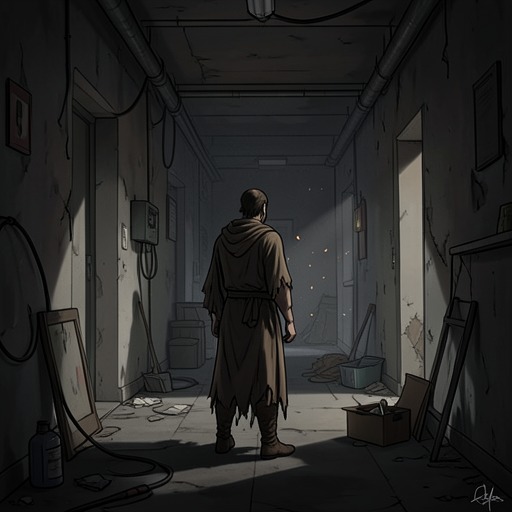
After Carter’s unexpected agility changes the warriors’ first response from killing him to capturing him, he studies his captors and weighs the danger of escape. Their rifles, he observes, are light, long-barreled weapons capable of firing explosive radium projectiles over extraordinary distances; he judges flight too dangerous. His captivity therefore begins not with a secure cell but with a calculation: speed might help him, but the weapons make open escape perilous.
The captors take him toward a city built on a tableland near the remains of an ancient sea. At the plaza, hundreds gather around him, eager to get close, until their leader quiets them and brings the party into a great public building. There, the assembled warriors examine Carter and expect him to perform. His unfamiliarity with Martian gravity makes walking difficult, and his attempts to move among desks and chairs amuse the onlookers. When a warrior roughly forces him upright, Carter strikes back. He expects immediate retaliation, but the encounter instead changes his standing among the Tharks.
Authority Won Through Combat
Carter later learns that the blow killed his opponent. The dead warrior’s equipment and ornaments are brought to him, and he recognizes that these are not merely trophies: under the Tharks’ crude system of justice, the victor receives the position and trappings of the vanquished. Carter has, without understanding the custom, won the rank of a chieftain. That unexpected elevation accounts for the relative freedom and tolerance he receives in the audience chamber.
His rank does not cancel his captivity. Lorquas Ptomel tells him that, though he has risen quickly through prowess, he is not one of the Tharks and owes them no allegiance. The contradiction is explicit: Carter is a prisoner who can give orders that others must obey, an outsider who is nevertheless a Tharkian chieftain, and a physically small stranger capable of defeating a powerful warrior. His authority is real within the community’s rules, but those rules do not make him a member of it or protect him from its leaders.
Watch, Threats, and the Attempt to Escape
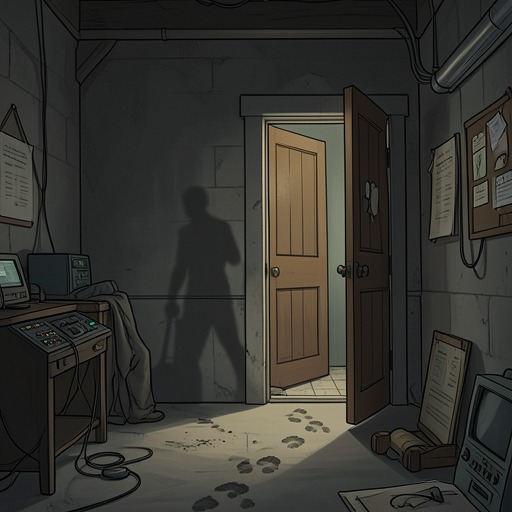
Carter’s confinement also includes constant supervision. When Sola leaves him alone with a formidable guard, the beast crosses to the only exit and lies across the threshold. It watches him throughout his captivity among the green Martians, never voluntarily leaving him and twice saving his life. The guard is both a barrier to escape and a source of protection, complicating the simple division between captor and ally.
The political danger becomes clearer when Lorquas confronts Carter over the report that he has plotted to escape with Dejah Thoris, a prisoner of another race. Lorquas says the charge could warrant execution, although he promises a trial on their return to Thark if Tal Hajus commands it. He also warns that Carter can be killed without an order only in self-defense or if caught attempting escape. This conditional protection makes the rules legible without making them reassuring: Carter has a recognized place in the hierarchy, yet a single act could bring the exception under which that place offers no defense.
The stakes are heightened by Dejah Thoris’s identity. She is the granddaughter of the greatest of the red jeddaks and the bitter enemy of the Tharks, and delivering her to Tal Hajus is, Lorquas insists, of the utmost importance. Carter’s possible escape is thus not treated as an isolated breach of custody. It threatens a politically valuable capture and places his already ambiguous standing against the demands of Thark leadership.
What Captivity Reveals About Thark Society
Carter’s experience exposes a society in which violence is not simply a threat from outside the law; it is one of the means by which status and justice are defined. His first fight earns him rank because the victor inherits the defeated warrior’s position. Later, Lorquas describes combat and attempted escape as the narrow conditions under which Carter may be killed without higher authorization. The system recognizes rules, but those rules operate within a culture that makes lethal force ordinary and authority contestable.
That order is connected to a wider culture of hardship. Carter learns that violent deaths dominate Martian mortality, while sickness accounts for very few deaths; many also die in hunting, aviation, and war, and children face danger from the great white apes. The narrative links this precariousness to Barsoom’s dwindling resources and to a society that treats life lightly. The Tharks’ harshness is presented not as a sequence of unrelated cruelties but as part of a system shaped by scarcity, communal control, and the constant expectation of violence.
The practice of raising children under communal arrangements further illuminates what Carter encounters. Sola’s account and Carter’s reflections describe a system that selects only the hardiest young and regulates births in response to deaths. The narrator connects the absence of parental and filial love to the loss of humane feeling, while also acknowledging the material pressure of a dying planet. This explanation does not undo the harm of the system; it shows how survival policy and emotional deprivation have become intertwined.
Dejah Thoris, Tars Tarkas, and the Limits of Power
Carter’s captivity brings him into contact with arguments that challenge the Tharks’ isolation. Dejah Thoris explains that her expedition was a peaceful scientific mission to study air currents and atmospheric density. She maintains that the work benefits both peoples, since scientific labor helps sustain the air and water needed for life on Mars. She urges the Tharks to abandon hostility and join the red Martians in efforts to regenerate their declining world, criticizing a communal order that, in her view, has left its people without homes, art, or love.
Her appeal visibly affects the assembled warriors, though Carter cannot know what passes through their minds. He sees Tars Tarkas rise with an expression unlike any he has previously observed in a green Martian warrior, as if he were struggling against custom and inherited habits. The moment suggests that Carter’s surroundings are not sealed against change, but it does not by itself alter his status or end the immediate danger to either prisoner. Captivity places him close enough to witness a possible opening while leaving its outcome uncertain.
Carter’s authority also becomes a means of contact rather than belonging. Tars Tarkas is a powerful leader and statesman, while Carter’s chieftain rank is an accidental consequence of a fight. Their relationship develops within this imbalance: Carter can exercise some authority among the Tharks, but the community’s senior leaders still set the terms of his confinement. His captivity therefore provides a vantage point from which he can learn the society’s customs, recognize potential allies, and pursue escape, without ever ceasing to be vulnerable to the power that holds him.
Significance
The Thark episode makes captivity an unstable status rather than a simple condition of helplessness. Carter is watched, threatened, and subject to the political priorities of his captors, yet the very violence that establishes their authority also grants him a place within their hierarchy. That place creates room for action without guaranteeing safety. The contrast is central to the episode’s portrayal of Thark justice: it can elevate a foreign prisoner according to its own rules while continuing to treat him as an outsider whose life may be taken under specified conditions.
The narrative also holds together two explanations of Thark brutality: the institutional severity of communal life and the pressures of a planet whose resources are waning. Dejah Thoris’s plea for cooperation supplies a competing vision, while Tars Tarkas’s reaction suggests the possibility of change. Carter’s captivity thus becomes both a practical struggle for survival and a sustained encounter with a society whose rules make power visible, whose customs shape even a stranger’s identity, and whose future may depend on whether inherited enmity can give way to alliance.