Lifting of the Siege of Helium
A Princess of MarsThe lifting of the siege of Helium is the turning point at which the campaign against Zodanga becomes a direct rescue of the besieged city. A Green Martian army, assembled by Tars Tarkas and joined to Helium’s forces, helps defeat the Zodangan fleet and then crushes the besiegers between two advancing lines. The siege ends in triumph for Helium, but the victory carries a stark cost: Zodanga has been reduced, its people and soldiers are captured or killed, and even surrender is marked by the ritual deaths of defeated commanders.
Background and stakes
The alliance that makes the relief possible emerges from an enemy camp. After hearing Dejah Thoris describe her expedition as a peaceful scientific mission, and appeal for fellowship between red and green Martians, Tars Tarkas shows a momentary struggle against the customs that govern his people. The appeal offers a way to join the two peoples’ efforts to sustain life on a dying planet; the invasion that follows, however, is not a peaceful undertaking. The account presents the attack on Zodanga as retaliation against a kingdom that had long pursued the green tribes and especially sought to destroy their incubators.
Tars Tarkas gathered forces on a scale unprecedented in the history of Barsoom. Three smaller hordes joined his initial column of one hundred thousand warriors after he promised them Zodanga’s loot. Traveling by night and sheltering by day in deserted cities, the army recruited another fifty thousand along the route. Ten days after setting out, it reached the outskirts of Zodanga at midnight, 150,000 strong. Keeping such a force together was itself an achievement: the hordes were prone to quarrel, and their shared hatred of the Zodangans temporarily overcame their internal rivalries.
The first phase of the campaign destroyed Zodanga’s resistance and opened the way toward Helium. When Tars Tarkas and Kantos Kan returned with news that the city had been completely reduced, the lesser hordes had already begun looting and fighting among themselves. Rather than lose more time trying to control them, the victors collected the warriors they could, manned captured vessels with Zodangan prisoners, and sailed for Helium. The expedition’s immediate stake had shifted from conquest to the relief of the besieged cities.
The fleet’s arrival and air battle
Five hours after the decision to depart, 250 battleships carrying nearly 100,000 Green Martian warriors left the roofs of Zodanga’s dock buildings; transports carrying their thoats followed. Behind them, about 40,000 warriors of the lesser hordes remained in the conquered city, looting, murdering, and fighting. Fires had been set in a hundred places, and smoke rose over Zodanga as the fleet traveled toward Helium. The rescuing force thus approached the siege from the aftermath of a conquest that had left its own city of departure burning.
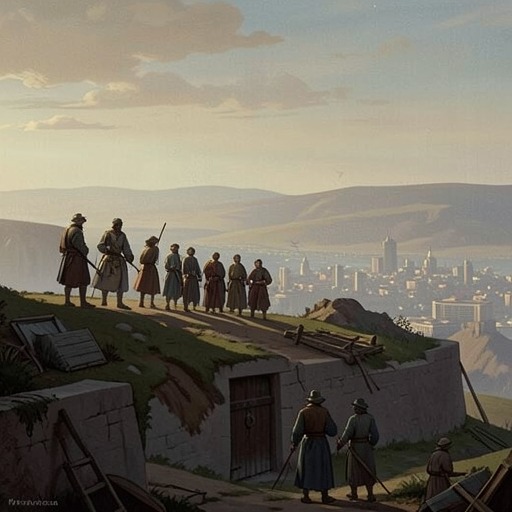
In mid-afternoon, the fleet sighted Helium’s scarlet and yellow towers. Zodangan battleships rose from the besieging camps to meet it, and the Green Martians opened fire as the ships left the ground. The twin cities of Helium recognized the newcomers as allies and sent hundreds of vessels to join them. The resulting engagement was the first real air battle witnessed by the narrator, and it immediately altered the balance around the city.
The Green Martians could not use their captured ships’ main batteries effectively: having no navy of their own, they lacked skill in naval gunnery. Their small-arms fire, however, proved consequential. While Heliumite and Zodangan vessels circled and exchanged broadsides, the Green Martian ships remained above the contest, their marksmen contributing to the outcome. One Zodangan battleship was torn open, overturned, and plunged toward the ancient sea bottom; its destruction galvanized the Heliumite squadron. Helium’s ships then maneuvered above their opponents and attacked with keel bomb batteries. Some besieging vessels became wrecks, while others tried to escape only to be surrounded by small fliers and held beneath Heliumite battleships ready to send boarding parties aboard.
Within little more than an hour of the Zodangan squadron’s rising to meet the relief fleet, the air battle was over. The surviving enemy vessels were taken toward Helium under prize crews. Yet the defeated fleet’s submission did not simply consist of lowering arms. Under an old custom, the commander of each vanquished ship had to signal surrender by leaping from its bow to its death. One after another, the commanders jumped with their colors held aloft; the fighting did not cease until the commander of the whole fleet took the same plunge. The ritual made victory visible, but it also prolonged the deaths of men after their ships had been beaten.
The attack on the besieging camp
The fleet’s victory did not by itself end the siege. The transports holding the Green Martians’ thoats had remained apart from the air battle. With no landing stages available, the animals had to be lowered in slings onto open ground about ten miles from the city. The unloading took the rest of the day and half the night; Zodangan cavalry attacked twice, though with little loss, and withdrew after dark.
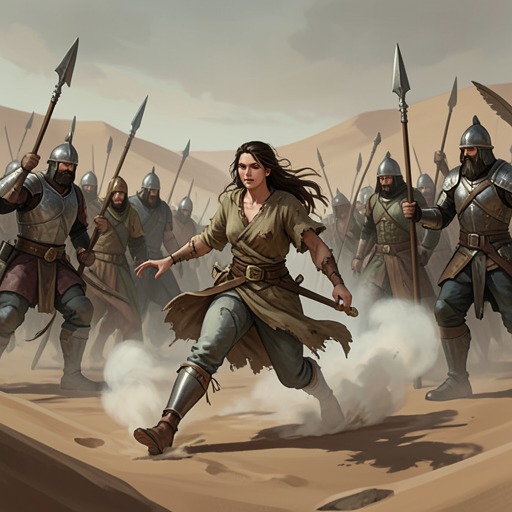
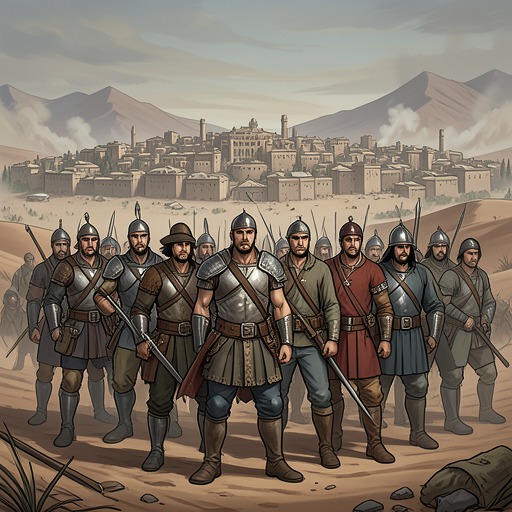
As soon as the last thoat was on the ground, Tars Tarkas ordered an advance. His force approached the Zodangan camp in three parties from the north, south, and east. About a mile from the main camp, the attackers met the outposts and, as arranged, took contact as the signal to charge. The battle did not begin with a surprise victory: the Zodangans were ready behind entrenched lines, and repeated assaults were repulsed. By noon, the relief force faced a serious numerical disadvantage. The Zodangans had assembled nearly a million fighting men from across the planet’s ribbon-like waterways; fewer than 100,000 Green Martians opposed them, and no word had yet arrived from Helium’s ground forces.
At noon, heavy firing along the line between the Zodangans and the cities announced that Helium’s reinforcements had arrived. Tars Tarkas renewed the charge at the same moment that Helium’s soldiers surged over the opposite breastworks. The Zodangans were caught between the two forces, pressed from both sides like material between millstones. They fought fiercely, but the position had become untenable. The plain before the city turned into a killing ground before the last Zodangan surrendered.
Aftermath and significance
With the surrender, the prisoners were marched back to Helium, and the victorious force entered the greater city in a triumphal procession. Women and children lined the avenues, joined by the few men whose duties had kept them within the city during the battle. They applauded without end and showered the arriving warriors with ornaments of gold, platinum, silver, and precious stones. The Green Martians drew particular excitement: never before had an armed body of their kind entered Helium’s gates as friends and allies. Their presence made the end of the siege more than a military relief; it publicly embodied a new alliance between peoples previously defined by hostility.
The liberation also reveals the limits of the transformation. The cooperation between Helium and the Green Martians is real and decisive, but it has been achieved through siege, invasion, and mass killing, while the conquest of Zodanga unleashes looting and violence among the victorious lesser hordes. The relief of Helium therefore closes one immediate danger without offering a peaceful resolution to Barsoom’s conflicts. Its jubilant welcome stands beside the burning city left behind and the commanders forced to die to certify defeat: triumph and brutality remain joined in the victory.