Lorquas Ptomel
A Princess of MarsLorquas Ptomel is the jed, or chieftain, of the green Martian community that captures John Carter and eventually returns with him to Thark. His authority rests within a martial society governed by custom and rank, but his most consequential appearances show that leadership is not simply a matter of force: he recognizes Carter’s earned standing and resists Tal Hajus when the ruler tries to override established procedure. In the public council, Lorquas’s defense of customary justice becomes a hinge in the transfer of power to Tars Tarkas.
Identity and Position
Lorquas Ptomel leads the party that takes Carter before its chieftain and into the audience chamber. The introduction there is formal but spare: Carter’s captor, Tars Tarkas, approaches the rostrum, while Lorquas rises and speaks his escort’s name; Tars answers with the ruler’s name and title. Carter initially cannot understand the exchange. He later learns that exchanging names is the customary greeting between green Martians. If strangers do not know one another’s names, they exchange ornaments when their purposes are peaceful; otherwise, they may exchange shots or settle the encounter through combat. Lorquas’s authority is thus established within a culture where identity, greeting, and the possibility of violence are closely linked.
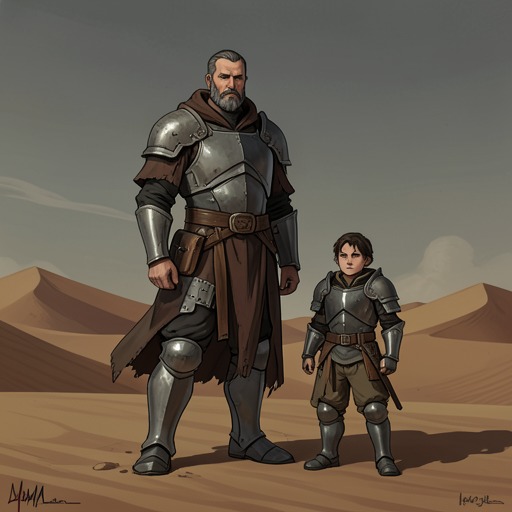
Tars Tarkas is identified as virtually the community’s vice-chieftain, while Lorquas is its principal ruler. The distinction matters: Tars leads the expedition and reports its incidents, including Carter’s capture, but Lorquas receives that account and presides over the gathering. The community’s later political arrangement gives each group its own jed and lesser chieftains, with Tal Hajus ruling the larger Thark confederation as Jeddak. Lorquas is therefore a local ruler within a broader hierarchy, not the supreme leader of Thark.
The Captive and the Audience Chamber
After Tars Tarkas has explained the expedition, Lorquas addresses Carter at length. Carter answers in English simply to show that they cannot understand one another; when he smiles at the end, Lorquas smiles in response. Carter takes this and a similar exchange with Tars as evidence that they share the capacity for humor, though his later understanding of green Martian amusement complicates the apparent common ground. This first audience sets a pattern: Carter is examined and interpreted by the community before he can explain himself in a language it understands.
The assembled warriors inspect Carter’s muscles and skin, then expect him to demonstrate his unusual movement. His leaps astonish the observers, but he eventually refuses repeated commands to perform and signals that he needs food and water. Lorquas’s council is not merely a tribunal or diplomatic meeting; it is also a public gathering in which the captive is assessed as a physical curiosity. The crowd’s response to Carter’s unexpected capacity to leap, and later to his ability to knock down a warrior, helps transform him in their eyes from a prisoner to someone whose prowess has to be reckoned with.
When Dejah Thoris is brought before the council, Lorquas questions her about her name and expedition. She identifies herself as the daughter of Mors Kajak of Helium and explains that the party had been sent on scientific work to map air currents and measure atmospheric density. She insists that the expedition was peaceful and that its work served the interests of both red and green Martians, since maintaining the planet’s air and water supply benefited everyone. Her appeal goes further: she condemns the green Martians’ communal system and urges cooperation with the red Martians to help their declining planet. Lorquas and the assembled warriors listen in silence. Carter believes they are moved, but the moment passes without a recorded decision to accept her proposal; the scene instead leaves open the distance between her appeal and the force of inherited custom.
Recognition, Rank, and Custom
Lorquas’s relationship to Carter changes as Carter’s conduct acquires meaning within Tharkian rules. After Carter’s first fight in the audience chamber, a warrior brings him the arms, ornaments, and equipment of the opponent he killed. Carter realizes that the fight has earned him the dead man’s status and possessions. The result is a paradoxical form of recognition: Carter remains a captive and an outsider, but he is treated as a chieftain because he has prevailed in combat. That standing explains the relative freedom and tolerance he receives in the audience chamber.
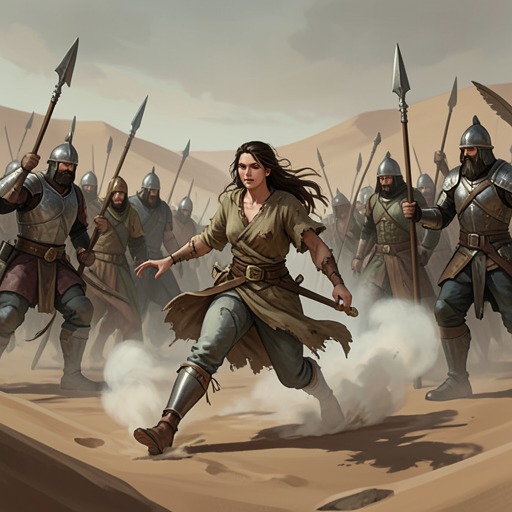
Lorquas’s rule also has a practical, military dimension. During the community’s stay after an airship battle, Tars Tarkas teaches Carter the customs of war, including how to ride the Tharks’ thoats. Carter rejects the common practice of relying on blows to make these animals obey and instead wins their confidence through patient, kind training. They become docile and respond readily to his commands. Carter explains to Tars Tarkas that humane treatment improves their reliability in battle and on the march, reducing the danger that a mount’s unpredictable behavior will turn victory into defeat. Tars asks to see the method and later has Carter demonstrate it before Lorquas and the assembled warriors. Lorquas recognizes its military result: the trained mounts improve the precision and speed of the community’s movements. In appreciation, he gives Carter a massive gold anklet taken from his own leg. His response shows that, within this martial order, an unfamiliar practice can gain acceptance when its practical value to the community is demonstrated.
Justice and the Challenge to Tal Hajus
Lorquas’s clearest political action comes when Carter is accused of plotting to escape with Dejah Thoris. He tells Carter that his position is unusual: Carter is a prisoner but gives commands that others must obey, an alien who is nevertheless a Tharkian chieftain, and a small figure capable of killing a powerful warrior with one blow. Lorquas says the accusations could warrant execution, but declares that Carter will receive a trial on their return to Thark if Tal Hajus so commands. The statement makes Lorquas both an authority over Carter’s status and a participant in a larger system whose ultimate ruler can direct the next step.
That dependence on custom becomes decisive in the council meeting where Tal Hajus tries to silence Carter. Carter appeals to the chiefs for a hearing, arguing that his service and status have earned him at least that much. Tal Hajus orders him bound and gagged. Lorquas interrupts, invoking the customs of ages among the Tharks and asking who Tal Hajus is to set them aside. Other voices echo his demand for justice, and Carter is allowed to continue. Lorquas does not merely observe the dispute: his public challenge gives the appeal institutional force and prevents Tal Hajus’s command from ending the proceedings.
Carter then argues that Tal Hajus has failed the martial standard by which the Tharks esteem their leaders. He contrasts the ruler’s absence from the fighting with his conduct toward defenseless people and proposes Tars Tarkas as a more worthy Jeddak. When Carter finishes, Lorquas addresses Tal Hajus in a cold, formal rebuke, calling attention to the humiliation and insisting that the accusation requires an answer. He then puts the question of fitness to rule before the chiefs. The twenty chieftains around the rostrum raise their swords in assent, making the decision collective rather than a private choice by Lorquas. Tal Hajus must fight Tars Tarkas to prove his right to rule, and the decree is final.
Political Legacy
The evidence does not describe Lorquas’s later fate or give him a further role in the events that follow the challenge. His significance lies instead in the decisions he makes at the point where Carter’s acquired rank, Tharkian custom, and the legitimacy of Tal Hajus’s rule meet. He receives Carter as a captured stranger, presides over his assessment, recognizes the usefulness of Carter’s animal-training method, and ultimately insists that even a powerful Jeddak remain answerable to customary justice. That defense does not make Lorquas a reformer in every respect: the council’s encounter with Dejah Thoris’s appeal produces no recorded alliance, and its political order remains rooted in martial hierarchy. But when Tal Hajus attempts to rule by command alone, Lorquas helps restore the authority of the council and custom, creating the conditions for Tars Tarkas’s challenge.