Tars Tarkas becomes Jeddak of the Tharks
A Princess of MarsTars Tarkas becomes Jeddak of the Tharks in a council confrontation that converts his reputation as a formidable warrior into formal rule. John Carter exposes Tal Hajus’s failure to meet the Tharks’ own standard of leadership; with the council’s assent, the two leaders fight, and Tars Tarkas succeeds to the position. His first decision as Jeddak is to raise Carter to the rank of chieftain, and he then puts Carter’s proposal for a campaign against Zodanga before the council. The succession thus joins personal vindication to a decisive change in the Tharks’ political course.
Causes and Background
The succession follows Tars Tarkas’s return to Thark with Carter. As they eat, Carter repeats the account Sola had told him during their earlier march: the history of the suffering inflicted on the only person Tars Tarkas had ever loved. Tars Tarkas says little, but his face registers both anger and pain. Carter’s account changes his willingness to face Tal Hajus; he no longer resists the proposal that they go before the Jeddak, though he first asks to speak to Sarkoja.
Tal Hajus greets their arrival with a demand that Carter be restrained and punished. Rather than submit to the ruler’s command, Carter addresses the assembled chieftains. He argues that he has earned a hearing: he has previously been a chief among the Tharks and, that day, fought beside their greatest warrior. His appeal is not simply for personal protection. It places the question of Tal Hajus’s authority before the council and asks the Tharks to judge their leader by their own customs.
The Council’s Test
Carter’s case rests on the contrast between the Tharks’ admiration for courage and Tal Hajus’s conduct. He charges that the Jeddak was absent from the fighting, while Tars Tarkas had proved himself in battle. Carter also points to his own earlier victory over Tal Hajus and asks whether such a ruler deserves to command. He presents Tars Tarkas as both a great warrior and a noble man, then calls on the council to recognize him as Jeddak.
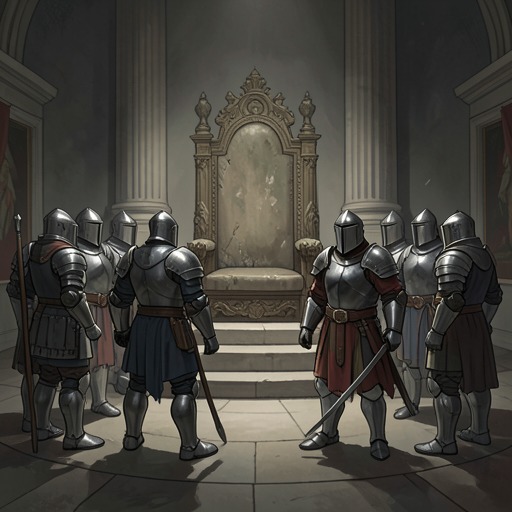
The appeal gains a strong response: the warriors applaud, and Tal Hajus does not answer. Lorquas Ptomel intervenes in the name of justice and the customs of the Tharks, insisting that Tal Hajus cannot set aside the established procedure. He asks the chieftains whether the Jeddak should prove his fitness to rule against Tars Tarkas. The twenty chieftains around the platform raise their swords in agreement. That collective assent leaves Tal Hajus no alternative but to draw his long-sword and meet his challenger.
Combat and Accession
The combat is brief. Tars Tarkas kills Tal Hajus and becomes Jeddak of the Tharks, with the defeated ruler’s death bringing the council’s challenge to its conclusion. The change of leadership is therefore not a peaceful transfer: the council authorizes a test, and the outcome settles who has the right to rule. Tars Tarkas’s accession conforms to the Tharks’ combat-based standard of authority while displacing a ruler Carter has just depicted as unworthy of it.
Tars Tarkas’s first act as Jeddak is to make Carter a full-fledged chieftain, granting him the rank he had earned through his combats during the first weeks of his captivity. The decision gives Carter an acknowledged place within the Thark leadership rather than leaving him dependent on personal favor alone. It also demonstrates that the new ruler recognizes Carter’s standing before the warriors and makes that recognition immediately official.
Political Consequences
Carter uses the favorable response to Tars Tarkas and himself to seek Thark support against Zodanga. He tells Tars Tarkas the story of his adventures and explains the proposal he has in mind. Tars Tarkas endorses it before the council: Dejah Thoris, Princess of Helium, has become Zodanga’s prisoner, and the Jeddak of Zodanga intends that she marry his son as the price of sparing her country from devastation. The leadership change therefore supplies the political authority for a new campaign, joining the rescue of Dejah Thoris to the Tharks’ conflict with Zodanga.
Within three days, Tars Tarkas leads an army toward Zodanga. Carter rides beside him, with Woola following his mount. The force begins with one hundred thousand warriors, assembled with the promise of Zodanga’s riches; during ten days of marching, Tars Tarkas persuades another fifty thousand to join. The army travels by night and shelters in deserted cities during the day. When it halts outside Zodanga, it numbers one hundred and fifty thousand. Tars Tarkas’s political and diplomatic ability is tested as well as his battlefield authority: maintaining even a semblance of harmony among the gathered hordes is difficult, but he brings the army to the city without a major fight among its members. Their longstanding hatred of the red men, particularly the Zodangans’ campaign against the green men and their incubators, helps suppress their internal quarrels.
Significance
The episode makes the succession a turning point in both character and political action. Tars Tarkas, previously introduced as a powerful statesman and warrior, becomes the leader who can convert personal allegiance into collective action. Carter’s intervention helps expose Tal Hajus’s weakness, but the council’s formal assent and Tars Tarkas’s victory—not Carter’s speech alone—establish the new Jeddak’s authority.
The contrast between the council’s appeal to custom and its violent means of enforcing that custom is central to the event. Authority is challenged publicly, judged against courage in battle, and confirmed through combat. Once Tars Tarkas prevails, the same authority is used to recognize Carter’s earned rank and to put a military proposal before the Tharks. The result is a succession that changes more than the name of the ruler: it redirects the Tharks toward a large-scale expedition and makes their internal leadership part of the wider struggle over Dejah Thoris and Zodanga.