Thark–Helium alliance
A Princess of MarsThe Thark–Helium alliance is a partnership between the Tharks and Helium that John Carter helps bring into being. First expressed as a shared campaign to rescue Dejah Thoris from Zodanga, it culminates in a public friendship between Tars Tarkas and Tardos Mors. The alliance turns a proposed military bargain into an opening for relations across a deep political and cultural divide, though its first momentum comes less from reconciliation than from the prospect of plunder and advantage.
Background and Conditions
The alliance emerges from a society Carter has come to know through captivity and conflict. At the outset, he regards the green warriors as a people whose customs sharply differ from his own; their communal amusements can include the death of prisoners, a sign of how little shared ground he initially sees between them and the red inhabitants of Mars. Yet his time among the Tharks also creates points of contact. Through his treatment of animals, for example, he demonstrates that kindness can produce practical cooperation: his thoats become unusually responsive, and Tars Tarkas hears his argument that a softer approach can make a warrior more effective. This does not itself create the alliance, but it helps establish Carter as someone able to address the Tharks in terms of both feeling and advantage.
The political case for cooperation is made explicit by Dejah Thoris before the later campaign. She explains that her Helium expedition had been a peaceful scientific party, sent to study air currents and atmospheric density, and that the work of Helium’s people helped sustain the air and water supply on Mars. She urges the Tharks to abandon hostility, describing how their communal system has left them without homes, art, or fellowship, and offers the red people’s aid in regenerating a dying planet. The appeal briefly moves the assembled leaders; Tars Tarkas rises with an expression that suggests an inward struggle against inherited custom. The scene makes the alliance’s unrealized moral possibility visible before Carter later turns cooperation into a concrete military proposal.
Proposal and Military Campaign
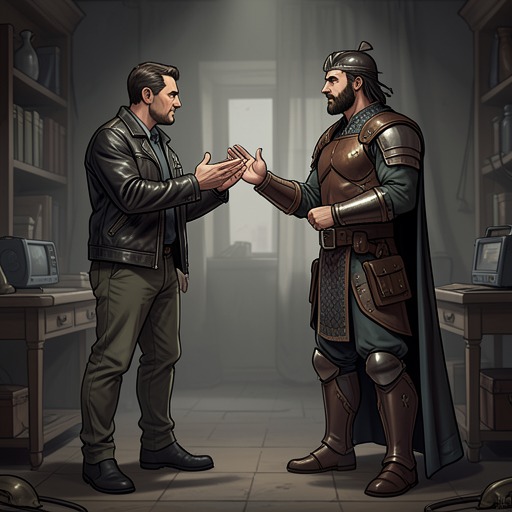
After Tars Tarkas becomes jeddak of the Tharks, he appoints Carter a chieftain, recognizing the rank Carter has earned through earlier combat. Carter uses the changed political moment to recruit the Tharks to his cause against Zodanga. He tells Tars Tarkas the story of his adventures and proposes rescuing Dejah Thoris, who is held by the Zodangan ruler and expected to marry his son to spare Helium from devastation.
Tars Tarkas presents the plan to the council as both a rescue and an opportunity. Returning Dejah Thoris to Helium would answer Carter’s aim, while the expected loot from Zodanga could give the Tharks resources to enlarge and increase their hatchings. He also sees an alliance with Helium as a way to secure sustenance and strengthen the Tharks among the green peoples of Mars. The appeal succeeds because it joins Carter’s immediate objective to the Tharks’ own strategic interests rather than asking them to act from sympathy alone.
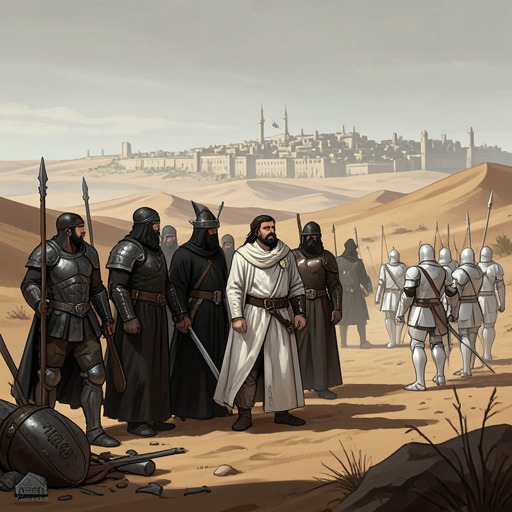
The response is unusually enthusiastic. Within half an hour, twenty mounted messengers are sent across dead sea bottoms to summon the hordes. Three days later, a force of one hundred thousand marches toward Zodanga; during the journey, Tars Tarkas recruits fifty thousand more. The army travels by night and shelters by day in deserted cities, a demanding arrangement that lets the host cross the exposed landscape while maintaining the march. When it reaches the outskirts of Zodanga ten days after setting out, the force numbers one hundred and fifty thousand.
The scale of the expedition makes the political stakes plain. Carter rides beside Tars Tarkas at the head of the column, with Woola following his mount. Tars Tarkas’s ability to enlist and manage the hordes is notable because their internal quarrels could have turned the march into conflict among themselves. Near Zodanga, those disputes are overtaken by their shared hatred of the red people, particularly the Zodangans, whose campaigns against the green warriors have targeted their incubators. The alliance therefore mobilizes not only around Carter’s rescue plan but also around longstanding grievances and the Tharks’ pursuit of security and resources.
Public Recognition and Aftermath
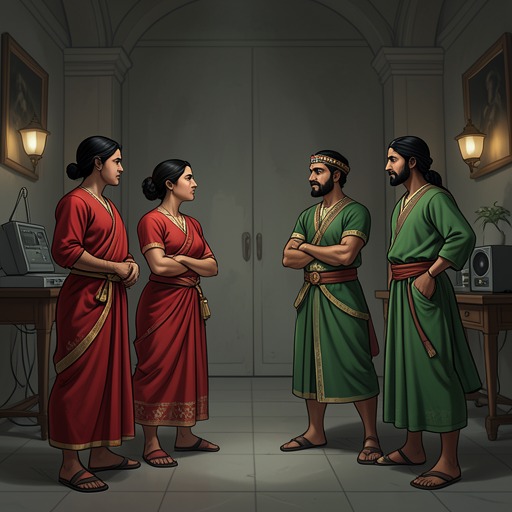
The alliance receives its clearest public recognition when the party reaches Helium. Tardos Mors, jeddak of Helium, meets Tars Tarkas first. He describes meeting a renowned warrior as an honor, but values still more the chance to place his hand on the shoulder of a friend and ally. Tars Tarkas answers that a man from another world has taught the green warriors the meaning of friendship and enabled them to understand and return the sentiments Helium offers. The exchange marks a change in relation: Tars Tarkas is no longer treated simply as the leader of a hostile people, but welcomed as a partner.
Tardos Mors then greets the green jeddaks and jeds with words of friendship and appreciation. His welcome makes the alliance broader than a private understanding between Carter and Tars Tarkas: Helium’s ruler addresses the Thark leaders directly and acknowledges them as members of a new political relationship. He also welcomes Carter and tells him that Helium has granted him Dejah Thoris without opposition, linking the settlement of Carter’s personal aim to the trust established between the allies.
Significance and Tensions
The alliance represents a real break with inherited antagonism, but the narrative gives that break mixed foundations. Dejah Thoris offers a vision of cooperation grounded in scientific labor, shared planetary survival, and fellowship. Carter’s later proposal has an immediate humanitarian aim in rescuing her, but Tars Tarkas secures Thark support by emphasizing plunder, food security, and the possibility of expanding their hatchings. The resulting campaign can advance a relationship between peoples while also serving conquest and material self-interest.
Carter’s role is that of mediator and strategist: he converts trust gained among the Tharks into a coalition with Helium, while Tars Tarkas supplies the authority and political skill needed to gather the hordes. Their eventual public exchange with Tardos Mors gives the new relationship a reciprocal form rather than leaving it as a temporary arrangement between armies. At the same time, the Tharks’ hostility toward Zodanga remains a powerful force in the march, and the evidence does not suggest that the old customs or suspicions disappear at once. The alliance matters precisely because friendship becomes possible within a world still shaped by violence, scarcity, and inherited division.