The Destruction of the Warhoon Incubator
A Princess of MarsThe Destruction of the Warhoon Incubator is the Tharks’ deliberate destruction of a Warhoon breeding enclosure encountered during their march. The party tears open the recently sealed structure and smashes every egg inside; the brief action exposes the intimate reach of green Martian warfare, where the future population of an enemy community is as vulnerable as its warriors.
Discovery on the March
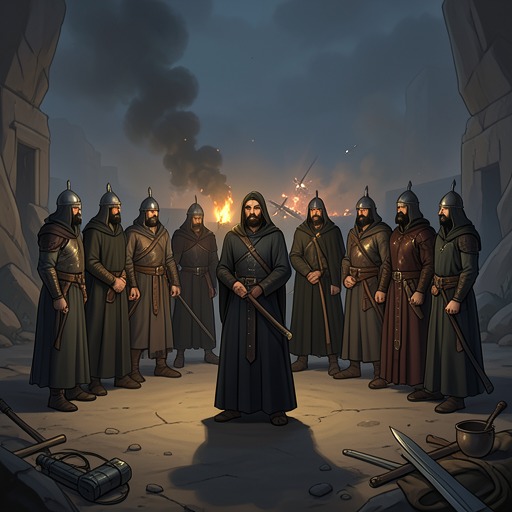
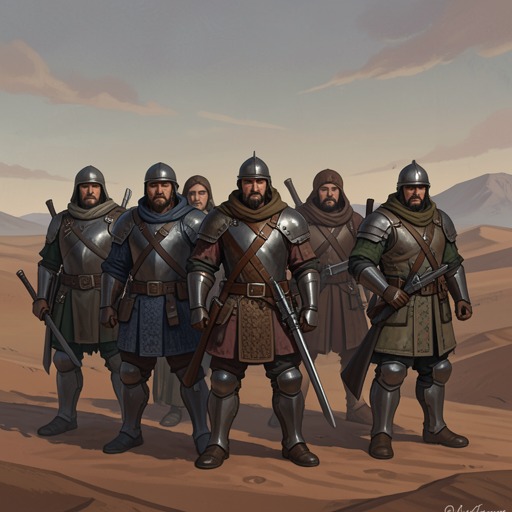
The encounter comes during a long march led by Lorquas Ptomel. At about midday, the Tharks see an enclosure well off to their right, and Lorquas Ptomel orders Tars Tarkas to investigate. Tars Tarkas takes twelve warriors, including John Carter, and they race across the moss toward it. The interruption shifts the column’s movement from travel to reconnaissance: a structure in the landscape becomes a sign of an opposing people nearby.
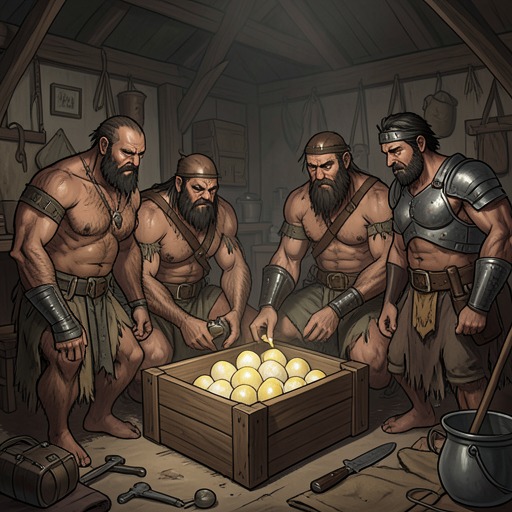
The enclosure is an incubator, but its eggs are noticeably smaller than the eggs Carter has seen hatching in the Tharks’ own incubator. Tars Tarkas examines the site closely and identifies it as belonging to the green men of Warhoon. The cement is scarcely dry where the entrance has been walled up, indicating that the enclosure has only recently been sealed. He concludes that the Warhoons cannot be a day’s march ahead, and the discovery immediately sharpens the prospect of conflict.
The Eggs Destroyed
The assault is swift. The warriors rip open the entrance, and two crawl inside; they soon demolish all the eggs with their short-swords. There is no attempt to seize or inspect the eggs after entry: the Tharks destroy the entire contents of the incubator, then remount and hurry back to join the main column. In a few moments, an enemy community’s protected place of reproduction has become the object of a military strike.
The smaller eggs do not indicate a smaller Warhoon people. When Carter asks Tars Tarkas about their size, he learns that green Martian eggs grow during a five-year incubation period. Newly laid eggs are only a little larger than ordinary goose eggs; growth begins when they are exposed to sunlight. The chiefs can therefore transport hundreds at a time from storage vaults to incubators. The Warhoon eggs are small because they have only just been placed in the enclosure, not because their future hatchlings would remain small.
Warfare Beyond the Battlefield
The attack makes visible a form of war directed not only at living opponents but at the means by which a people continues. The Tharks’ destruction of the eggs is consistent with the wider conflict in which green Martian groups seek advantage by despoiling one another’s incubators. The act is especially pointed because the site is newly sealed: a protected enclosure, rather than an armed force, is what the Tharks find and destroy.
The episode also sets the Tharks’ conduct against the wider violence of green Martian society. Their common amusement can include the death agonies of prisoners, and the suffering of others may provoke hilarity rather than pity. Here, however, the violence is not presented as entertainment but as a direct act against a rival group’s future. The change in purpose does not soften its consequence: all the eggs in the enclosure are killed.
Place in the March
Carter’s question about the eggs turns the attack into a moment of explanation as well as action. The practical difference between newly laid eggs and eggs nearing hatching gives him a view into a system normally hidden inside the incubator: growth takes years, sunlight initiates it, and chiefs oversee the movement of large numbers of eggs. The same knowledge clarifies what the destruction means. The Tharks have not merely broken a wall; they have erased the Warhoon eggs gathered within it.
The column’s march continues immediately after the raid, but the encounter changes the meaning of the route. The enclosure confirms that the Warhoons are close, and Tars Tarkas’s battle-ready response frames the discovery as a prelude to possible fighting. In miniature, the episode joins the book’s military movement to its account of a society organized around communal reproduction: the incubator is both a practical institution and a strategic vulnerability.