Chloe Thorensen’s recovery from her accident injuries
AccidentChloe Thorensen’s recovery from her accident injuries is a slow passage from intensive care toward the demands and frustrations of life outside it. Her pain, extensive casts and pins, and need for continued care make recovery tangible rather than instantaneous; her eagerness for music, friends, and home shows how quickly survival gives way to the difficult work of living with the aftermath. At the same time, Chloe’s fear for Allyson Clarke keeps her own progress emotionally entangled with the crisis affecting both families.
Condition and Early Recovery
In the days after the crash, Chloe remains in considerable pain despite medication. Her father, Trygve Thorensen, says that even visiting her has been difficult: after six days at her bedside, he is relieved that she is due to leave intensive care. The move marks meaningful progress, but not a return to health. Chloe is still recovering from serious injuries, and the family’s relief comes from being able to worry about the next stages of care rather than whether she will survive.
Chloe is beginning to stir while Allyson remains unconscious. The contrast is stark: one girl is showing signs of movement, while the other is still in a coma, and both families continue to wait on uncertain medical developments. Chloe’s progress therefore brings hope without resolving the wider crisis. Her father can take comfort in her improvement while remaining aware that recovery will have its own demands.
Leaving Intensive Care
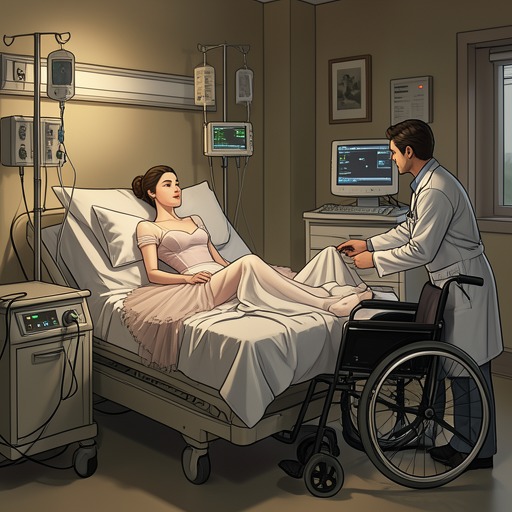
After her transfer from intensive care, Chloe is less groggy, though she is still in considerable pain. Her hospital room fills with flowers, and a few close friends are able to visit. It is the first time since the crash that she has seen friends, having previously seen only her father and brothers. The change in visitors gives the move out of intensive care a social meaning as well as a medical one: Chloe is not simply being monitored in a different room but beginning, cautiously, to reconnect with her ordinary life.
Her preferences quickly reappear alongside her injuries. She wants her music and friends, hopes to go home the following week, and asks her father to wash her hair. Going home so soon is impossible, and caring for her involves intimate practical work as well as hospital visits. Trygve jokes about the difficulty of this next phase, but the humor rests on a genuine reversal: these are problems he is glad to have, because they replace the more frightening question of whether Chloe will live.
The physical details of Chloe’s condition remain visible. When Page Clarke visits, Chloe still has extensive casts, pins, and other medical apparatus, and she is in a fair amount of pain. Yet she is handling the situation well and is happy to be alive. The passage holds both facts together: survival does not erase discomfort or the practical restrictions imposed by her injuries, while those restrictions do not cancel her relief at having survived.
Family, Friends, and Everyday Care
Trygve’s care for Chloe includes staying close during her intensive-care period and then negotiating the wishes that come with her return to a hospital room. He recognizes that her demand for music, company, home, and help is a new set of challenges, but they are welcome ones. His response makes the change in her condition legible through ordinary family life: recovery begins to ask for patience, assistance, and limits rather than only vigilance at the edge of survival.
Friends also begin to gather around Chloe. Jamie Applegate wants to see her, but Trygve asks him to wait another day, until the weekend. Jamie is polite and concerned, and he sends the largest bouquet in the room with his parents. Later, he brings CDs and his own player for Chloe to borrow, along with more flowers. He asks Page how soon he can visit Allyson, too. These gestures show his concern for both girls, while the delayed visit reflects the adults’ effort to protect Chloe from too much too soon and to judge carefully what Allyson can manage.
Page’s visits make the two girls’ situations part of the same daily routine. She sits with Allyson, then goes to Chloe’s room; she brings Chloe magazines, cookies, and makeup after Chloe complains that the hospital food is disgusting. The small comforts do not undo the pain or the limits of hospitalization, but they give Chloe familiar choices and companionship while she is still dependent on others. Her room’s flowers and borrowed music similarly make a clinical setting more connected to the friendships waiting outside it.
Recovery Alongside Ongoing Uncertainty
Chloe’s improvement does not remove her worry about Allyson. She asks Page for news as soon as her mother enters the room, and Trygve has told her honestly that Allyson might still die. Chloe is therefore recovering while facing the possibility of losing the friend who was injured in the same crash. Her happiness at being alive coexists with fear for someone whose condition remains critical; the account does not treat survival as a simple emotional resolution.
The narrative measures Chloe’s recovery through modest changes and renewed wants rather than a completed return to normal. She moves out of intensive care, becomes less groggy, receives friends, and begins asking for the music, home life, and personal care she misses. At the same time, pain and extensive medical supports remain part of her immediate reality, and her hope of going home quickly is checked by what her condition requires. Her recovery is presented as a continuing process, shaped by physical dependence, family care, friendship, and the unresolved danger facing Allyson.