
The Fables’ Contest Between Power and Justice
Aesop's FablesThis thread follows how the collection exposes power that disguises appetite as law and contrasts it with practical resistance.
increasing Bearing strength in each event
 decreasing
Bearing strength in each eventdecreasingThe Lamb’s Refuted Defense
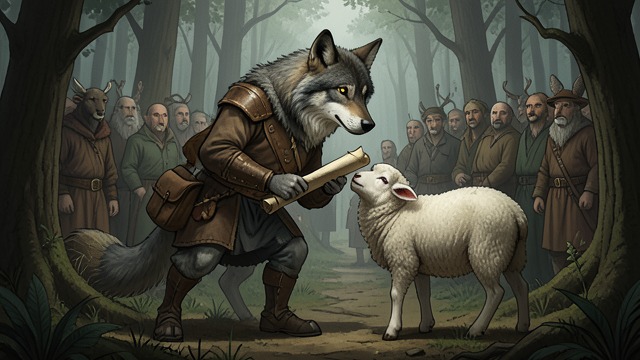
Accusation Without Justice
The Wolf’s Case
The Wolf invents one accusation after another, and the Lamb answers each with facts. The exchange makes the imbalance unmistakable: reason cannot protect the powerless when the judge is also the predator.
The Outcome
The Wolf eats the Lamb anyway, exposing the accusations as excuses rather than genuine grievances. The opening fable establishes a moral landscape in which force may seize the language of justice without accepting its limits.
The Sheep Dismiss Their Guards
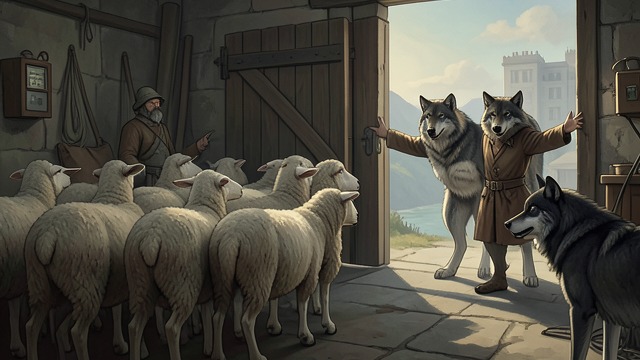
Peace as a Trap
The Wolves’ Proposal
The Wolves blame the Sheepdogs for conflict and offer reconciliation if the Sheep dismiss their protectors. Their argument turns the victims’ safety measures into supposed causes of hostility.
The Unprotected Flock
The Sheep accept the offer and are destroyed. The episode shows how an aggressor can make disarmament sound like mutual trust when only one side benefits from it.
The Lion Claims Every Share
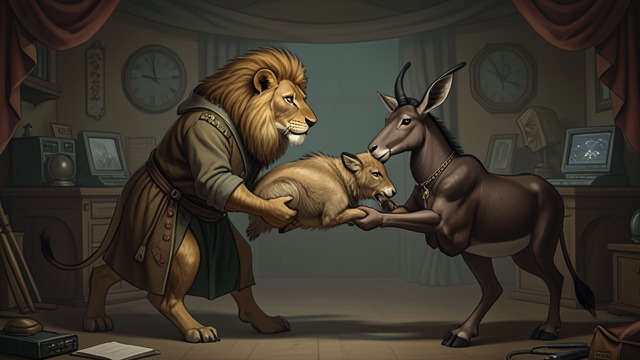
Partnership Under Unequal Power
The Hunt
A Lion and a Wild Ass cooperate to capture prey, each contributing different abilities. Their alliance appears useful until the time comes to divide the results.
The Final Division
The Lion claims every portion and threatens the Wild Ass for resisting. Cooperation cannot guarantee fairness when one partner controls the terms and the consequences.
The Lions Answer the Hares

Equality Without Leverage
The Hares’ Argument
The Hares address an assembly and argue that all creatures should be equal. Their appeal is coherent, but it does not alter the material imbalance between them and their opponents.
The Lions’ Reply
The Lions answer that the Hares lack claws and teeth. The retort exposes how political ideals can be dismissed by those whose power makes the existing order advantageous.
The Trumpeter’s Responsibility
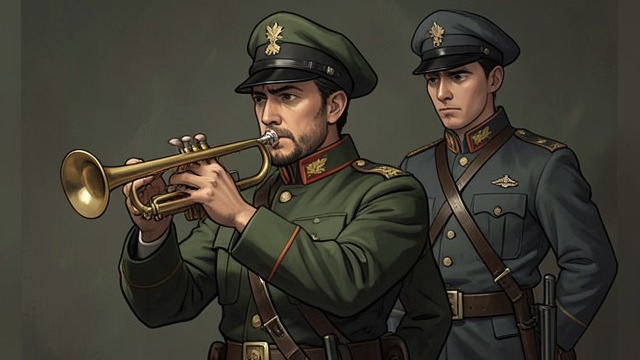
Influence as Power
A Prisoner’s Defense
An enemy captures a Trumpeter who insists that he has killed nobody and carries no weapon. He treats his role as harmless because he does not fight directly.
The Captors’ Judgment
The soldiers answer that his music urges others into battle. The episode widens responsibility beyond direct violence to include the influence that mobilizes it.
At the collection’s opening
In the early collection
In the middle portion of the collection
In the later animal-society fables
Near the end of the fable sequence
