
Deception Escalates Into Exposure
Aesop's FablesThis thread follows lies and performances as they shift from useful disguises to traps that expose their makers.
increasing Bearing strength in each event
 decreasing
Bearing strength in each eventdecreasingThe Shepherd Boy’s False Alarm
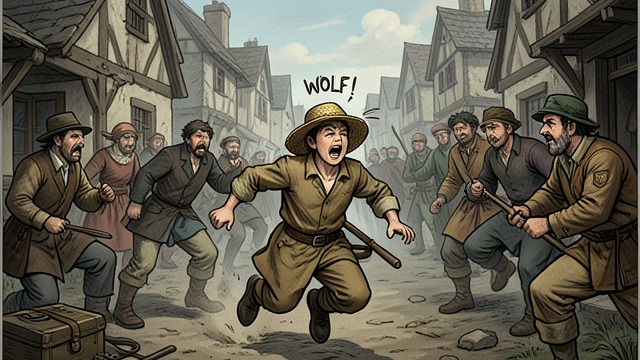
A Lie Spends Trust
Repeated Cries
A Shepherd-boy calls “Wolf” several times to amuse himself, bringing villagers out to help. Each false alarm teaches them to discount his warning.
The Real Attack
When a Wolf finally comes, the villagers do not respond. The boy’s earlier deception changes the meaning of his later truthful cry and leaves the flock exposed.
The Fox’s Tale About Becoming a Wolf
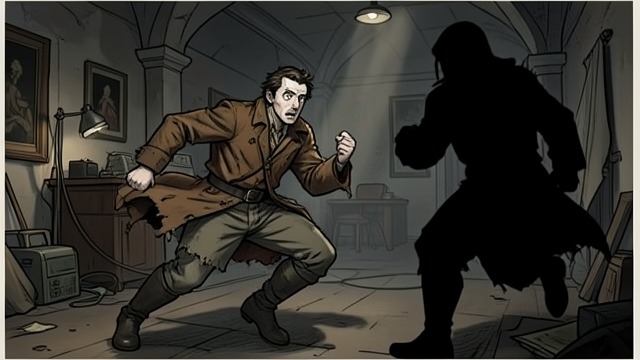
A Story Used to Steal
The Innkeeper’s Fear
A Thief claims that he transforms into a Wolf after yawning three times. He makes the Innkeeper believe that staying nearby is dangerous.
The Coat Disappears
As the Innkeeper flees, the Thief takes his coat and escapes. The invented transformation works because fear interrupts the victim’s examination of what is actually happening.
The Ape Rewards the Flatterer
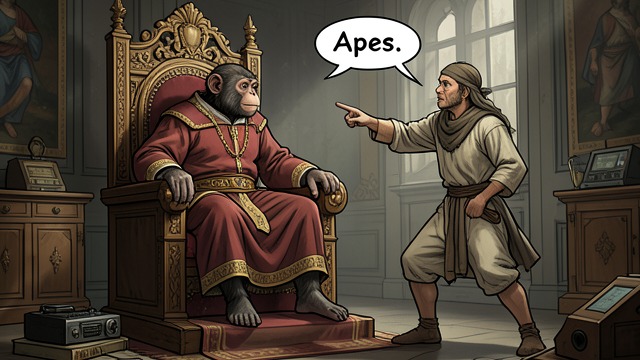
Truth and Favor at Court
A King Seeks Praise
An Ape ruler asks two Travelers how he and his court appear. The liar praises them and receives a handsome reward.
Honest Speech Is Punished
The truthful Traveler calls them Apes and is attacked. The conflict shows how a ruler’s desire for affirmation can turn honesty into a punishable offense.
The Jackdaw Loses Both Communities
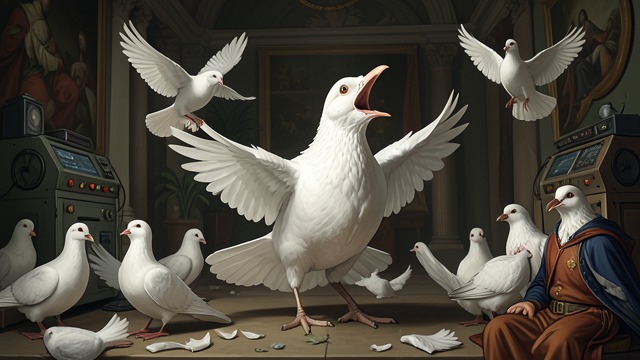
A Failed Double Identity
Painted for Admission
A Jackdaw paints itself white and joins Doves to share their food. Silence lets the disguise work briefly.
Rejected on Both Sides
When it chatters, the Doves drive it out; the Jackdaws also reject it because of its altered appearance. The attempt to belong everywhere leaves it accepted nowhere.
The Countryman’s Proof Is Ignored
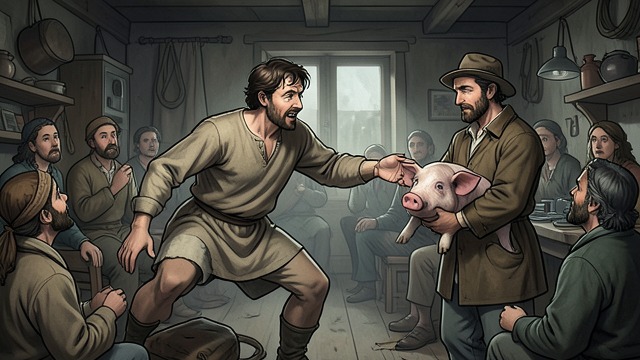
Performance Outweighs Evidence
A Competing Act
A Buffoon imitates a pig so well that an audience applauds. A Countryman promises a more natural imitation and secretly brings a real pig.
The Crowd’s Misjudgment
The audience prefers the Buffoon until the Countryman reveals the animal. The demonstration exposes how prior loyalty can overpower direct evidence, even when the proof is in front of the judges.
In the early collection
In the later animal stories
In the final third of the collection
Among the later fables
Near the collection’s end
