
Parents Teach Through Care and Example
Aesop's FablesThis thread traces family affection and authority as they help, mislead, or fail to prepare younger generations.
increasing Bearing strength in each event
 decreasing
Bearing strength in each eventdecreasingThe Mole’s Mother Tests His Sight
A Child’s Claim
Confidence Without Perception
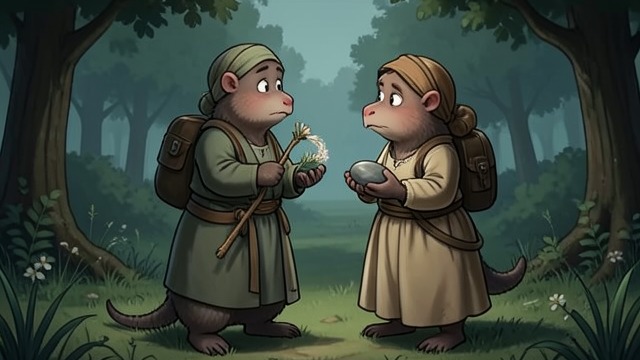
A young Mole insists to its Mother that it can see. The claim asks for confirmation despite the animal’s blindness from birth.
A Second Sense Fails
The Mother presents frankincense, which the Mole mistakes for a pebble. She concludes that it has also lost its sense of smell, making the test a lesson in recognizing limits rather than insisting on ability.
The Fawn Questions Its Mother
Courage Cannot Be Argued Into Being
The Fawn’s Reasoning
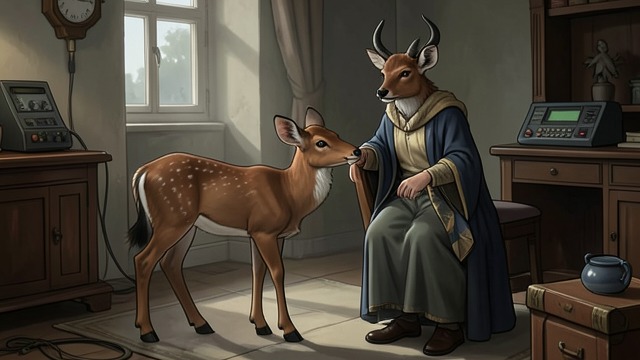
A young Fawn notes its Mother’s size, speed, and horns and asks why she fears Hounds. Its argument is logical but does not account for fear as an involuntary response.
The Mother’s Admission
The Mother says that even a single bark makes her ready to flee. The exchange distinguishes the possession of advantages from the emotional capacity to use them under pressure.
A Monkey Defends Her Young
A Mother’s Partial View
The Public Contest
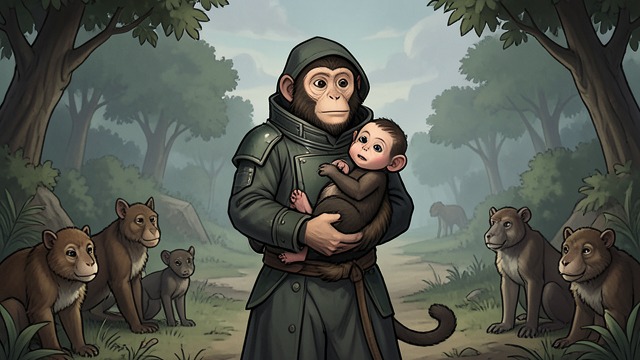
Jupiter promises a prize for the handsomest offspring. A Monkey presents an awkward-looking young one, and the animals laugh.
A Mother’s Certainty
The Monkey admits that Jupiter may not award the prize, but insists her child is dearest and most beautiful to her. Affection persists even when public judgment disagrees with a parent’s view.
A Mother’s Threat Misleads a Wolf
Words Taken Literally
A Threat at the Door
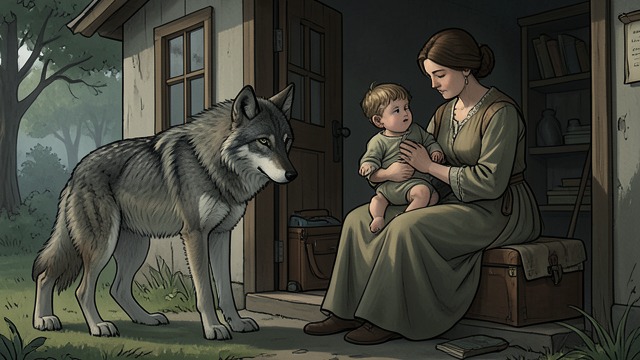
A hungry Wolf hears a Mother tell her child that the Wolf will eat it if it does not behave. The Wolf waits outside, treating the words as a reliable promise of prey.
A Different Evening Promise
The Mother later says she will kill any Wolf that comes. The Wolf leaves hungry, having failed to distinguish a threat used to discipline a child from a plan of action.
The Lark Honors Its Father
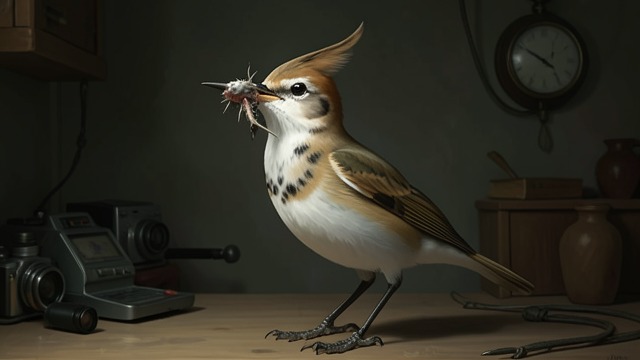
Reverence in a Mythic Origin
No Earth for Burial
The Lark’s father dies before there is earth, leaving the young bird unable to bury him. It waits, with no ordinary place available for the duty.
The Burial in Her Head
After five days, the Lark buries him in her own head, and the story explains the bird’s crest through this act. The legend makes filial reverence the source of a lasting physical sign.
In the early fables
Among the early animal fables
In the middle fables
In the later animal tales
Near the end of the collection
