
The Book’s Changing Account of Authorship
Aesop's FablesThis thread tracks the preface’s movement from Aesop as foundational fabulist to a layered literary tradition involving later writers and editors.
increasing Bearing strength in each event
 decreasing
Bearing strength in each eventdecreasingA Form Defined by Instruction

What Makes a Fable
Story and Hidden Meaning
The preface distinguishes a fable from a tale by its intended lesson and from a parable by its use of fictional characters. Animals and other figures make advice easier to receive.
The Teacher’s Purpose
The fabulist is described as a moral instructor who can provoke laughter while correcting conduct. This definition gives the collection an interpretive standard against which its varied stories can be judged.
Aesop as the Founding Name
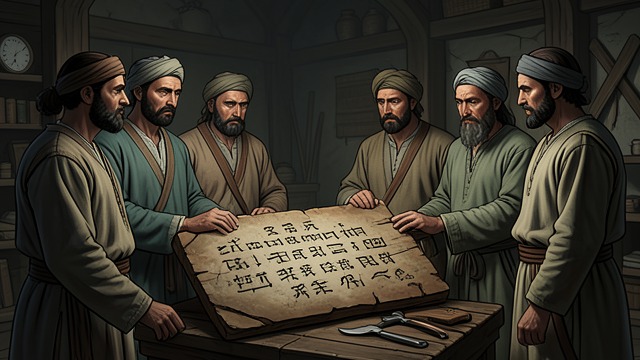
Oral Origins and Attribution
A Shared Inheritance
The preface acknowledges that many fables predate Aesop or arose later. It nevertheless credits him with shaping enough stories in a recognizable mode to become the father of Greek fable.
Words and Ideas
Bayle’s account separates the material and thought associated with Aesop from the later wording. The collection’s name therefore signals a tradition as much as a single author’s fixed text.
Socrates Versifies Remembered Tales

Fables in Philosophical Practice
Recollection
The preface reports that Socrates turned some remembered fables into verse while awaiting the return of the sacred ship from Delphi. His versions drew on what he could recall.
An Ongoing Use
The episode places fables within education and literary exercise, not only oral entertainment. Later scholars and students likewise use retelling to examine morals and practice style.
Babrius Enters the Debate

Competing Claims
A Lost Poet
Nevelet suggests that Babrius may be behind the existing forms of many fables. Bentley argues that prose versions can be related to Babrius’s meter, prompting resistance and scholarly dispute.
A Manuscript Appears
In 1844, a manuscript of Babrius is found on Mount Athos. The discovery supports the importance of Babrius as a collector, while the preface still places the fables in a broader history of adaptation.
A Collection Built Across Centuries

Editors Shape the Corpus
Recollection and Expansion
Planudes gathers about 150 fables, and early printed editions build on that collection. Nevelet adds materials from manuscripts and other writers, producing a more extensive corpus.
Translation and Scholarship
Lewis edits recovered Babrius texts, while the Townsend translation names several sources. The preface presents the book not as an untouched ancient original but as a work assembled through transmission.
At the beginning of the preface
In the preface’s account of ancient tradition
While Socrates awaits his death in prison
From the 17th century to the 19th century
From the 14th century through 1846
