
Promises Become Tests of Trust
Aesop's FablesThis thread follows relationships that begin with assurances and are judged by whether conduct confirms them.
increasing Bearing strength in each event
 decreasing
Bearing strength in each eventdecreasingThe Fox Promises a Way Out
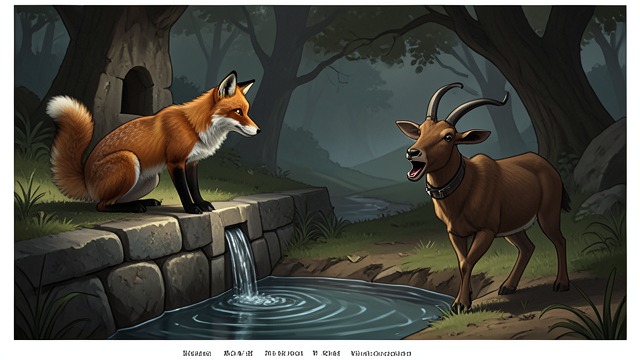
The Goat in the Well
A Persuasive Invitation
A Fox trapped in a well praises its water to a thirsty Goat and encourages it to jump down. The Goat hears the assurance it wants rather than asking how either animal will climb out.
Escape Without Reciprocity
The Fox uses the Goat’s body to reach the opening and leaves it behind. The promised shared escape collapses when the Fox’s own safety is secured.
The Lion and Dolphin Make an Alliance

Friendship Across Different Worlds
The Agreement
A Lion and a Dolphin agree to be friends because each rules a different domain. Their alliance rests on admiration and an assumption of mutual usefulness.
The Impossible Aid
When the Lion calls for help on land, the Dolphin cannot reach him. The failure is not betrayal but a failure to consider whether the promised assistance is physically possible.
The Eagle and Lion Require Surety
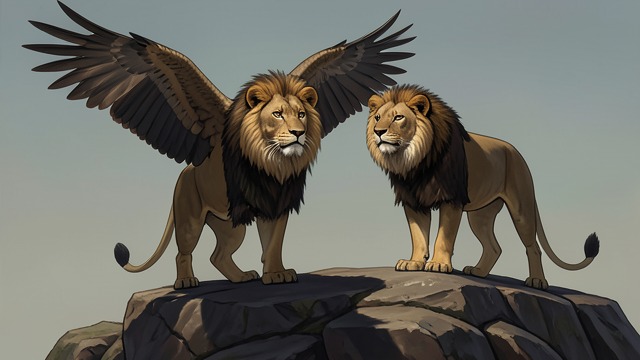
Trust and Unequal Mobility
An Offer of Alliance
An Eagle proposes an alliance with a Lion. The Lion does not reject cooperation, but asks for assurance of the Eagle’s good faith.
A Practical Doubt
The Lion points out that the Eagle can fly away whenever the agreement becomes inconvenient. The fable treats trust as something tested against the actual conditions of a relationship.
The Ass Learns From Its Companion
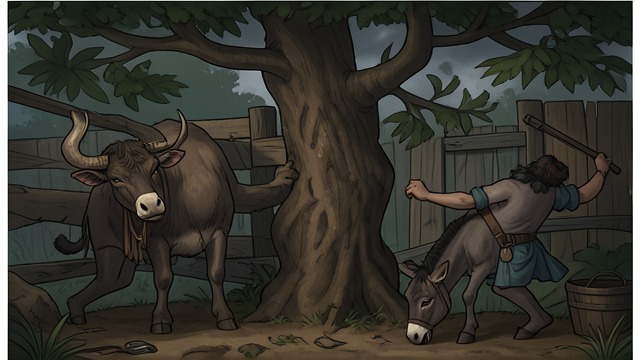
Character by Association
A Trial in the Yard
A man tests an Ass by placing it among his other animals. The new arrival immediately joins the laziest and most voracious companion.
A Quick Conclusion
The purchaser sends it back without further trial, believing its choice reveals its habits. The brief episode makes social attachment a practical sign of character rather than a formal promise.
A Fox and a Woodcutter Part Uneasily
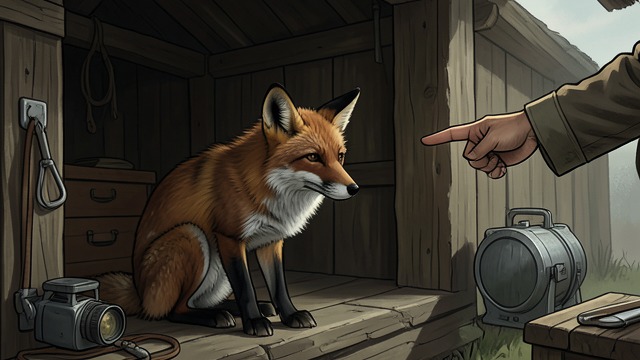
Shelter and Betrayal
Hiding From the Hunt
A Woodcutter directs a pursued Fox to shelter in his hut, then signals its hiding place while verbally denying knowledge of it. The Fox survives because the hunters ignore the gesture.
Words Measured Against Deeds
When the Fox refuses to thank him, it explains that the Woodcutter’s hands contradicted his speech. The encounter makes conduct, rather than stated intention, the measure of trust.
Early in the fable sequence
In the early middle portion
In the middle collection
In the later animal tales
Late in the collection
