Horse
Aesop's FablesThe Horse is a recurring animal character in George Fyler Townsend’s fables, used to dramatize how status and strength can be altered by dependence, neglect, and self-interested choices. Across several distinct stories, he moves from honored war companion to overburdened laborer, trades freedom for revenge, and sees the very pride that once separated him from an Ass turned against him. These episodes give concrete form to the collection’s conventional characterization of the Horse as proud, while showing how circumstances can make that pride precarious.
Identity and Narrative Function
The preface identifies the Horse as a character traditionally marked by pride, alongside the Fox’s cunning, the Hare’s timidity, the Lion’s boldness, and the Ass’s patience. It presents such recognizable traits as part of the fable’s method: animal characters retain familiar characteristics while depicting human motives and passions. The Horse’s stories draw on that convention, but their action also shows that his standing is not fixed. Fine equipment and military usefulness can give way to exhaustion and menial work, and his confidence can become a source of vulnerability.
The preface also cautions that not every fable in the collection achieves equal unity between its narrative, animal characters, and moral. That distinction matters to the Horse’s appearances: each story makes a different use of him rather than combining the episodes into one continuous biography. Their force comes from recurring contrasts—honor against neglect, revenge against freedom, and pride against reversal—not from a single chronological life story.
The Soldier’s Charger: Care, Neglect, and Consequence
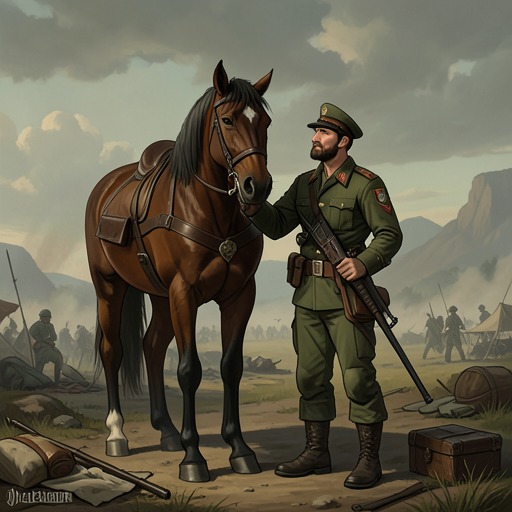
In “The Horse and His Rider,” a Horse Soldier treats his charger as a fellow helper while the war lasts, carefully feeding him hay and corn. Once peace comes, the Soldier changes his treatment: the Horse receives only chaff and must carry heavy loads of wood under harsh labor. The change is not caused by any failing on the Horse’s part; it follows the Soldier’s changed use for him when the immediate need for war has passed.
When war is proclaimed again, the Soldier puts the Horse in military trappings, mounts him, and wears his heavy coat of mail. The Horse immediately falls beneath the burden and cannot bear it. He tells the Soldier that he has transformed him from a Horse into an Ass, and asks how he can expect an instant return to the strength of his former role. The fable’s reversal makes the Soldier’s earlier neglect decisive: the charger once maintained for emergencies can no longer serve when summoned back to them. The Horse’s explanation turns the change in his condition into an accusation about the costs of treating a partner as a tool only when useful.
Revenge and the Loss of Freedom
In “The Horse and the Stag,” the Horse initially possesses the plain alone. When a Stag intrudes and shares his pasture, the Horse seeks a man’s assistance to punish the newcomer. The man offers effective help on terms: the Horse must accept a bit in his mouth and carry him. The Horse agrees, allowing the man to mount.
The bargain defeats the Horse’s stated aim. Rather than securing revenge while retaining his independence, he finds that he has enslaved himself to human service. The story’s central turn is not the defeat of the Stag but the Horse’s altered relationship with the man he enlisted. His resentment at sharing pasture leads him to accept a means of redress that imposes a lasting cost on himself; the fable thus makes the pursuit of retaliation a route to lost freedom.
Pride and Reversal
“The Horse and the Ass” opens with a Horse proud of his fine trappings. On the highway, he meets a heavily laden Ass, who slowly moves out of the way. The Horse threatens to kick him; the Ass says nothing and makes a silent appeal to the justice of the gods. The contrast is immediate: the Horse’s display and threat meet the Ass’s restraint rather than a contest of force.
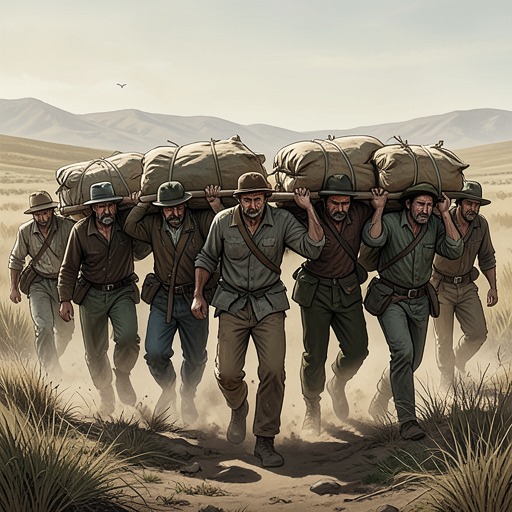
Not long afterward, the Horse becomes broken-winded and his owner sends him to the farm. The Ass then sees him drawing a dungcart and mocks the discrepancy between his former finery and his reduced condition. The ending returns the Horse’s earlier contempt to him: the animal who had scorned another’s burden now occupies a lowly working role himself. Pride here is exposed not simply by changed appearance but by the Horse’s dependence on circumstances beyond his control.
A Fable Character, Not a Continuous Biography
The Horse’s appearances are separate moral constructions, not successive stages in one uninterrupted personal history. One story focuses on a Soldier’s failure to sustain the charger he once valued; another on a Horse’s choice to surrender freedom in pursuit of revenge; a third on the reversal of a boastful Horse’s fortunes. Read together, they make his traditional pride a point of departure rather than a complete explanation of his character. Each narrative tests status against what follows: the burden he can no longer carry, the service he has accepted, or the cart he is made to draw.
The preface defines the fable as a brief narrative in which fictional characters carry instruction about human motives and conduct, with the lesson closely bound to the action. The Horse’s stories exemplify that design through concrete reversals instead of a shared plot: the charger’s fall follows neglect, the loss of independence follows the bargain for revenge, and the Ass’s rebuke follows the Horse’s earlier contempt. Across these distinct endings, the Horse becomes a vehicle for examining how pride and short-sighted choices can leave their author in a position he once despised.