Nostalgia and preserving memories
Always and Forever, Lara JeanNostalgia and preserving memories become a way for Lara Jean Covey to recognize what is ending without treating the past as something she can simply keep unchanged. As high school closes and her relationship with Peter Kavinsky faces an uncertain future, she preserves particular objects and moments: a piece of family history, inscriptions in a yearbook, and a scrapbook assembled for Peter. Her keepsakes do not stop time; they make a lived time tangible, and let her acknowledge its importance even as she moves forward.
Old Objects and Family Memory
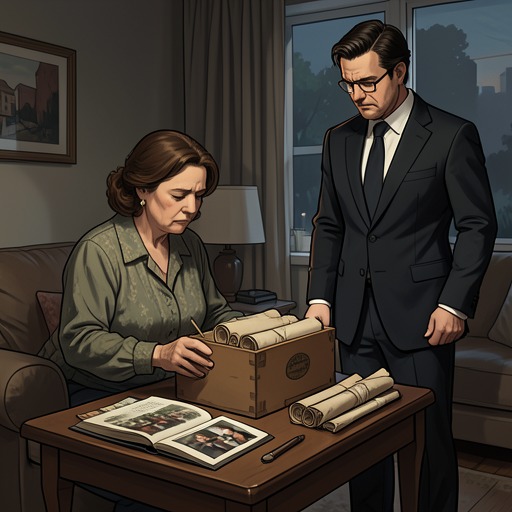
A conversation about holiday decorations makes the tension between sentiment and practicality concrete. Kitty Song argues that the family should discard some old belongings, including a scraggly, chewed-looking tree skirt, because age alone does not make an object worth keeping. Lara Jean does not deny that the skirt has worn out. But its history matters: her mother bought it at an elementary-school Christmas fair, where Lara Jean and Margot Song each wanted a different design. Their mother chose the red one, expecting the white skirt to get dirty quickly.
The tree skirt thus carries more than its original use. It recalls their mother’s presence and an ordinary childhood disagreement, connecting domestic routine to family memory. Lara Jean expects that she and Margot will refuse to let Kitty throw it away. If the skirt must be retired, Lara Jean plans to cut off a square and store it in her hat box. The small fragment offers a compromise: the worn object need not remain in service for its history to survive. In the same conversation, Trina Rothschild’s elaborate Christmas village—packed in boxes in the garage, with its own barber shop, bakery, and toy store—raises the practical problem of where new family traditions and old belongings will fit. Memory here occupies actual household space, making preservation a negotiation rather than an abstract ideal.
Marking the End of High School
With only three days of school remaining, yearbooks arrive with blank pages for signatures and a place of honor on the back cover. Lara Jean has saved hers for Peter because she does not want to forget how special the year has been. The yearbook turns that wish into a shared object: each can leave a mark in the other’s copy, fixing a moment of their relationship in a form they can revisit.
Lara Jean chooses a quotation about laying dreams beneath someone’s feet and asks Peter to write his yearbook quote for him. He tells her to surprise him; his chosen inscription, “You’re welcome.” —Peter Kavinsky, answers her choice with a teasing, personal gesture. The exchange makes the yearbook more than a record of school. Its messages preserve the couple’s familiar humor and their distinct ways of speaking, while the surrounding blank pages invite the signatures of a wider community.
The last day of school gives nostalgia a bodily rhythm. Lara Jean and Peter climb the staircase together, as they have before, with Peter taking the stairs two at a time and Lara Jean hurrying behind him. She identifies the walk as their last shared climb of that kind and the day as the end of her high-school career. Later, when Peter mocks her insistence that they will always have Beach Week, she throws a hair tie at him. His teasing does not erase her conviction: she believes these days will remain part of what they remember for the rest of their lives. The repeated staircase and their familiar banter make an ending legible through details that might otherwise seem routine.
Keepsakes and the Scrapbook
Lara Jean’s scrapbook gathers memories from different moments in her relationship with Peter rather than arranging them as a simple record of a single occasion. It includes their homecoming photograph, in which she is dressed as Mulan and Peter as a dragon; a receipt from Tart and Tangy; a note from an earlier stage of their relationship; photographs from Senior Week and prom; dried rose petals from her corsage; and the Sixteen Candles picture. Together, the items give the relationship a material history: images sit beside scraps of everyday life, and a flower preserved from a dance sits beside the evidence of dates and jokes.
The collection also has limits. Lara Jean leaves out the ticket stub from their first real date and Peter’s note saying, “I like you in blue.” Those remain tucked away in her hatbox. Preserving memories does not mean placing everything in one display; some things stay private, held close in a separate container. The difference between the scrapbook and the hatbox suggests that keepsakes can serve different kinds of attachment, from memories she wants Peter to share to objects she is not ready to part with.
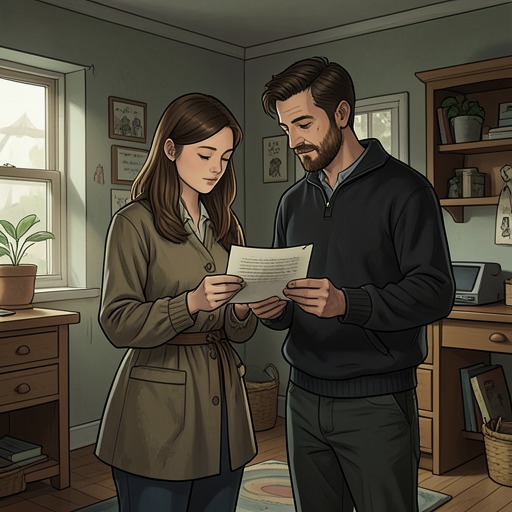
The scrapbook’s most important inclusion is the letter Lara Jean wrote long ago, the one that brought them together. She once wanted to keep it herself, but decides that Peter should have it instead. When he reaches that page, he recalls her earlier wish to hold on to it. Lara Jean asks him to promise to keep it forever. The exchange gives the letter a changed role: a private beginning becomes a gift and a shared possession, entrusted to Peter as their future becomes less certain.
What Memory Can Preserve
Lara Jean understands the scrapbook as proof: proof that she and Peter were there, that they loved each other, and that whatever happens later cannot take this time away from them. This is not a guarantee that their relationship will remain unchanged. Rather, the collection preserves the reality of what they have experienced without predicting its outcome. Its objects make a past that cannot be repeated available for recognition.
Across the tree-skirt fragment, the yearbook, and the scrapbook, preservation is selective and active. Lara Jean distinguishes between what can be shared, what belongs in a private hatbox, and what can be allowed to wear out while a piece of it is saved. Nostalgia therefore does not mean keeping every old thing intact. It is a way of choosing which details can carry a person, a family, or a relationship forward—and of giving memory a form that can endure even when daily life changes.